




3 Tips for Building a Healthy Wellness Program
Opportunities to save money on health insurance premiums by participating in health screenings and fitness and education activities motivate employees while helping employers save on claims and reap the benefits of a healthier workforce.

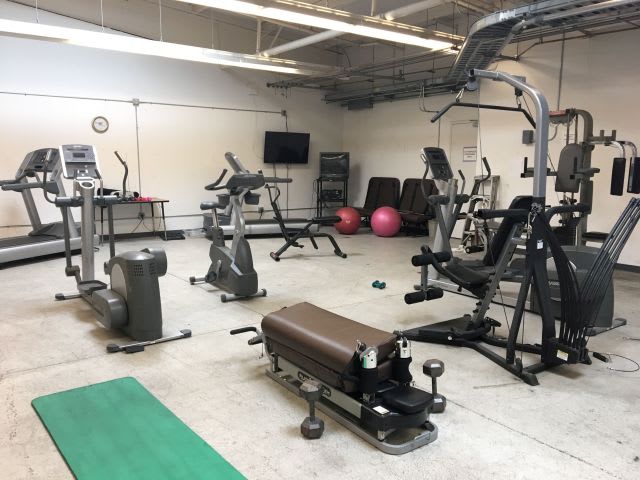
Elk Grove (Calif.) Unified School District’s transportation department worked with the district’s wellness program to establish a gym after transportation staff members asked to bring in workout equipment.
Elk Grove (Calif.) Unified School District’s transportation department worked with the district’s wellness program to establish a gym after transportation staff members asked to bring in workout equipment.
As health care costs increase year over year and with bus driver and other transportation jobs being largely sedentary, a workplace wellness program can help employees improve their health, which is a benefit to them and their employers. The programs, whether formal or informal, can offer an opportunity for regular exercise and a baseline for employees who want to make lifestyle changes to improve their health. Moreover, some districts have turned to the programs to quell rising health care claims costs.
The foundation of many wellness programs are health screenings and assessments. At Des Moines (Iowa) Public Schools, voluntary biometric screening for employees consists of taking blood pressure, height, weight, cholesterol count, blood glucose, waist circumference, and a body composition test, which includes body fat percentage, body mass index, and lean tissue mass.
The district also pulls data from an online wellness assessment, sometimes referred to as a health risk assessment, offered through the district’s health insurance provider, Wellmark Blue Cross and Blue Shield of Iowa. Employees anonymously respond online to questions about their health habits, designed to help them and the district, as they customize the program to be more effective.
“We can combine [assessment] data with the biometric data to get a big picture of health in this population and where the needs are, where we can work on improving,” says Katie Northness, the wellness program manager for the district.
In addition to Des Moines Public Schools, SBF spoke with two other districts running successful wellness programs. Here, we share some tips from them, which include offering financial incentives for participation in health screenings and assessments, and tailoring fitness and education components to employees’ interests and needs.
1. Customize for staff members’ interests
Because there is no such thing as a one-size-fits-all wellness program, Northness advises getting input from staff members on their interests to tailor a program based on their needs.
“A bus driver, teacher, and human resources staff member are all facing very different things when they come to work,” she notes. “You want to create programming that is going to be beneficial to your population.”
Leaders in particular should be involved in creating a program, Northness points out, because they will set the tone.
“If you get them involved and people see that they are participating, that really sends the message to employees.”
Options are also important: Des Moines is kicking off the 2017-18 school year with a stress management class in September. Additional class topics offered throughout the year are nutrition, physical activity, and financial health.
“We try to hit a wide variety of health topics so that people can pick what appeals to them the most,” Northness says.
Additionally, the district’s transportation department selects activities for wellness challenges, which employees can participate in to get discounts on their health insurance premiums. The district appoints staff members as “wellness champions” to create these challenges. This year, they created “Lap the Lot,” which encourages bus drivers to walk around the bus parking lot for exercise.
“Their goal was to walk 150 laps around the lot in a three-month time frame,” Northness explains. “If they completed it and turned in their tracking form, they got a 15-minute massage. They could also enter it as credit for health insurance savings.”
Each building appoints at least one wellness champion. (Some, such as the transportation building, have two, due to a larger number of staff members.) The wellness champions answer questions about the program. They are also given $500 to spend, along with some guidelines, to create challenges and activities, with approval from a staff member who acts as the wellness manager. Wellness champions can earn a stipend of $500 for the year after documenting their time spent on their duties.
Establishing the position of a wellness program manager is helpful but not necessary; many workplaces create programs without having a dedicated staff member. Instead, they may appoint a wellness committee to start a program, Northness says.
Four years ago, Elk Grove (Calif.) Unified School District’s transportation department worked with the district’s wellness program to establish an informal gym for all employees, in addition to those in the transportation department, says Mike Sharp, transportation operations manager for the district.
Drivers and other staff members asked to bring in workout equipment, and they were able to do it when they partnered with the district’s wellness program, he added.
The department was able to set aside some space in a storage area above the transportation facility and brought in treadmills and exercise bikes. The transportation department has also allowed staff members to donate weights and a TV and disc player for workout DVDs to exercise while they’re on break.
“I see people there almost every time I go,” Sharp says. “It’s a popular feature.”
The district’s wellness program also includes a walking path, which is about 2.2 miles one way, at its transportation facility, which has a secured lot and is housed with food and nutrition services, purchasing, and warehouse maintenance operations.
Since their bus drivers love volleyball, San Antonio (Texas) Independent School District (ISD) plans to make use of an existing volleyball court and hold a volleyball contest between the drivers in its two terminals and make exercise tips available to them as part of a wellness initiative, says Nathan Graf, senior executive director of transportation and vehicle maintenance at the district.
As a result of creating wellness programs at Houston ISD and at San Antonio, Graf learned to solicit feedback from staff members, who can contribute great ideas. For example, a Houston ISD bus driver suggested that the transportation department wear red during a Heart Awareness Day event in February.
“Try to make it as fun as possible,” Graf says. “The more fun you make it, the greater your participation.”

San Antonio (Texas) Independent School District recently held its first health fair. Employees received a health screening, which included weight and height, cholesterol, and blood pressure, tips on exercising effectively, and a cookbook with healthy recipes.
2. Provide financial incentives
When Des Moines Public Schools started its wellness program in 2013, Northness says, staff were incentivized to participate in onsite biometric screenings by not only receiving a Fitbit, but by saving money on the following fiscal year’s health insurance premiums as well.
Discount incentives for the district’s bus drivers range from $50 to $400 on premiums. They can save $100 each for the biometric screening and the assessment, and can complete up to four wellness challenges or activities throughout the year, with each one worth $50 in savings. Eligible activities include attending health-related classes; medical visits such as a yearly physical, dental visit, or vision exam; participating in a 5K, triathlon, or marathon; and receiving free health coaching.
The district’s most recent savings on health care claims is an average of $710 per participant yearly, Northness says.
Elk Grove’s wellness program has received robust support, with about an 85% participation rate among school bus drivers, who get a 5% rebate on their health insurance premiums, Sharp says.
It’s the financial incentive — lowering monthly premiums — that really gets people moving, he adds.
For the last six years, all Elk Grove employees have had the opportunity to participate once a year in a wellness program that includes a wellness exam and an online health assessment similar to that at Des Moines Public Schools, which gives recommendations on improving health based on the employee’s responses. The program is designed to provide employees with a baseline on their health and help with obstacles such as weight or high blood sugar.
Regarding costs, Des Moines, with a total of over 5,000 employees, sees biometric screenings as one of the biggest program expenses, with a price tag of $40 and up per person. Be sure to set money aside for them in the budget if management and/or employees are interested, Northness advises.

Des Moines (Iowa) Public Schools’ wellness program created the “Lap the Lot” challenge, which encourages bus drivers to walk around the bus parking lot for exercise and to get a discount on their health insurance premiums.
3. Forge partnerships
With districts across the U.S. dealing with budget cutbacks, partnerships with health insurance companies and the local American Red Cross branch can help keep costs low for a wellness program.
San Antonio ISD just held its first health fair on May 12, to kick off its new wellness program. Graf, who organized the event, had previously created a wellness initiative for Houston ISD, then joined San Antonio ISD about six months ago and started a similar program there.
More than half of San Antonio’s approximately 180 bus drivers and all 10 mechanics attended the fair, Graf says.
“We didn’t think we would get near that many. We were hoping for 25%, but over half of our workforce show up,” he added. “They had a great time.”
At the fair, employees received a health screening, which included weight and height, cholesterol, and blood pressure, tips on exercising effectively, and a cookbook with healthy recipes. They also had the option to attend classes on healthy eating.
The event, which was put on by Aetna, the district’s health insurance provider, “didn’t cost us a dime,” Graf says.
San Antonio will eventually partner with local health care companies to roll out initiatives similar to a “Love Your Heart” initiative at Houston ISD in 2016, Graf says. The initiative included talks that encouraged employees to develop heart-healthy habits such as regular exercise. Additionally, in February, Graf coordinated a partnership between Houston ISD and the Red Cross that provided health tips to employees and offered discounts at Macy’s for the month.
Des Moines’ health classes are offered by a local chiropractor for free because of her mission to bring more health awareness and education to her community.
“It’s a nice resource for us to take advantage of,” Northness says.
Another valuable — and free — resource that the district has used is The Wellness Council of America (WELCOA), which provides guidelines and resources when starting and running a wellness program, Northness adds.
More Management

How to Build a Better Driver Training Program
Ready to boost up your school bus instructor training? Here’s how to pick the right talent and improve recruitment, retention, and safety.
Read More →
CALSTART and Forth Combine to Form Catalyst Mobility
The new name represents a renewed vision for the nonprofit focused on advancing clean, equitable, and affordable transportation solutions that move people and goods.
Read More →
What Makes a Great School Bus Driver Trainer?
Choosing the right school bus driver trainer takes more than experience. Learn six keys to selecting and developing trainers and evaluating program effectiveness.
Read More →


School Bus Contractors Expand Through New Deals, Acquisitions & Partnerships
STA's Canadian division acquires Ontario-based G&L Stevenson Transport while Durham School Services adds a new district contract in California, First Student adds a New Jersey contract, and Minnesota Coaches acquires Halo Transportation.
Read More →
Logan Bus Company Rolls Out AI Phone System for NYC School Bus Families
A summer pilot found that AI agents could handle most routine calls, freeing up time for customer service staff to focus on emergencies and complex family concerns.
Read More →
From Intent to Impact: What I Learned About Leadership from TAPT
A Texas transportation supervisor shares lessons on self-awareness, accountability, managing stress and building trust — and why investing in leadership development matters at every stage of your career.
Read More →
NAPT Names 2026 Award Recipients, Hall of Fame Inductee
Who earned national recognition for their work in student transportation? This year, NAPT named five recipients of its 2026 awards for service, safety, and leadership, plus its newest Hall of Famer.
Read More →
2026 State of Student Transportation Report
Driver shortages. Rising costs. Growing safety expectations. More data, but not enough time to act on it. The 2026 State of Student Transportation Report reveals what transportation leaders say is putting the most pressure on their operations—and where they’re investing next. See how your priorities compare.
Read More →
How to De-Escalate an Angry Person: 5 Steps for Handling Workplace Conflict
What makes emotions run high, and how should you handle an angry colleague or parent? Follow these steps for staying calm, listening, showing empathy, and resolving conflict.
Read More →
What Readiness Looks Like This School Year
Learn about the challenges shaping the 2026–2027 school year, from persistent driver shortages and budget pressure to technology and readiness gaps. See how school districts are responding and adapting in Zonar’s 2026 Back-to-School Readiness Report.
Read More →