




3 Steps to Weapons Incident Prevention
Keeping weapons off of a school bus or defusing the situation if they are brought on board requires ensuring that drivers are in tune with the students they transport, offering a comprehensive training program, and establishing specific policies and procedures for drivers to follow.

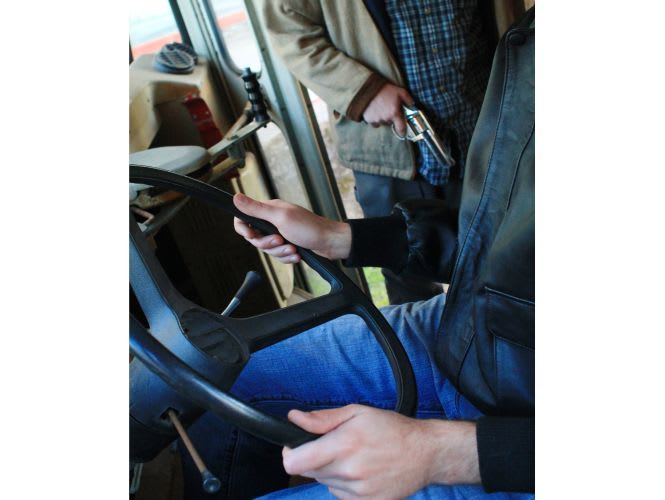
School bus drivers are on the road for the majority of the day and are often the only adult on the bus (unless an aide has been assigned to the bus), with connection to their operation's transportation office limited to communication via a cell phone or a two-way radio.
Given these circumstances, drivers must safely and effectively handle dangerous situations that may occur, such as a student bringing a weapon on a school bus, while waiting for help to arrive.
Specialists in this field offer their expertise to help pupil transportation officials prepare their drivers, discussing everything from the importance of driver awareness to the value of training and emergency response procedures.
Pupil transporters also share the steps they have taken in this arena, detailing their operations' practices, instruction efforts and policies.
1. Encourage driver vigilance
Those involved in providing instruction on weapons incidents say that it is crucial for school bus drivers to remain alert while they are transporting students.
Bret Brooks, a senior instructor for Gray Ram Tactical LLC in Higginsville, Mo., as well as a full-time police officer, SWAT team sniper and a captain in the U.S. Army, says there are previous and immediate indicators that can help drivers determine whether an incident may occur.
"Previous indicators include things like, has a student talked about bringing a gun or another type of weapon to school in the past? Has a student brought a weapon to school before?" Brooks explains. "Immediate indicators include unusual bulges around the waist — that's typically where students will try to hide a weapon."
Brooks also says that if a student has a gun in his or her waistband, the driver will usually see the student continually touching the weapon to make sure it is still there.
"They're mentally uncomfortable with having the weapon, so security checks can be a dead giveaway that they have something that they shouldn't," Brooks explains.
Pupil transportation officials understand the importance of driver vigilance, incorporating discussions on the topic in their in-service meetings.
"We focus on drivers keeping their ears open all the time. Anytime something is reported to a driver, such as a threat from a student to bring a weapon to school, we emphasize that the driver needs to report those incidents immediately," says Gary Thomsen, transportation director for Evergreen Public Schools in Vancouver, Wash. "We deal with it that day, including making a home visit with school administrators and law enforcement offi cers, if necessary."
Jim Ellis, transportation supervisor for Moravia (N.Y.) Central School District, says that in conjunction with driver awareness, it is essential to establish good relationships with students.
"We discuss the importance of drivers and attendants establishing trustful and positive relationships with their students as a preventive measure so students feel they can report their own suspicion of another student carrying a weapon without fear of it being handled clumsily," Ellis says.
Equipping school buses with surveillance cameras can also aid in monitoring students.
Roosevelt Carter, transportation supervisor for Madison County Schools in Huntsville, Ala., has cameras installed on 85 percent of his buses, and he believes the cameras have helped deter students from bringing weapons on the buses.
"We also ask that the drivers survey the back of the bus through the rearview mirror," Carter says. "If the driver suspects that something is going on that shouldn't be, we'll pull the tape and review it."
[PAGEBREAK]
[IMAGE]492[/IMAGE]2. Partner with community agencies for training
Offering training for drivers that addresses the possibility of students bringing weapons on school buses will strengthen their ability to deescalate incidents.
Thomsen recruits commissioned police officers who work at Evergreen Public Schools; the officers speak to the drivers about emergency scenarios that could occur on a bus, what they should and should not do, etc.
"We work very closely with our SWAT team as well. They work with our mechanics on how to put our buses out of commission if necessary so that they can't operate," Thomsen says. "The drivers also know how to shut the battery off in the event of an emergency."
Beyond working with police and SWAT officers, drivers are given tips on what to do in a variety of emergency situations. "If it's a case where someone is forcing a driver to do something against their will, we provide tips for them, such as acting like the bus is malfunctioning, so they need to call for help," Thomsen explains.
Moravia Central School District's transportation staff has also partnered with local law enforcement agencies and state troopers for training sessions, but seeing an incident occur, followed by the driver's response, has also proved effective. "We show a tape of a driver who had a student fire a gun on his bus — he handled it marvelously," Ellis says.
Central Bucks School District in Doylestown, Pa., has developed a comprehensive three and a half-hour training program for its school bus drivers on weapons incidents and other emergency situations, and how to respond to each.
As part of the program, SWAT team officers review with the drivers in a 30-minute presentation how they would respond to a hostage incident where weapons are involved.
"We gave all drivers a one-page laminated paper with all of the basic actions they should take under certain emergency situations and a small manual that they keep in their buses with information covered in the program," says James Czyz, transportation manager. "We also created another booklet for our office staff that describes the procedures they should follow if drivers call in and need assistance during an emergency."
Supplemental resources
There are numerous other training resources on weapons awareness and emergency prevention that can provide pupil transportation officials and their bus drivers with valuable information.
Brooks says that Gray Ram Tactical offers a program that can be applied to the pupil transportation industry. The instructors have had many years of experience, and they can personalize training for the audience they will be speaking with.
Safe Havens International, a nonprofit organization in Macon, Ga., also offers instruction on these topics.
"One of the things that we emphasize in our training is stress reactions," says Executive Director Mike Dorn. "When your heart rate skyrockets, you can make bad decisions. You should keep the heart rate down to help you think clearly, and you'll have better fine motor skills to help operate the bus."
One way to slow a rapid heart beat is through what Dorn calls "combat breathing." This entails taking deep breaths, holding them and then slowly exhaling.
Dorn also recommends free online training courses offered by the Federal Emergency Management Agency, specifically National Incident Management System (NIMS) courses.
"NIMS is an information resource management system that helps people make decisions quickly and under pressure," he explains. "It also teaches them how to work with multiple organizations — school officials, police and fire department staff, etc. — when an incident occurs."
For more information on NIMS courses, visit http://www.fema.gov/emergency/nims/NIMSTrainingCourses.shtm.
The following are additional resources that pupil transportation officials have found helpful:
The Crisis Prevention Institute, http://www.crisisprevention.com/.
Grace Under Fire: Establishing a Culture of Safety and Learning the Skills for Calming and De-escalating Aggressive Individuals, by Ellis Amdur. (Visit http://www.edgework.info/ and click on the "Verbal De-escalation of Aggression" link, then "Social Service Professionals," for more information about the book.)
School Transportation Security Awareness (a DVD that depicts a hostage situation on a bus).
[PAGEBREAK]
3. Generate procedures for effective emergency response
Equally important to training bus drivers on weapons incidents is establishing policies and procedures for drivers to follow in the event of such an emergency.
Dorn encourages transportation officials and their bus drivers to work with law enforcement and school district administrators to generate policies and procedures for three distinct weapons incident-related possibilities:
There is a suspicion or an indication that a student has a weapon on a bus.
A student has used a weapon on a bus and has injured others.
A hostage situation.
Moreover, every school bus driver should receive a written copy of their department's response procedures for these scenarios, and they should be trained on how to execute the procedures.
Dorn says the combination of establishing response procedures and training drivers on these procedures will "build confidence, which is something that will keep people from panicking."
Pupil transportation departments' procedures for resolving weapons incidents are similar, usually involving communication with the transportation office to notify the rest of the staff (if possible), followed by a call to local law enforcement.
Evergreen Public Schools drivers have been instructed to contact the dispatch office through the two-way radios on the buses, say "code red" and give their location to the dispatchers. A code red clears the radio so that other drivers cannot call in during the emergency. It also notifies the dispatchers of the seriousness of the situation and that law enforcement will need to become involved.
Thomsen says the office staff would then try to get as much information as they can from the driver about the situation.
"Anything a driver can do to keep the situation calm is key," he adds. "That usually means talking to the student. If the opportunity exists for the driver to evacuate the rest of the students to isolate the individual, that's even better."
Ellis expresses a similar sentiment. "We train drivers and attendants that their priority in a weapons incident is the welfare of the other children on board. Their first goal is convincing the student (or other party) with a weapon to let the other students off the bus," he says.
Ellis also has his drivers use a code. If a driver suspects that a student has a weapon on the bus, he or she calls base by radio and says, "I won't be able to take that trip to Pennsylvania we talked about." The office staff then contacts law enforcement, which intercepts the bus en route.
However, he notes that if a student actually displays a weapon, the driver uses plain language — not a code — over the radio to describe the situation. Law enforcement is then sent to the scene.
Central Bucks School District's transportation department has had a panic button installed on the instrument panel of its buses to assist drivers in an emergency. Czyz asks his drivers to contact the transportation office whenever possible in a dangerous situation, but he says that when the drivers press the button, it sends a signal to the dispatcher that there is a problem and then the office staff can, through its GPS, locate the bus and determine the best response based on what the driver can tell them.
To further enhance safety for their drivers and the students they transport, Madison County Schools and Moravia Central School District prohibit their drivers from searching students for weapons or trying to disarm students.
Both Brooks and Dorn agree that this is a good practice. "By trying to search a kid for a weapon, you can push that into a shooting, hostage or a stabbing situation," Dorn explains. "We normally want the search to be conducted by the police."
More Safety
School's Back. Here's What Happened to Traffic, Speeding & Distraction
What happens to traffic when school resumes? New data analysis examines changes in distracted driving, congestion, and speeding around schools.
Read More →
Geotab Expands Fleet Safety Tools With Video Coaching, Risk Insights
New safety and video capabilities aim to help fleet managers assess risk, support drivers, and take targeted action through video coaching, red-light violation detection, and more.
Read More →
How to Build a Better School Bus Driver Training Program
Is it time to strengthen your driver training? Here’s how to pick the right talent and improve recruitment, retention, and safety. This video is brought to you by IC Bus.
Read More →

Recent School Bus Accidents Leave 2 Dead, 2 Injured
Four school bus crashes in Florida, Illinois, and Georgia highlight risks in transportation lots, at bus stops, and during student loading and unloading.
Read More →
When Every Second Matters, Clarity Keeps Routes Moving
From routine delays to urgent incidents, strong communication practices help drivers, dispatchers, schools, and families respond with confidence.
Read More →
What Happens When a School Bus Catches Fire — and What Can Help
School bus fires are rare but can be devastating. Learn how advances in fire suppression and asset protection help fleets detect fires earlier, reduce damage, and improve safety.
Read More →
Geotab Launches Tool to Help Fleets Investigate Road Incidents
Geotab Investigations combines telematics data, video, documents, and other evidence to help fleets reconstruct incidents, resolve claims, and determine what happened.
Read More →
Texas Sixth Grader Wins 2026 National School Bus Safety Poster Contest
Sai Darshana Yekolu of Moseley Middle School in Prosper, Texas, was named the newest winner for her artwork, bringing the theme of “Safe Rides, Everyday Heroes” to life.
Read More →
Doing More With Less: How Transportation Directors Can Prioritize Safety Amid Budget Uncertainty
With diesel prices soaring and nearly one-third of transportation directors expecting budget cuts, maintaining student safety has never been more challenging. Download this guide to learn how leading districts are prioritizing risk, funding critical safety technology, and building stronger budget cases with data.
Read More →
Walton County Schools Adds Gatekeeper Stop-Arm Enforcement System
The Florida district will deploy Gatekeeper’s updated Student Protector technology, which now incorporates AI to improve video evidence.
Read More →