




3 reasons for bus drivers to get fit, and how to get there
For school bus drivers, obtaining a basic level of fitness and maintaining a healthy weight will enhance safety, professionalism and personal wellness. The job can actually provide a good structure for making time to exercise and eat well.
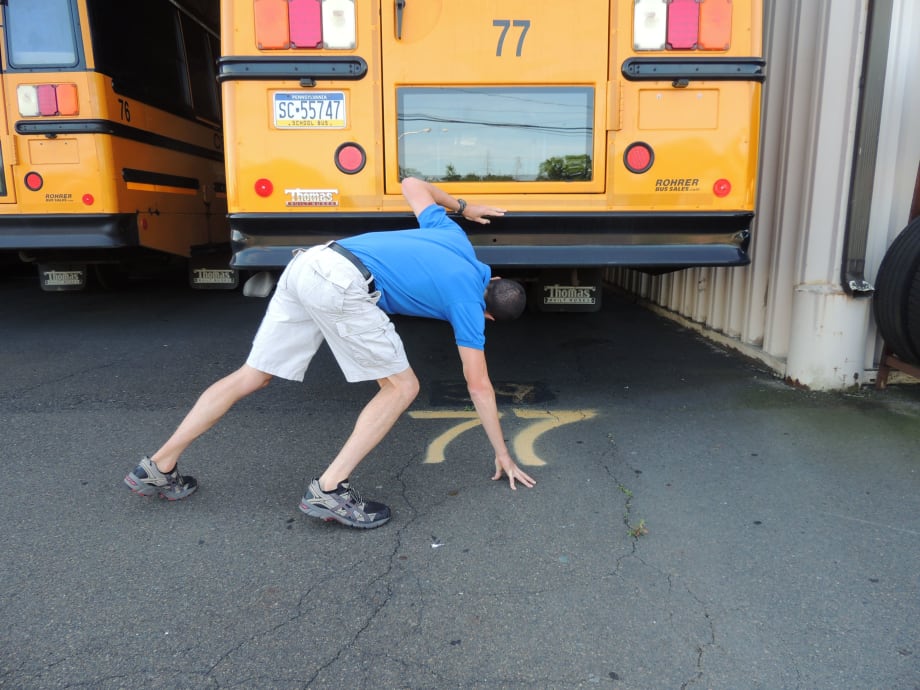
“Bus drivers top obese workers list.” As I read the USA Today on May 19, this headline grabbed my attention.
As someone with a passion for the school bus industry as well as an unyielding appreciation for health and wellness, I couldn’t help but read on.
Amy Langfield wrote the article and hit upon an honest but stinging truth.
According to Gallup, a study of 14 occupation groups ranked transportation workers as having the highest obesity rate, 36%. For every three individuals in our profession, more than one is obese.
This statistic is very unfortunate, but the good news is that the window for change and improvement is wide open. There are many reasons why this generally unhealthy state shouldn’t be and why it doesn’t have to be.
The following points will highlight the importance of improving driver health and hopefully will be the catalyst for some to improve their habits and see results.
Why it is important
School bus drivers and other transportation workers should obtain a basic level of fitness and maintain a healthy weight for three main reasons: safety, professionalism and personal wellness.
1. Safety is of the utmost importance in our line of work. We check our buses to ensure that they are in working order. We schedule and plan routes, carefully load and unload students, and take extra precautions at intersections and railroad crossings — all in the interest of safety. The condition of the driver behind the wheel is a crucial piece of this safety chain.
A driver who is fit and healthy can better manage the acute operations of the bus and possesses more endurance for long and arduous trips. A healthy bus driver is also less likely to have a medical emergency while operating the vehicle. Although not an everyday occurrence, bus evacuations and emergency situations could potentially call upon the physical capacities of a driver.
[PAGEBREAK]
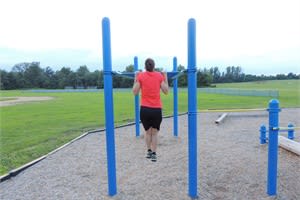
Resourcefulness is good in getting exercise. For example, an elementary school may provide a playground area, which could be ideal for calisthenics.
2. Professionalism is connected to many factors, but appearance and function are significant among them. Whether it is fair is not the issue here. It is just the reality that individuals and their entire field are going to be judged by impressions.
Bus drivers who keep themselves in good or at least functional condition help to represent us in a positive light. Those outside of the industry will make judgments of us whether we like it or not.
Our work is challenging and important. Because of that, we deserve to be respected, but setting an image that garners this respect is up to us.
People outside of our industry are looking at us, but we are also being watched by people within our very own buses. Students ride our buses each and every day. As bus drivers, we are role models.
Perhaps not everyone is like me and, as a child, looked up to their bus drivers with great adoration. Nonetheless, some do — maybe more than we realize — and we have the power to have influence.
3. Personal wellness is the third reason for bus drivers to obtain and maintain an appropriate weight and level of fitness. This might sound selfish at first, but ultimately it can lead to us being better able to perform our jobs and serve our students.
Being physically fit will simply make us feel better. Beyond all of the physical issues, being fit can decrease depression and improve our overall well being. In the end, it can lead to a longer and more productive career.
How we can improve
Despite the current physical state of the transportation industry, it is promising to know that it doesn’t have to be this way. The structure and the opportunity for school bus drivers to live healthy lifestyles are certainly present. In fact, I believe we actually have distinct advantages over people who work the normal 9 to 5.
Although the hours for bus drivers can vary, many of us drive in the a.m. and p.m. with a break in between. This affords several positives.
First, we have a window for working out after our a.m. run and another after our p.m. run.
Second, a midday break provides time for planning and preparing a healthy lunch and dinner. There is no excuse for eating fast food when you have a four-hour lunch break. For those of us with midday runs or trips, things can be different. However, planning and forethought can usually go a long way.
Another advantage that we as bus drivers possess is the ability to hang up our keys and leave the job behind. Although this might not always be the case for directors and other management personnel, drivers are generally not burdened by work-related e-mails and cell phone calls outside of working hours.
Again, this enhances our opportunities to exercise and plan meals without distraction. It even allows for reducing stress and improving sleep. Both of these factors can be easily taken for granted, but sleep and stress can largely impact our weight and health.
[PAGEBREAK]As I mentioned before, trips can throw a curveball into a routine. However, they don’t always necessitate skipping workouts or making poor food choices. Depending on where you are traveling, you may have some downtime, and there may be fine areas for taking a walk or a run.
Resourcefulness is good, too. For example, an elementary school may provide a playground area, which could be ideal for calisthenics. A secondary school may have a track, which could be ideal for a cardiovascular endeavor such as a brisk walk or run. And it is always wise to pack a healthy lunch ahead of time.
Don't blame the seat
Some people blame the high obesity rate on the sedentary nature of our job. Let’s explore this. We’ll assume that we work for eight hours each day. We sleep for eight hours each night. This leaves us with eight other hours. I truly believe that anybody can fit a workout of some sufficiency somewhere into that remaining eight-hour timeframe.
Let’s consider something else in this "sedentary nature" concept. Although we are not necessarily striving to become professional athletes, they provide a lesson for us.
The observation of many world-class athletes shows them primarily doing two things: working out and resting. Many actually spend very little time walking around or performing moderate exercise. They exercise purposefully, and then they rest and recover.
Personally, I find such a routine rather effective. I get my exercise during my off hours and enjoy my seat time behind the wheel. There is no need to be exercising for an entire workday.
Fitness tips for bus drivers |
• Work out after the a.m. run and/or after the p.m. run. |
Start small, keep it simple
That brings us to the actual nature of exercise and diet. Small things can be significant in themselves and can also progress into even greater improvements.
A simple 10- or 15-minute walk or a quarter-mile jog, or less, are great starts and can progressively lead to physical improvements. Cutting out one snack or replacing one soda with water can be steps in the right direction. Begin gradually and take one step at a time.
When it comes to health and fitness, we really don’t need complicated workout routines and trick diets. Those may be vital for professional athletes, but overall wellness and weight control is a simple process. I did not say easy, but simple.
As a society, our knowledge of exercise, diet and lifestyle is vast. Ultimately, it comes down to application and being conscientious. When we give conscientious thought to what we are actually doing to our bodies and plan ahead, our behaviors can change. With that our habits can change.
If more of us take these steps, our industry will become healthier as a whole. We should do it, and we can do it.

Larry Hannon Jr. is a school bus driver for the Centennial School District in Warminster, Pa., and head track and field/cross country coach at Delaware Valley College in Doylestown, Pa. He also serves as a volunteer judge at local and state school bus safety competitions. His father, Larry Hannon Sr., is a 37-year driver for Centennial and has placed first at the School Bus Driver International Safety Competition nine times.
More Management

Zum Secures Continued Financing Support for School Bus Expansion
Generate Private Credit has financed approximately $75 million in school bus deployments across three states, supporting more than 500 buses as Zum expands across the county.
Read More →
Beyond Discipline: A Different Approach to Student Behavior on the Bus
After implementing a dean of students program in Oregon, North Clackamas is seeing positive improvements. Here’s how it worked. The Route is brought to you by IC Bus.
Read More →
A Dean of Transportation's Different Approach to Student Behavior on the School Bus
After implementing a dean of students program in Oregon, North Clackamas is seeing positive improvements on the bus. Here’s how it worked.
Read More →

Inside NAPT ACTS 2026: Highlights from Louisville
From federal updates and student behavior strategies to new school bus technology and industry awards, see highlights from NAPT ACTS 2026 in Louisville.
Read More →
Meet the 2025 School Bus Driver Hero Winner: Annette Brown
We caught up with Wa-Nee Community Schools' Annette Brown on site at SBFX, where she was named the 2026 School Bus Driver Hero Award winner. Hear about her reaction, what she loves most about being a school bus driver, and more!
Read More →
Predictability Is Like Ketchup (According to 6-Year-Olds)
To students, a different school bus can feel like a full-blown crisis. One driver reflects on why familiar routines, showing up on time, and being reliably boring matter more than we think.
Read More →
Samsara Launches Free Driver Rewards Program
The new Driver Perks program gives eligible professional drivers access to discounts and offers without adding a cost for participating fleets.
Read More →
How Tax-Exempt Municipal Leases Can Help Finance School Buses
Let’s explore school bus financing options, including municipal leases, vendor payable accounts, and balloon payments, and how they can help stretch fleet budgets.
Read More →
Nominate Rising School Transportation Pros Under 40!
We’re searching for the next generation of leaders making an impact across the K-12 student transportation industry to recognize as SBF’s 2027 Trailblazers. Nominations are open now!
Read More →
Changing Lanes: BusWhere, EverDriven, InterMotive, Summit School Services, Switzer-Carty & Thomas Built Buses
Check out who's been hired, promoted, and appointed to leadership positions at various school transportation suppliers, contractors, and manufacturers.
Read More →