




2023 Special-Needs Survey: Bus Production Lead Times, Lack of Aides Among Several Pain Points
The 2023 survey, which will appear in the February print edition of School Bus Fleet, offers a glimpse of how special-needs transportation providers are faring and what challenges they face.

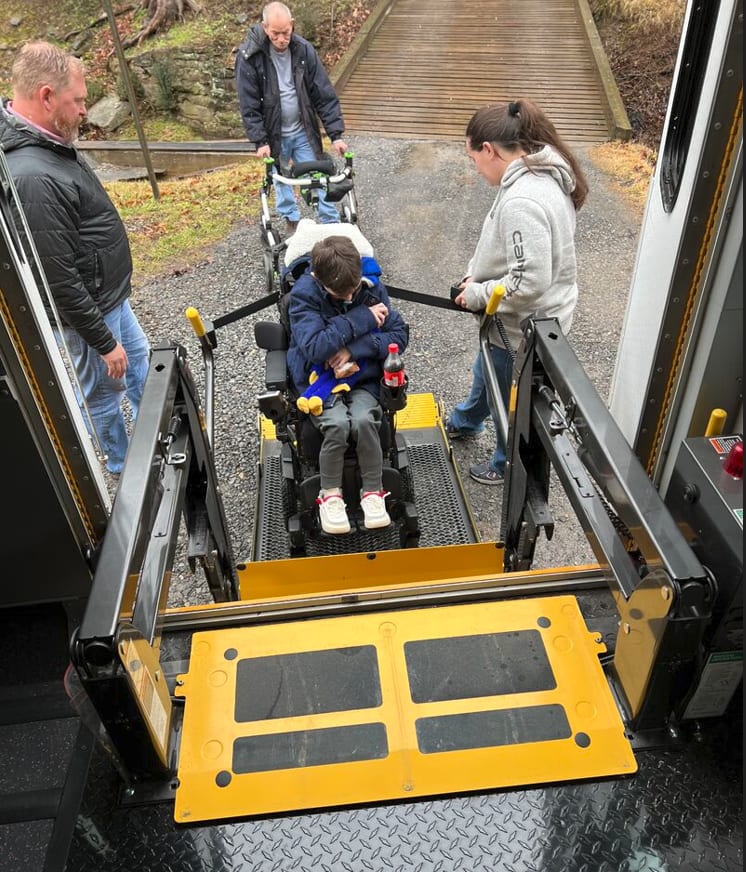
During a pilot project with GreenPower Motor Company, a Wyoming County (West Virginia) Schools student is helped aboard a Type A Nano BEAST electric school bus.
Photo: GreenPower Motor Company
The school bus driver shortage doesn’t seem as drastic among special-needs operations in our latest special-needs transportation survey, but that certainly doesn’t mean everything’s running like a finely tuned machine.
About 60% of responding special-needs transporters told School Bus Fleet that they’d seen limited or no impact from the ongoing driver shortage in recent months, while nearly 30% still aren’t close to full staff.
What they really need, it seems: fresh blood at the wheel and more aides and substitutes to help. Oh, and school buses produced on a quicker timetable.
Special-Needs Transportation Pain Points
The 2023 survey (sponsored by AMF-Bruns of America and appearing in the February print edition of School Bus Fleet) offers some glimpses at what the front-line workers are experiencing in the field. Among the pain points described in the survey:
Scheduling special-needs training during the school year.
Hiring younger drivers.
Longer routes challenging students and drivers.
Lack of aides and substitutes.
Time required to certify new drivers.
Wait times for production of new school buses.
Meeting the Need
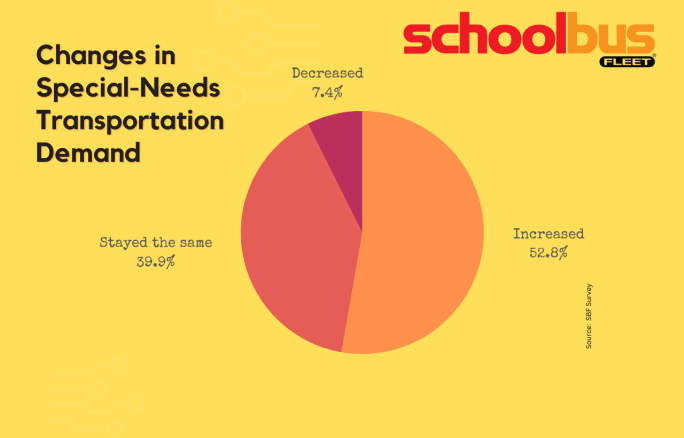
For more than half of the survey respondents, demand has increased for special-needs transportation services during the past year.
Image: Canva/SBF
More than half the respondents reported that their operation’s percentage of special-needs passengers increased compared to last year, while 40% indicated the demand stayed the same. More than 7% reported a decline.
How are special-needs drivers compensated compared to general-education drivers? Nearly 90% of respondents indicated that their drivers make the same as their general-education counterparts, while 9% make more and less than 2% earn less. That’s on par with the results from 2022.
About 90% of respondents said that their buses carry an aide/attendant on board, while 10% do not.
What They’re Driving
Only about half the operations surveyed are using Type A school buses for their special-needs transportation fleets. More than 64% use Type C “conventional” buses – and 76% of respondents said that some of their special-needs students are mainstreamed on regular routes. More than 31% use vans. Of the fleets that use vans, most – as in previous years – are driving Ford Transit and Dodge Caravan vehicles.
Nearly half the respondents indicated that supply chain issues and delayed OEM lead times at least moderately affected their ability to effectively transport special-needs students, while 33% reported no problems on that front. About 10% reported it was severe or critical.
Turning to Technology?
Less than two-thirds of respondents indicated that all their vehicles are equipped with electronic systems that remind drivers to walk to the back of the bus to check for students after a run. Less than 20% reported having no such systems on board, which is up from about 14% last year.
About 82% equip their vehicles with video surveillance, which is on par with 2022.
Few operations (about 8%) indicated that they’re using electronic tracking systems such as Z Pass) for their special-needs passengers. That’s down from 10% in 2022.
Getting Outside Help
Is it getting bad enough for some to outsource their operations?
For some, yes, but 63% indicated they aren’t considering outsourcing during the next 12 months. About 15% are currently outsourcing, while 3% are thinking about making the move this year. And 12% said they might outsource, depending on what happens during the next year.
Of the operations that are outsourcing, nearly 58% are using an alternative transportation service like EverDriven or HopSkipDrive, while 38% are using a school bus contractor operation.
Check Out: Editor's Note: A Year on the Rebound
More Special Needs Transportation
BraunAbility Introduces New Safety Barrier for Wheelchair Lifts
LiftSentinel is designed to add another layer of protection during wheelchair loading and unloading and can be retrofitted to many existing commercial lift installations.
Read More →
HopSkipDrive Launches New Safety, Driver Consistency Features for 2026-27 School Year
The company’s free ride recording, live ride tracking, and consistent driver assignments aim to improve safety and continuity for diverse student transportation needs.
Read More →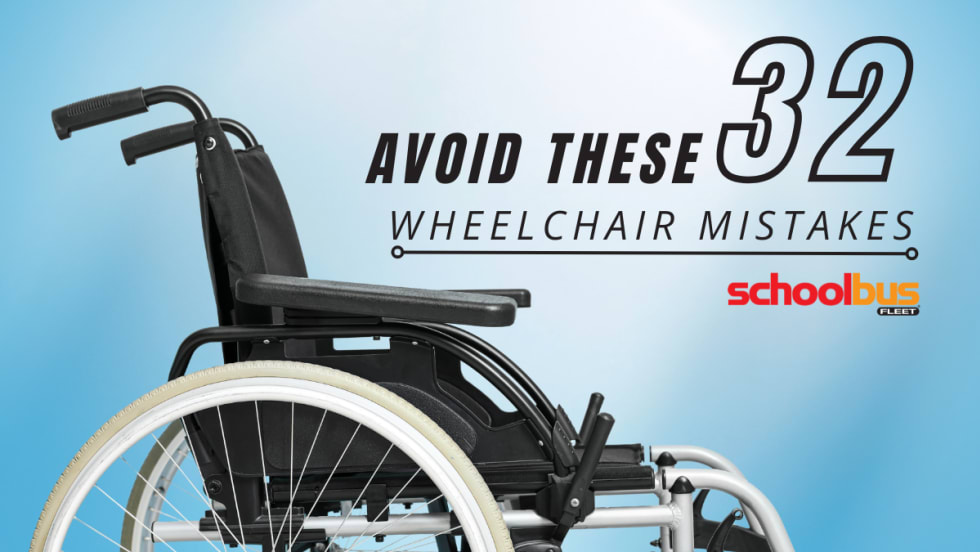
The Most Common Wheelchair Securement Mistakes on School Buses (and How to Fix Them)
Small missteps in wheelchair securement can have serious consequences. Here are 32 tips from experts to reduce risk and increase student safety on the bus.
Read More →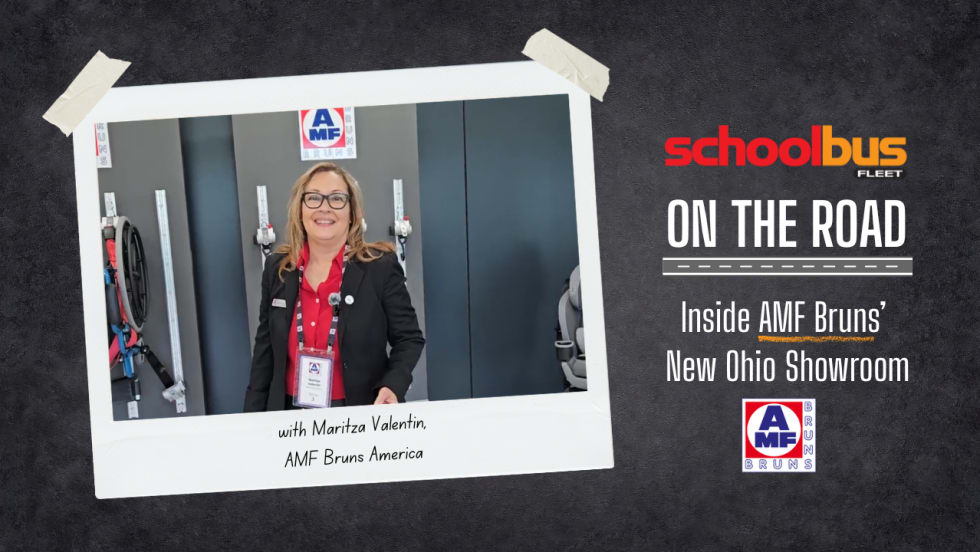
Inside AMF Bruns’ New Showroom: School Bus Securement Solutions Explained
Go inside AMF Bruns America’s new Ohio showroom with Maritza Valentin to see its FutureSafe technology, driver training tools, securement systems, and seating innovations.
Read More →
What AMF Bruns’ New Facility Means for Customers [Video]
Inside AMF Bruns’ new Stow, Ohio, operations: See how expanded space and innovation will enhance customer support and operations.
Read More →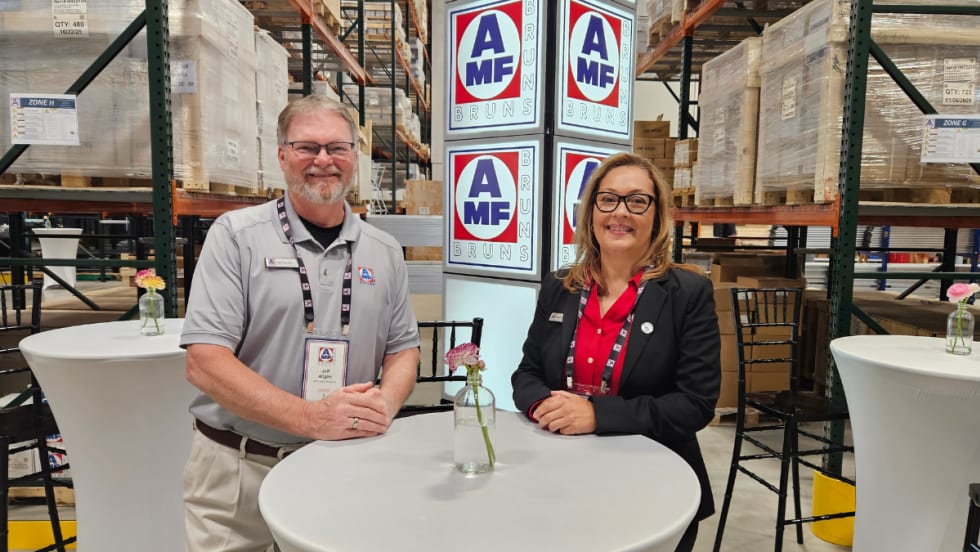
AMF Bruns Expands in Ohio, Investing in Growth and Community
With expanded production space, local investment, and a growing workforce, AMF Bruns is scaling its U.S. presence. Here’s an exclusive first look inside the new Stow, Ohio, HQ.
Read More →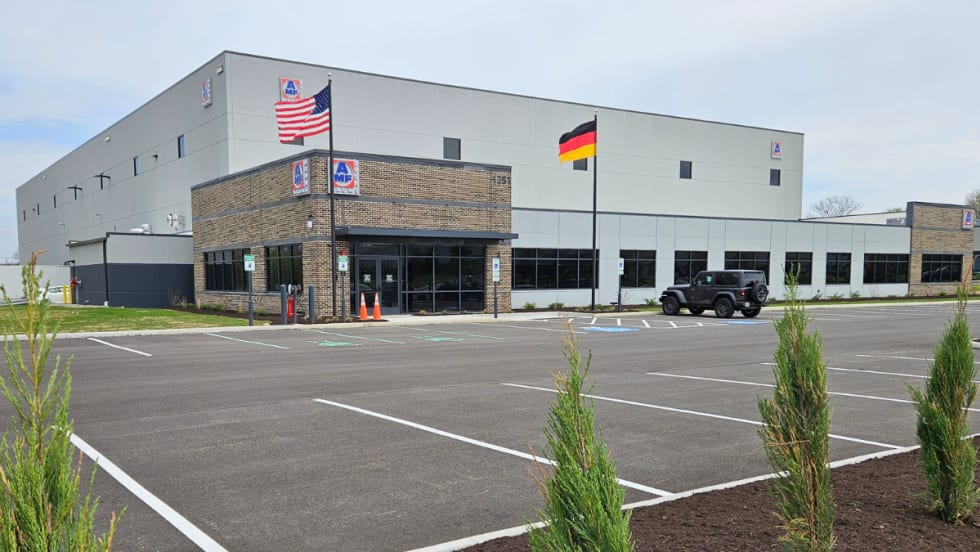
Inside AMF Bruns of America’s New Ohio Manufacturing Facility [Photos]
Take a behind-the-scenes look at AMF Bruns of America’s new 41,000-square-foot Stow, Ohio, headquarters, featuring advanced manufacturing, expanded space, and future-ready mobility solutions.
Read More →
First Student Boosts Student Support in Wichita & Texas
First Student and Wichita Public Schools are using behavioral support strategies to improve student ride experiences, while a separate initiative expands access to after-school programs through a bus donation.
Read More →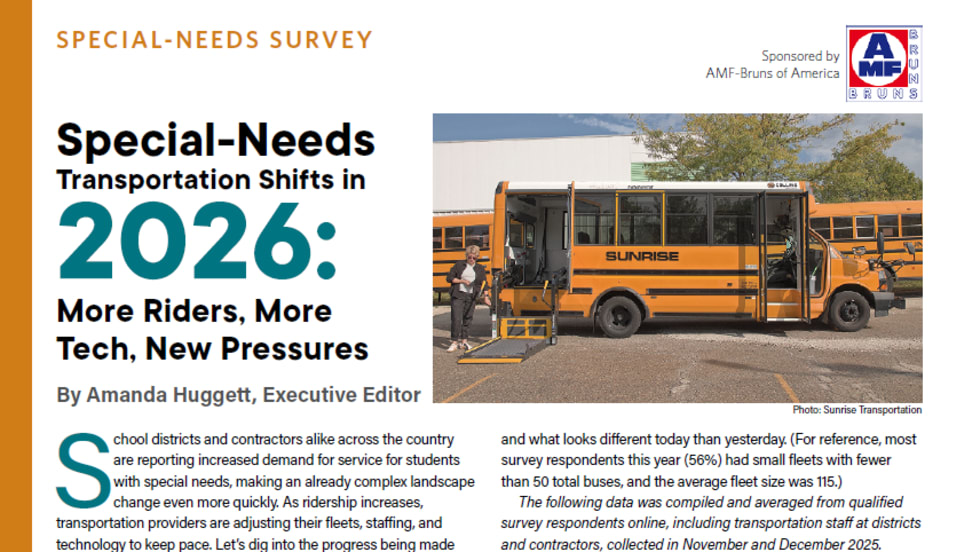
2026 Special-Needs Transportation Survey
What’s changing in special-needs transportation? This year, student transportation operators report a rising need, easing driver shortages, growing tech adoption, and evolving challenges. Sponsored by AMF Bruns of America.
Read More →
The Lived-Experience Gap in Mobility Tech: An Expert Take on Safe Student Transportation
Brianna Pauwee, a product application specialist at AMF Bruns of America and a wheelchair user, drops in to The Route to share practical securement and training insights, plus the story behind the new “Beyond Mobility” podcast. The Route is sponsored by IC Bus.
Read More →