




16 key school transportation issues in the New Year
NAPT News & Views: As we begin a new year, we want you to have a snapshot of the issues we consider front and center for our industry. Here are some issues on the NAPT public policy radar screen in 2015.

Peter Mannella is NAPT secretary and Region 1 director.
Some might say the business of yellow transportation is very predictable year to year and just marches on, striving to provide good, reliable and safe service as it has for generations.
The reality is things change constantly, and complacency is never the right default. As transportation/education professionals, we must constantly learn from the past and engage enthusiastically in new thinking to position ourselves and our profession to best advantage.
Indeed, this is one of the primary reasons for NAPT: to anticipate problems and opportunities; provide you with factual information to help you in your job; advocate for you nationally on the political and regulatory scene; and create training opportunities.
Critical to accomplishing this is developing a public policy agenda that takes measure of the realities we face and encourages your thoughtful engagement locally.
So, as we begin a new year, we want you to have a snapshot of the issues we consider front and center for our industry. Some are “evergreens” you know well already; others are new. Some need more attention than others.
Here is the NAPT public policy radar screen:
1. The yellow school bus is the safest, most economical, most energy-responsive and most environmentally friendly way to transport our children to and from school each day.
2. There is an important link between the yellow school bus and the performance of our children in the classroom; ensuring access to the school bus helps to ensure access to educational services and ultimately educational attainment.
3. The color of a school bus is an integral attribute of its unique design, and the industry must ensure that the color of a school bus continues to meet its objective as a safety factor.
4. The National Highway Traffic Safety Administration (NHTSA) has stated that its best advice on the matter of seat belts in large school buses — superseding all other guidance — is contained in a single document: the Aug. 25, 2011, denial of a petition requesting that NHTSA mandate seat belts in large school buses. We encourage everyone to read the entire petition denial notice carefully.
5. School transportation administrators should engage in continuous professional education and should be certified in industry practices and knowledge.
6. Illegal passing of stopped school buses exposes our children to the risk of injury and death. It must be eliminated through standardized penalties, simpler enforcement and greater public education efforts.
7. Bullying has no place on the school bus, and school districts should have clear and well-considered policies for handling such events and behaviors.
8. All school bus drivers and attendants should receive relevant and appropriate training in transporting all students, but particularly in the transportation of students with disabilities and special needs.
9. It is preferable that all children ride on yellow school buses, but in those areas where this is not possible, children should be provided with the safest possible transit systems or safely constructed and well-equipped infrastructure to get them to school.
10. Leaving children unattended on school buses must not be condoned in any way because it exposes our children to risk, is a frightening experience for the children, and erodes public confidence in the safety and security of the yellow school bus.
11. School transportation operators should utilize computer-based routing and scheduling systems to attain maximum efficiency in their operations and safety for students.
12. Taxpayers are entitled to know that school bus operations are conducted according to benchmarked standards and quality measures.
13. School bus drivers should not engage in text messaging or similar activities while operating a school bus.
14. School bus drivers should always utilize their lap-shoulder seat restraints on the school bus.
15. The federal government should appropriate full funding of IDEA (Individuals with Disabilities Education Act) and special-education services, including costs related to transportation.
16. The federal and state governments should invest appropriately in improving our highways and bridges to help ensure safer passage of the nation’s school buses and the children we carry on them.
Please keep these messages in mind as you engage professionally in your communities. When a reporter comes to you with questions, or when there are budget or other school bus-related discussions, these straightforward statements should help you communicate.
More Management

STA Acquires Sunrise Transportation
Student Transportation of America expands in Illinois and Connecticut through Sunrise's fleet of nearly 1,000 vehicles.
Read More →
EPA Opens $180M DERA Funding Round for Diesel Upgrades
The 2026 Diesel Emissions Reduction Act program seeks applications from eligible organizations to accelerate the retirement of legacy diesel vehicles.
Read More →
HopSkipDrive’s CareEngine Targets the ‘Exceptions’ in Student Transportation
The new platform works alongside districts’ existing transportation management systems to coordinate specialized rides, automate last-minute changes, and turn ride data into operational improvements.
Read More →


The Right Ride for Every Student: Navigating the New Student Transportation Ecosystem
How should districts blend school buses with small-vehicle transportation and other options? EverDriven CEO Mitch Bowling discusses safety, costs, partnerships, and strategy.
Read More →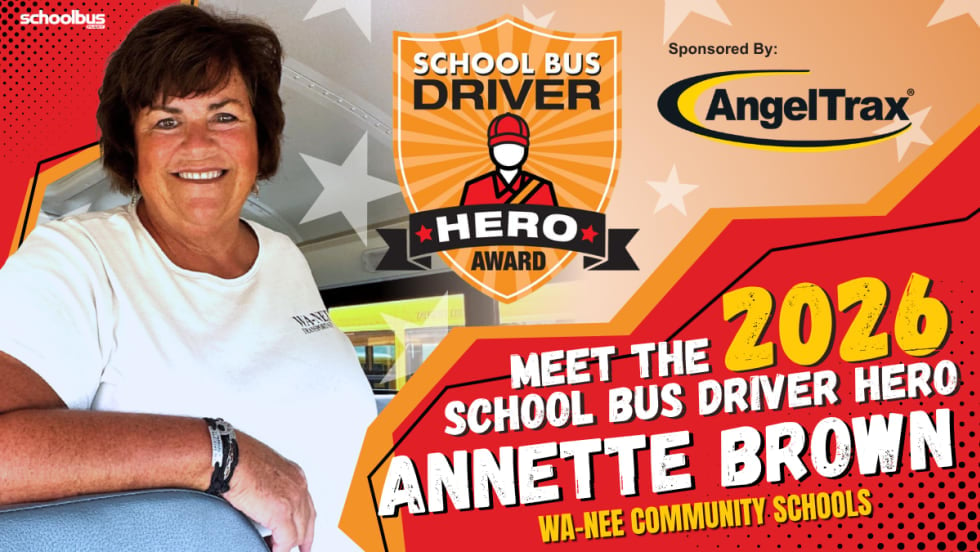
Annette Brown Always Takes the Extra Time: Meet Our 2026 School Bus Driver Hero
For more than 30 years, the Wa-Nee Community Schools driver has treated students like family, combining safety, compassion, and servant leadership to make a lasting difference on and beyond the school bus.
Read More →
How to Build a Better Driver Training Program
Ready to boost up your school bus instructor training? Here’s how to pick the right talent and improve recruitment, retention, and safety.
Read More →
CALSTART and Forth Combine to Form Catalyst Mobility
The new name represents a renewed vision for the nonprofit focused on advancing clean, equitable, and affordable transportation solutions that move people and goods.
Read More →
What Makes a Great School Bus Driver Trainer?
Choosing the right school bus driver trainer takes more than experience. Learn six keys to selecting and developing trainers and evaluating program effectiveness.
Read More →
School Bus Contractors Expand Through New Deals, Acquisitions & Partnerships
STA's Canadian division acquires Ontario-based G&L Stevenson Transport; Durham School Services adds a new district in California; First Student expands in New Jersey; and Minnesota Coaches rebrands and acquires Halo Transportation.
Read More →
Logan Bus Company Rolls Out AI Phone System for NYC School Bus Families
A summer pilot found that AI agents could handle most routine calls, freeing up time for customer service staff to focus on emergencies and complex family concerns.
Read More →