




15 Ways to Get Your Operation in Shape
When school begins each fall, does your operation border on chaos? Will too many K-3 students get on the wrong afternoon bus? Will special-needs dri...
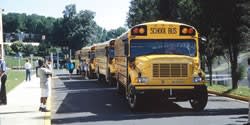
When school begins each fall, does your operation border on chaos? Will too many K-3 students get on the wrong afternoon bus? Will special-needs drivers, students and parents not have accurate schedule information?
Avoid such problems by planning now for this fall’s route implementation. Here’s a list of helpful tips to ensure that your operation is ready to roll when the first bell rings this fall.
1. Update and publish schedules early. Each fall, bus drivers, students and school staffs face a host of challenges:
Experienced school bus drivers are challenged with route changes or entirely new routes, while new drivers face even greater challenges.
Some children will be riding a school bus for the first time, and experienced riders will be in new schools under different busing conditions.
School staffs must find the time to place numerous students on the correct buses for their first ride home.
Addressing these scenarios properly is critical to the safe transportation of students, but many of these people do not think of school transportation until the day school begins.
It is our job to make all aware of the need for accurate schedule information, and to provide that information well before the start of the school year. Schedules must be easily understood so parent, child and school staff will be guided to the correct bus piloted by a driver who will transport the students confidently and safely to their destination.
2. Get the word out early. When regular-education bus schedules are available to school staff early, the transportation department can minimize the number of last-minute calls to the transportation office.
Develop procedures now so transportation office staff have bus schedules delivered to secondary schools before early registration (check with schools for dates, but it is usually the first or second week in August).
Elementary school secretaries should receive their schedules just after they return from break. Sending schedules out early requires that schedules be “frozen,” because changes made after distribution will not reach all students. Thus, no changes can be made once the schedules are sent out. If a change must be made after the “freeze” date, consider running buses on the first published schedule until the driver can notify students of the change. The old times should be followed for the first week of school.
{+PAGEBREAK+} 3. Bus identifiers. Route numbers should be posted on the right side of the bus by the entry door. Color-coded cards should be in the first student window on the right side.
For a good route sign system, try Reflective Image at www.schoolbussigns.com. If the bus has tinted windows, consider fitting the first window with clear glass. If students approach buses from the left side, make sure route identifiers are visible from the left side of the bus.
4. Bus lineup diagrams. Have someone with an artistic flair prepare bus lineup diagrams for all schools. Students and school staff should have a copy of their school’s lineup well before the start of the school year. Once the routes are frozen, route numbers can be entered on the diagrams.
5. Implement color-coding policy. If you do not use color coding of buses and hospital-style wrist bands, consider implementing the program for K-3 students. Strong, inexpensive paper wrist bands impregnated with fibers are available in various colors and can be ordered on the Internet. Have drivers give each child two — one for the wrist and one for the backpack.
We must provide school staff the necessary schedule information to match students to color-coded buses when the dismissal bell rings. Have schools schedule a kindergarten orientation a week before school starts. Stop information, colors and wrist bands can be given out at this meeting. Use your computer software to send student bus rosters for schools and drivers. Whatever student identification system is used, make certain that elementary school secretaries receive in-service training about a week before the start of school regarding bus lineup diagrams, bus loading protocols and procedures for “lost” students.
When the secretaries leave this meeting, they should know how to find the correct bus for every student before the dismissal bell rings each afternoon.
6. August driver in-service. Start planning topics and speakers now. Find a location that is fun and different. What date(s) will it occur? How long will it last? Before the end of the school year inform drivers of the date of the in-service and let them know whether attendance will be mandatory.
7. Preparations for driver bid. If drivers bid for routes, lock in the date the bid will occur. If you are in a union environment, be sure to include the union in setting up bidding procedures. After the regular drivers’ bid, assign open routes to substitutes and have them dry-run the route with the assigned bus well before the start of school.
8. Dry runs. After in-service and bidding and a few days before the start of school, consider requiring drivers with unfamiliar routes to make a mandatory dry run of their route, including locating their parking sequence at bus lineups at all assigned schools. If you do not have computer-generated driver turning instructions, get the project started now so they can be handed to drivers before their dry runs.
9. Orientation for new middle school/junior high school students. Consider approaching middle/junior high school principals with an opportunity to familiarize students new to their schools with bus schedules and campus orientation. Pick the students up at their regularly scheduled morning times and two or three hours later have the buses lined up as indicated in the line-up diagram for that school. This will lessen confusion of drivers and students on the first day.
{+PAGEBREAK+} 10. Give drivers copies of all schedules and lineups. On the first few afternoons, when students approach buses to ask where their bus is, rather than tying up the radio, make sure the drivers have all the answers with them.
11. Special-needs drivers. Make drivers responsible for contacting their parents with schedule information. During dry runs, drivers are to hand-deliver a letter to parents outlining schedule information, procedures for pickup, penalties for misbehavior, requirement that bus be met by an adult, procedure for changing stop location, etc.
Set up computerized schedules so that drivers get maximum student info from the route printout. Each run sheet should list the school’s phone number in the heading information. Each student record should include home phone number, adaptive equipment requirements, a disability information code and, if necessary, a short statement of special arrangements (for example: Do not seat near Joseph; keep Amy’s lunch in front; must wear safety vest at all times; must be met).
12. “Lost” students. Develop a procedure so that drivers with students on the wrong bus will know what is expected. For example, an afternoon route begins with a high school run. If a student boarded the bus in error, the driver should not disrupt the route timing by driving the student to his or her correct stop. Far better, the driver stays on the route and proceeds to the next school on time. A school administrator at the next school on the route can call the parent to come pick up the student. The same procedure should apply to the rest of the route, except the last run, where the driver can deliver children home without inconveniencing others.
13. School staff. Special-needs routes change continually, and drivers are required to keep parents informed of changes on their routes. School staff also need bus schedule information. To the extent possible, student bus rosters of special-needs students should be faxed to each school prior to the start of school.
14. Office staff. Will staffing be adequate during the first week of school to answer all incoming calls? If not, consider adding phone lines and hiring temporary clerical employees to give out schedule information and take messages for office staff. Normally, these workers should not be needed more than three or four days.
15. Driver recruitment. Advertise now and plan for a summer class with sufficient time to have drivers tested and ready before the August in-service. If your state performs driver testing, make sure to reserve testing time well in advance.
There are a lot more details, but you get the idea. Time spent in early planning is never wasted. It is personally rewarding to refine a system, which reduces the probability of mishaps — some that can be very traumatic for those affected.
Make it easy for all involved to be successful and then compliment them on how they made it look easy! I guarantee they’ll appreciate that you and your staff were behind their success.
John Farr is a school transportation consultant with more than 40 years of industry experience. He can be reached at johnhfarr@comcast.net.
More Management

How to Build a Better Driver Training Program
Ready to boost up your school bus instructor training? Here’s how to pick the right talent and improve recruitment, retention, and safety.
Read More →
CALSTART and Forth Combine to Form Catalyst Mobility
The new name represents a renewed vision for the nonprofit focused on advancing clean, equitable, and affordable transportation solutions that move people and goods.
Read More →
What Makes a Great School Bus Driver Trainer?
Choosing the right school bus driver trainer takes more than experience. Learn six keys to selecting and developing trainers and evaluating program effectiveness.
Read More →

School Bus Contractors Expand Through New Deals, Acquisitions & Partnerships
STA's Canadian division acquires Ontario-based G&L Stevenson Transport while Durham School Services adds a new district contract in California, First Student adds a New Jersey contract, and Minnesota Coaches acquires Halo Transportation.
Read More →
Logan Bus Company Rolls Out AI Phone System for NYC School Bus Families
A summer pilot found that AI agents could handle most routine calls, freeing up time for customer service staff to focus on emergencies and complex family concerns.
Read More →
From Intent to Impact: What I Learned About Leadership from TAPT
A Texas transportation supervisor shares lessons on self-awareness, accountability, managing stress and building trust — and why investing in leadership development matters at every stage of your career.
Read More →
NAPT Names 2026 Award Recipients, Hall of Fame Inductee
Who earned national recognition for their work in student transportation? This year, NAPT named five recipients of its 2026 awards for service, safety, and leadership, plus its newest Hall of Famer.
Read More →
2026 State of Student Transportation Report
Driver shortages. Rising costs. Growing safety expectations. More data, but not enough time to act on it. The 2026 State of Student Transportation Report reveals what transportation leaders say is putting the most pressure on their operations—and where they’re investing next. See how your priorities compare.
Read More →
How to De-Escalate an Angry Person: 5 Steps for Handling Workplace Conflict
What makes emotions run high, and how should you handle an angry colleague or parent? Follow these steps for staying calm, listening, showing empathy, and resolving conflict.
Read More →
What Readiness Looks Like This School Year
Learn about the challenges shaping the 2026–2027 school year, from persistent driver shortages and budget pressure to technology and readiness gaps. See how school districts are responding and adapting in Zonar’s 2026 Back-to-School Readiness Report.
Read More →