




Related: Pay Attention to the School Bus Industry Before It's Too Late
10 Keys for Contractors to Protect Business During COVID-19
Crucial practices include educating and negotiating with districts to continue compensation while buses aren’t running, following safety procedures consistently, and keeping abreast of loan and legal resources, experts say.

Nicole Schlosser・Former Executive Editor
6 min to read
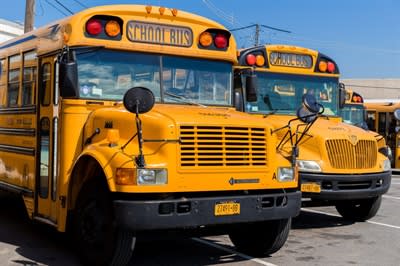
Photo courtesy Corey Muirhead
The COVID-19 pandemic continues to impose drastic changes on pupil transportation as school districts prepare to reopen, most likely in the fall. Meanwhile, many school bus contractors are still struggling to maintain their businesses — keeping employees on the payroll and buses maintained, up to speed on inspections and ready to roll when school resumes — with reduced or no payments from districts.
In School Bus Fleet’s recent webinar, “Getting Paid, Staying Afloat: How Contractors Can Cope With the COVID Shutdown,” three experts — Michelle Wiltgen, the assistant vice president and national commercial marketing manager for National Interstate Insurance Co.; Corey Muirhead, the president of the New York School Bus Contractors Association and executive vice president of Logan Bus and Affiliates in Ozone Park, N.Y.; and Curt Macysyn, the executive director of the National School Transportation Association (NSTA) — advised contractors on how to keep their businesses going.
The presenters discussed insurance and liability issues sparked by the pandemic; safety guidelines; how to counter-arguments that some school districts are using as a basis for not paying contractors and negotiate; and the latest information on federal loan programs. Here, SBF shares some takeaways from that webinar.
1. Educate Customers, Stakeholders.
School bus contractors perform several services besides supplying buses and drivers. Despite school closures, Muirhead says, these services are still being provided, including driver physicals and medical exam reports, CPR and first aid certification, and bus inspections. Companies that include these ancillary benefits, as well as administrative costs in their bid prices provide the services whether or not transportation is running.
However, school district administrators and school boards may not be aware of these myriad measures and need to be informed. As to how to do this, he advises, contact school board officials, members of the community, and the PTA, and don’t forget to post on social media.

Corey Muirhead, the president of the New York School Bus Contractors Association and executive vice president of Logan Bus and Affiliates, recommends specific counterarguments to payment refusals.
2. Form Pay Refusal Counterarguments.
Some contractors may also need specific counterarguments to a couple common reasons districts give to refuse pay if buses aren’t running while schools are closed.
In New York, Muirhead says, those arguments have been that there is no service being performed to pay for and that payment would be a gift of public funds.
Muirhead says that legal research shows that municipal expenditures used for a public transportation system have long been recognized as a legitimate public purpose not conflicting with the state constitution, according to a judge’s ruling in a New York state court case known as the County of Niagara vs Leavitt (New York.)
Preserving the transportation infrastructure of a school district by paying a school bus contractor to continue to maintain its fleet and trained, legally compliant drivers is essential for the public good, he adds.
“There’s case law to support our arguments,” Muirhead says. “You are still providing services.”
Contractors should also, when told that a district will not pay for services based on advice from their legal counsel, remind them that the school board and superintendent run the district, not their attorneys.
“School boards and community members are going to have to live with not having transportation when school resumes,” Muirhead says. “It will take months to have vehicles inspected and approved to resume service.”
3. Negotiate, Negotiate, Negotiate.
Case in point: districts that once refused to pay contractors while buses aren’t running but who are then educated on all the services they are getting are changing their positions.
“In New York they have been willing to pay up to 90% and percentages as low as 50%,” Muirhead notes.
Districts are offering to pay a percentage of the contract revenue for true fixed costs such as keeping employees on the payroll, covering their health insurance, and vehicle inspections.
“Run your numbers and find out what percentage of your contract revenue you can live with,” he adds.
Muirhead suggests going over what the district normally pays every year and offering, for example, to continue to operate by laying off employees but paying health insurance, and for inspections and maintenance, essentially saying “This is what I can do if you were to pay me X amount.”
NSTA's Macysyn adds that school budgets have already been allocated, especially for transportation, so it is not about money not being in the coffer.
“It’s a matter of striking that reasonable position: a district is going to pay the contractor because they understand the importance of maintaining the continuity of the transportation system,” he says.

Michelle Wiltgen, the assistant vice president and national commercial marketing manager for National Interstate Insurance Co., recommends consistently following safety guidelines.
4. Maintain Relationships.
National Interstate’s Wiltgen says that keeping in touch with employees who are furloughed as well as customers and business partners — including your insurer — is more important than ever.
“They want to know what you’re doing; they are part of your family,” she adds. “Let them know your protocols for keeping passengers and students safe.”
5. Follow Safety Guidelines Consistently.
Wiltgen stresses following the Centers for Disease Control and Prevention (CDC) guidelines for protecting passengers from the Coronavirus. (Those were updated on May 19, about one week after this webinar was presented, to include recommendations for social distancing on school buses and cleaning school buses.) She also advises following any additional practices the same way, every time, in every situation.
6. Lawyer Up.
Wiltgen warns contractors to be prepared, unfortunately, to be sued and to proactively seek legal counsel. Resources include The U.S. Law Network. Additionally, associations such as the American Bus Association often make legal resources available to members.
“Your policies and procedures are going to be key to protecting you,” she says.
7. Be Thorough, Empathetic With Claims.
Wiltgen points out that employees who test positive for COVID-19 are seeking damages through workers’ compensation. However, they must prove they contracted Coronavirus at work, which can be an uphill battle.
Collect as much information as possible and contact your insurance company and broker, she recommends. Also, show empathy toward employees.
“Obviously there is a real fear factor,” Wiltgen adds.

Curt Macysyn, the executive director of the National School Transportation Association, advises keeping up to date on loan programs.
8. Keep Up to Speed on Loan Eligibility.
Macysyn says that the CARES Act provided many contractors that met the criteria of having 500 or fewer employees with loans through the Paycheck Protection Program (PPP). However, many others are above that threshold, which disqualifies them.
An alternative is The Main Street Lending Program, established by the Federal Reserve to support small- and medium-sized businesses that were in solid financial condition before the pandemic.
Macysyn adds that businesses receiving a PPP loan are also eligible to receive a Main Street Lending Program loan. The program is intended for companies with no more than 15,000 employees or annual revenue of no more than $5 billion.
Other CARES Act provisions that can help contractors, Macysyn says, are Net Operating Losses, Business Interest Expense, the Employee Retention Credit, and Payroll Tax Deferral. However, PPP loan recipients are not eligible for the employee retention credit, he notes.
9. Seek Cleaning Advice From OEMs.
Wiltgen recommends reaching out to manufacturers to ensure that the products you are using on your buses are compliant because various surfaces in the vehicles may require different care.
10. Cover Pandemics in Contracts.
Muirhead says that to get much-needed protection moving forward, cover pandemics in contracts with language clarifying you will be paid during a school shutdown, and add it in the Q & A section of your website.
Listen to the webinar on-demand.
Subscribe to Our Newsletter
More Management

How to Build a Better Driver Training Program
Ready to boost up your school bus instructor training? Here’s how to pick the right talent and improve recruitment, retention, and safety.
Read More →
CALSTART and Forth Combine to Form Catalyst Mobility
The new name represents a renewed vision for the nonprofit focused on advancing clean, equitable, and affordable transportation solutions that move people and goods.
Read More →
What Makes a Great School Bus Driver Trainer?
Choosing the right school bus driver trainer takes more than experience. Learn six keys to selecting and developing trainers and evaluating program effectiveness.
Read More →


School Bus Contractors Expand Through New Deals, Acquisitions & Partnerships
STA's Canadian division acquires Ontario-based G&L Stevenson Transport while Durham School Services adds a new district contract in California, First Student adds a New Jersey contract, and Minnesota Coaches acquires Halo Transportation.
Read More →
Logan Bus Company Rolls Out AI Phone System for NYC School Bus Families
A summer pilot found that AI agents could handle most routine calls, freeing up time for customer service staff to focus on emergencies and complex family concerns.
Read More →
From Intent to Impact: What I Learned About Leadership from TAPT
A Texas transportation supervisor shares lessons on self-awareness, accountability, managing stress and building trust — and why investing in leadership development matters at every stage of your career.
Read More →
NAPT Names 2026 Award Recipients, Hall of Fame Inductee
Who earned national recognition for their work in student transportation? This year, NAPT named five recipients of its 2026 awards for service, safety, and leadership, plus its newest Hall of Famer.
Read More →
Sponsored•September 2, 2026
2026 State of Student Transportation Report
Driver shortages. Rising costs. Growing safety expectations. More data, but not enough time to act on it. The 2026 State of Student Transportation Report reveals what transportation leaders say is putting the most pressure on their operations—and where they’re investing next. See how your priorities compare.
Read More →
How to De-Escalate an Angry Person: 5 Steps for Handling Workplace Conflict
What makes emotions run high, and how should you handle an angry colleague or parent? Follow these steps for staying calm, listening, showing empathy, and resolving conflict.
Read More →
Sponsored•September 1, 2026
What Readiness Looks Like This School Year
Learn about the challenges shaping the 2026–2027 school year, from persistent driver shortages and budget pressure to technology and readiness gaps. See how school districts are responding and adapting in Zonar’s 2026 Back-to-School Readiness Report.
Read More →