




NAPT News & Views — Have candid discussions about your school bus environment
NAPT's executive director explains his mixed emotions about Karen Klein, the school bus monitor who endured vulgar verbal abuse from a group of foul-mouthed, ill-mannered children on a school bus.
I have mixed emotions about Karen Klein, the school bus monitor who endured vulgar verbal abuse from a group of foul-mouthed, ill-mannered children on a school bus.
On one hand, I am amazed. The 68-year-old grandmother who worked for Greece (N.Y.) Central School District was subjected to 10 minutes of profane taunting by four immature teenagers who subsequently were suspended from school for a year. She showed remarkable, admirable composure. Like almost everyone else, I do not know how she did it. I do not have skin thick enough to take what those punks dished out; I would not have been able to sit there in silence and suffer the indignities she suffered.
On the other hand, I wonder why she didn’t say anything — if not to the kids, then to someone else. That’s what school bus monitors are supposed to do. They don’t ride school buses for fun; they are on board to monitor the ride.
So, why didn’t she say something? What went wrong here?
According to Peter Mannella, executive director of the New York Association for Pupil Transportation, who was on the front line during the news cycle of the Karen Klein story, “The one thing I’m hearing more frequently in the week or so since the incident involving Karen Klein is that drivers and attendants are not in any consistent fashion getting the support they’re needing,” he said.
He noted that while the perpetrators in this case were dealt with severely because of the extensive media coverage, this is not always the case. In short, school administrators in some cases are not following through.
“Without support and follow-through, many drivers and attendants feel, ‘Why bother?’” Mannella said. “Sometimes drivers and attendants hold back because they are not looked at in the same light as other school staff. If the schools have the time to listen to teachers or a library aide, they should listen to the folks on the bus, too.”
In media comments, Klein underscored the same feeling, saying she didn’t report the incident to school officials because it was the last day of school and she didn’t think the children would be disciplined.
That supposition brings to mind the blockbuster 1975 movie “Jaws.” Most will recall that the horror-thriller was about a giant great white shark that menaces a small town. What does this have to do with bad behavior on school buses? Well, the subplot was that the chief of police wanted to take strong action and close the beach, but the mayor and merchants refused because they feared it would cause the town to get a bad reputation — ergo, financial ruin at the height of the tourist season. And, they prevailed until what at first seemed like an isolated attack turned into repeated mayhem.
Is the school bus industry facing a similar situation? Will bullying and other bad behavior continue because some people are more inclined to downplay reported incidents rather than address them aggressively? I sure hope not.
Bullying prevention and intervention is no easy job, and most people know it. The root causes of bullying and other disrespectful behavior (and sometimes criminal violence) are many, tied to complex societal ills, varying community norms, degree of parental engagement and other factors best explained by behavioral experts. But it is something we have to deal with every day, particularly in transportation.
The cold, hard fact is that what happened to Karen Klein on board that bus was not unprecedented; it’s what happened afterward that was.
Klein was portrayed as a hapless victim, which captured the hearts and minds of millions of people. As a result, she became a media darling. She appeared on countless network TV shows telling her story. She posed for pictures that appeared with stories written about her in publications ranging from People and Parade magazines to the Christian Science Monitor. She received more than $700,000 and a vacation to Disneyland from sympathetic well-wishers. The outpouring of support for her was astounding.
The media have said repeatedly that what happened to her on board that bus that day should be a “wake-up call” for the school bus industry. They apparently are unaware of what readers of these pages know — that bullying prevention has been a priority of ours for quite a while. We believe bullying has no place on the school bus, and we want school districts to have clear and well-considered policies for handling such events and behaviors, not only on the school bus but also at school bus stops. We have even worked with the U.S. Department of Education to develop bullying prevention training for drivers and monitors that is not only really good, it’s free!
We need to redouble our efforts to have candid, honest discussions about what’s happening aboard our school buses. Nobody likes bad news, especially when it can affect a bond rating, a budget vote or somebody’s reputation or job status. But a culture of silence breeds tacit acceptance and invites more such behavior. That’s really not good for anyone.
Mike Martin is executive director of NAPT.
More Safety

How to Build a Better School Bus Driver Training Program
Is it time to strengthen your driver training? Here’s how to pick the right talent and improve recruitment, retention, and safety. This video is brought to you by IC Bus.
Read More →
Recent School Bus Accidents Leave 2 Dead, 2 Injured
Four school bus crashes in Florida, Illinois, and Georgia highlight risks in transportation lots, at bus stops, and during student loading and unloading.
Read More →
When Every Second Matters, Clarity Keeps Routes Moving
From routine delays to urgent incidents, strong communication practices help drivers, dispatchers, schools, and families respond with confidence.
Read More →

What Happens When a School Bus Catches Fire — and What Can Help
School bus fires are rare but can be devastating. Learn how advances in fire suppression and asset protection help fleets detect fires earlier, reduce damage, and improve safety.
Read More →
Geotab Launches Tool to Help Fleets Investigate Road Incidents
Geotab Investigations combines telematics data, video, documents, and other evidence to help fleets reconstruct incidents, resolve claims, and determine what happened.
Read More →
Texas Sixth Grader Wins 2026 National School Bus Safety Poster Contest
Sai Darshana Yekolu of Moseley Middle School in Prosper, Texas, was named the newest winner for her artwork, bringing the theme of “Safe Rides, Everyday Heroes” to life.
Read More →
Doing More With Less: How Transportation Directors Can Prioritize Safety Amid Budget Uncertainty
With diesel prices soaring and nearly one-third of transportation directors expecting budget cuts, maintaining student safety has never been more challenging. Download this guide to learn how leading districts are prioritizing risk, funding critical safety technology, and building stronger budget cases with data.
Read More →
Walton County Schools Adds Gatekeeper Stop-Arm Enforcement System
The Florida district will deploy Gatekeeper’s updated Student Protector technology, which now incorporates AI to improve video evidence.
Read More →
How To Build a More Secure School Bus Yard During and After Hours
As thefts and overnight security threats continue, school transportation leaders are combining stronger operational practices with AI-enabled surveillance to better protect buses, facilities, and staff.
Read More →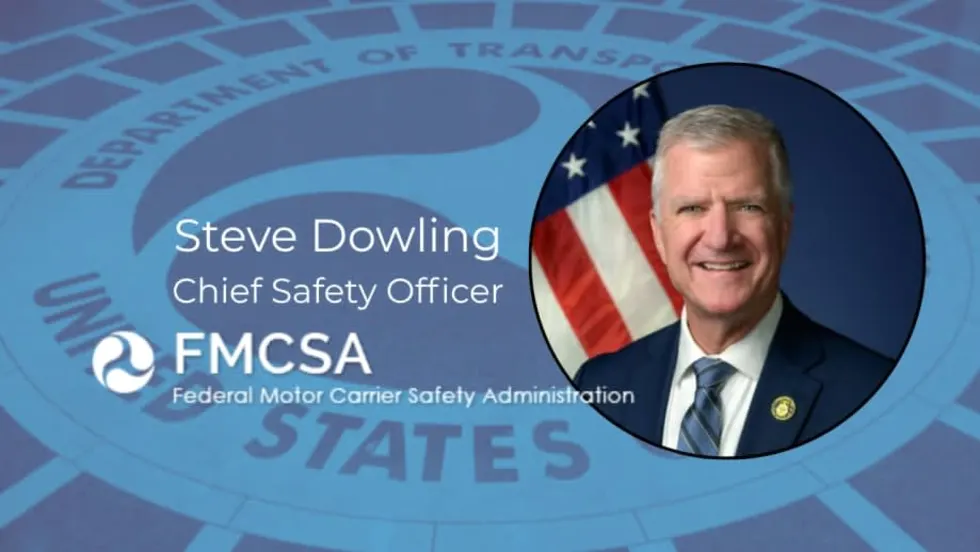
FMCSA Names New Chief Safety Officer: What School Bus Operators Should Know
Steve Dowling is set to lead the federal agency's efforts to advance commercial motor vehicle safety and reduce crashes, fatalities, and injuries on the nation's roadways.
Read More →