Zum Launches All-Electric, V2G-Capable Fleet in California District [Updated]
This initiative with Oakland Unified School District aims to reduce emissions, improve air quality, and enhance grid resilience, setting a precedent for sustainable student transportation nationwide.
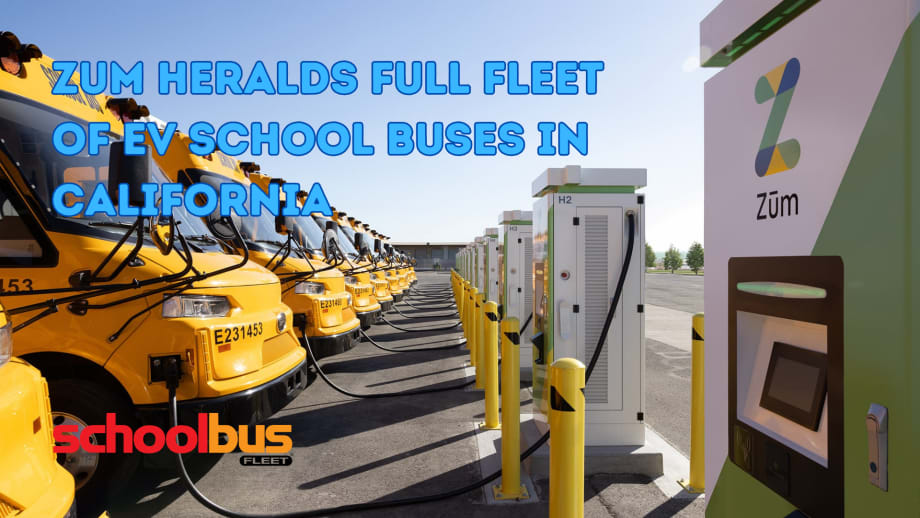
Zum supplied Oakland Unified School District with 74 all-electric school buses and bidirectional charging technology.
Photo: Zum/School Bus Fleet
3 min to read
Zum, a modern student transportation platform, has deployed what it calls the first 100% electric school bus fleet in the nation. The Oakland Unified School District (OUSD) is the first major school district in the United States to transition to a 100% electrified school bus system with vehicle-to-grid technology.
Originally announced in May 2024, Zum is providing a fleet of 74 electric school buses and bidirectional chargers in Oakland, managed through its AI-enabled technology platform.
Ad Loading...
"Today marks an exciting milestone in student transportation," Zum Founder and CEO Ritu Narayan said. "By converting Oakland Unified's school bus fleet to 100% electric, we are showing that sustainability solutions are here – and can positively impact an entire community. Electric school buses with V2G capability create cleaner transportation and send untapped energy from bus batteries back to the grid. It's a win-win for children, families, schools and drivers."
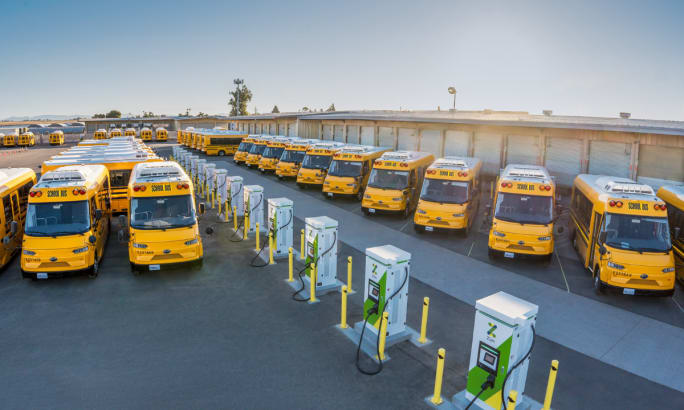
The all-electric vehicle (EV) fleet will not only transport students sustainably but also play a critical dual role as a virtual power plant (VPP), providing up to 2.1 gigawatt-hours of energy back to the power grid annually.
The all-electric vehicle (EV) fleet will not only transport students sustainably but also play a critical dual role as a virtual power plant, providing up to 2.1 gigawatt-hours of energy back to the power grid annually.
Photo: Zum
Student transportation is the largest mass-transit system in the nation, moving 27 million students twice daily. Today, more than 90% of the nation’s 500,000 school buses run on carbon-based fuels, releasing more than 8.4 million tons of greenhouse gases annually, exposing students and communities to harmful gases every day.
"This is a landmark achievement, especially in Oakland, where families are disproportionately impacted by exposure to air pollution and high rates of asthma and other respiratory ailments," OUSD Superintendent Dr. Kyla Johnson-Trammell said. "Zum's electric school buses provide our students quieter, cleaner rides to and from school, giving them a better chance at success in the classroom, while ensuring the District is doing its part to cut down on air pollution to the benefit of all Oakland residents."
3 Takeaways
Oakland Unified School District pioneers a 100% electric school bus fleet, setting a national precedent for sustainable student transportation.
Bidirectional chargers enable buses to support the grid, offering up to 2.1 gigawatt hours of energy annually, enhancing grid resilience.
Collaboration with partners and innovative programs accelerates the transition, highlighting the potential for widespread adoption of electric buses.
Electrification of such a large fleet with V2G capabilities requires a vast ecosystem of partners.
Ad Loading...
Federal and California State programs that have been critical to the acceleration of this project are: the Environmental Protection Agency’s (EPA) Clean School Bus program, California Air Resources Board (CARB), Heavy Vehicle Incentive Program (HVIP) vouchers, Bay Area Air Quality Management District (BAAQMD), and Clean Mobility Operations (CMO) programs.
The acceleration of the EV transition was the result of Pacific Gas and Electric Company’s, Zum’s utility partner, ability to provide 2.7 megawatts of load to Zum’s Oakland EV-ready facility in record time.
"PG&E is proud to work closely with Zum and Oakland Unified in deploying what is the largest electric school bus fleet and vehicle-based, grid-supporting resource in the country," said Mike Delaney, vice president of utility partnerships and innovation, PG&E. "Oakland is PG&E’s headquarters; it is home to many of our customers and co-workers, and a city we’ve proudly served for more than a century. Achieving this advanced fleet electrification and vehicle-grid-integration milestone for the people and students of Oakland reflects our commitment to delivering excellent customer service outcomes for our hometowns using breakthrough thinking, collaboration, and swift execution."
Zum has set a goal of electrifying 10,000 bidirectional school buses, which will create the potential to supply 300 gigawatt-hours of energy to the power grids annually. In addition, Zum is electrifying school buses in its fleet in districts across the country, with San Francisco Unified and Los Angeles Unified — which are three and six times the size of Zum’s Oakland school bus fleet, respectively — to soon follow.
Editor's Note: This story was originally published May 15, 2024 and was updated on Aug. 29, 2024 with more information and photos, after the electrified school bus fleet officially launched in Oakland.
The new name represents a renewed vision for the nonprofit focused on advancing clean, equitable, and affordable transportation solutions that move people and goods.
Propane and electric school bus deployments continue to grow as districts add new vehicles, expand charging infrastructure, and gather more real-world operating data.
WRI’s latest buyer’s guide points to a consolidating electric school bus market, but fewer options may reflect a maturing industry rather than fewer meaningful choices for school bus operators.
Learn how propane autogas helps school districts manage fuel costs with predictable pricing, lower maintenance, and reduced emissions from former transportation director Joel Stutheit.
The acquisition combines intelligent charging software, bidirectional charging expertise, and fleet electrification services to support the growing adoption of electric school buses across North America.
See which districts across the U.S. are putting electric school buses into service, expanding charging infrastructure, and planning the next phase of fleet electrification.
The federal agency has proposed changes to next year’s targets that would eliminate DEF derates, ease warranty requirements, and retain current NOx emissions standards.
The latest developments include new funding, charging infrastructure, utility investments, and fleet technologies designed to support the transition to electric school buses nationwide.