




Related: Security Requirements, Terminology Key Issues at 2015 NCST
NCST 2020 Postponed, National Stop-Arm Survey Canceled Due to COVID-19
The 17th National Congress on School Transportation is tentatively rescheduled for May 2021. Meanwhile, the National Association of State Directors of Pupil Transportation Services annual stop-arm survey will not be conducted this year.

Nicole Schlosser・Former Executive Editor
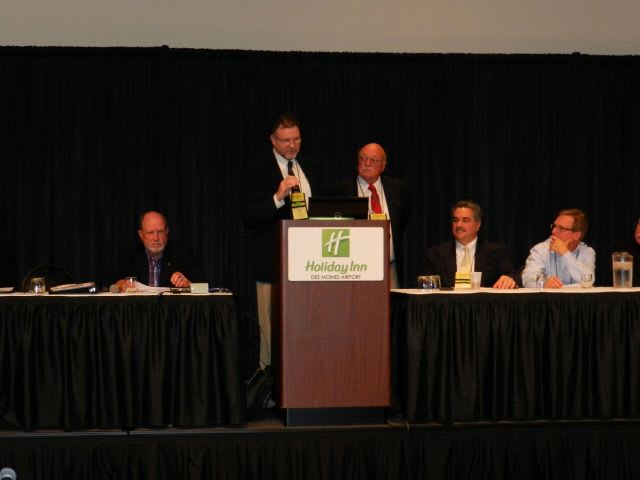
The 17th National Congress on School Transportation (NCST), which was to take place in May 2020, has been postponed. Murrell Martin (shown left at podium) and Bill Loshbough are pictured here leading a discussion at NCST 2015.
3 min to read

The 17th National Congress on School Transportation (NCST), which was to take place in May 2020, has been postponed. Murrell Martin (shown left at podium) and Bill Loshbough are pictured here leading a discussion at NCST 2015.
The 17th National Congress on School Transportation (NCST), which had been scheduled to take place from May 17 to 20 in Des Moines, Iowa, has been rescheduled due to the COVID-19 pandemic.
Patrick McManamon, the NCST Steering Committee chair, announced in a letter on Wednesday to Congress participants and other interested parties that the committee based the decision to postpone the event on the latest Centers for Disease Control and Prevention (CDC) guidance for mitigation of the novel coronavirus and COVID-19.
The event is tentatively rescheduled for May 16 to 19, 2021, and that many of the details involved in postponing the event are currently being worked out, McManamon added in the letter.
“We are united with the nation in having to make difficult decisions in the overriding interest of public health and safety,” McManamon stated.
Since 1939, the NCST (formerly the National Conferences on School Transportation) has been held periodically with the primary objective of ensuring safe, efficient transportation for schoolchildren. Since 1980, the 300-plus delegates from around the country who comprise the Congress have convened every five years.
For more information on the postponement, contact Jennifer Bruce at AdminServices@nasdpts.org or (518) 220-9905, or Patrick McManamon at Patrick.McManamon@vermont.gov or (802) 828-3757.
Meanwhile, the National Association of State Directors of Pupil Transportation Services (NASDPTS) announced in an email to state transportation directors across the U.S. on Wednesday that it is canceling its annual national stop-arm survey due to many schools being closed for weeks or longer in response to the pandemic.
“NASDPTS is canceling this year’s call for state directors and others to coordinate the voluntary collection of data on the incidence of illegal passing of school buses,” Charlie Hood, NASDPTS’ executive director wrote in the email.
This year would have been the tenth in which the survey was conducted. In last year's survey results, which NASDPTS recently updated to include Washington, D.C., 95,494 vehicles passed school buses illegally on a single day. (School Bus Fleet had reported the results when they were initially released in July; a total of 130,963 school bus drivers in 39 states reported that a total of 95,319 vehicles passed their buses illegally on a single day. That total was significantly higher 2018’s total of 83,944 passing incidents.)
Overall, the past nine years of survey data have “documented an unfortunate and consistently high incidence of illegal passing,” Hood noted in the letter.
Alternatively, Hood told SBF that NASDPTS plans to coordinate one or more surveys to assess best practices and solutions to illegal passing, rather than focusing on the number of incidents.
The surveys would ask state directors and possibly school districts questions about policies, procedures, and equipment that states are employing to cut down on illegal passing of school buses and improve pedestrian safety for school bus riders.
“Our goal is to make responding to the substitute surveys simple, while collecting information that will allow us to determine consensus best practices or sources of data that states oversee,” Hood added in the letter.
NASDPTS will work to avoid "reinventing the wheel" or duplicating information from other sources, Hood stated, and pointed to the January 2020 report from the National Conference of State Legislatures State School Bus Stop-Arm Camera Laws.
More Safety

How to Build a Better School Bus Driver Training Program
Is it time to strengthen your driver training? Here’s how to pick the right talent and improve recruitment, retention, and safety. This video is brought to you by IC Bus.
Read More →
Recent School Bus Accidents Leave 2 Dead, 2 Injured
Four school bus crashes in Florida, Illinois, and Georgia highlight risks in transportation lots, at bus stops, and during student loading and unloading.
Read More →
Sponsored•September 8, 2026
When Every Second Matters, Clarity Keeps Routes Moving
From routine delays to urgent incidents, strong communication practices help drivers, dispatchers, schools, and families respond with confidence.
Read More →

What Happens When a School Bus Catches Fire — and What Can Help
School bus fires are rare but can be devastating. Learn how advances in fire suppression and asset protection help fleets detect fires earlier, reduce damage, and improve safety.
Read More →
Geotab Launches Tool to Help Fleets Investigate Road Incidents
Geotab Investigations combines telematics data, video, documents, and other evidence to help fleets reconstruct incidents, resolve claims, and determine what happened.
Read More →
Texas Sixth Grader Wins 2026 National School Bus Safety Poster Contest
Sai Darshana Yekolu of Moseley Middle School in Prosper, Texas, was named the newest winner for her artwork, bringing the theme of “Safe Rides, Everyday Heroes” to life.
Read More →
Sponsored•August 27, 2026
Doing More With Less: How Transportation Directors Can Prioritize Safety Amid Budget Uncertainty
With diesel prices soaring and nearly one-third of transportation directors expecting budget cuts, maintaining student safety has never been more challenging. Download this guide to learn how leading districts are prioritizing risk, funding critical safety technology, and building stronger budget cases with data.
Read More →
Walton County Schools Adds Gatekeeper Stop-Arm Enforcement System
The Florida district will deploy Gatekeeper’s updated Student Protector technology, which now incorporates AI to improve video evidence.
Read More →
How To Build a More Secure School Bus Yard During and After Hours
As thefts and overnight security threats continue, school transportation leaders are combining stronger operational practices with AI-enabled surveillance to better protect buses, facilities, and staff.
Read More →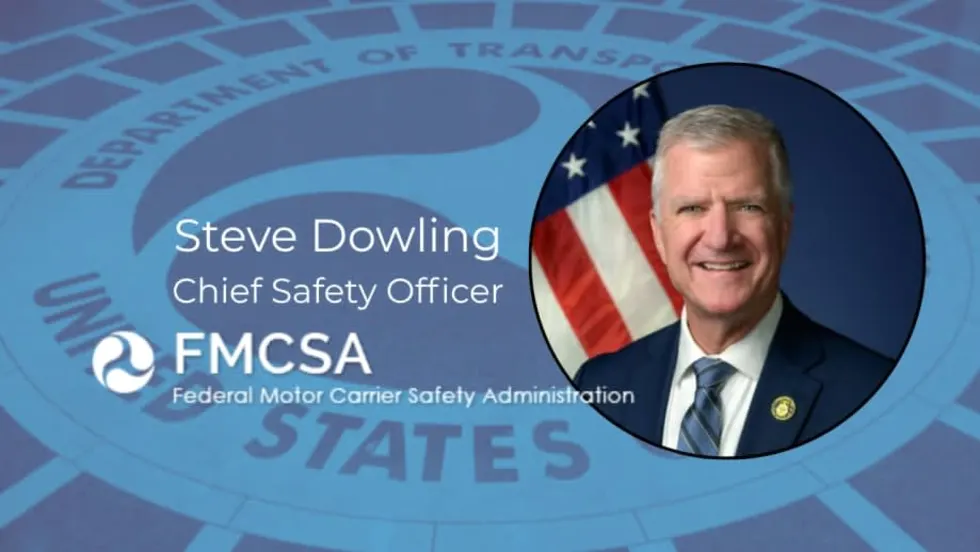
FMCSA Names New Chief Safety Officer: What School Bus Operators Should Know
Steve Dowling is set to lead the federal agency's efforts to advance commercial motor vehicle safety and reduce crashes, fatalities, and injuries on the nation's roadways.
Read More →