




Responding to terrorism requires courage and faith
As Vince Lombardi once said, “It’s not whether you get knocked down, it’s whether you get up.” This country got knocked down on Sept. 11 during the...
As Vince Lombardi once said, “It’s not whether you get knocked down, it’s whether you get up.” This country got knocked down on Sept. 11 during the terrorist attacks on New York City and Washington, D.C., not to mention the crash of the hijacked airliner in Pennsylvania. Thousands of innocent people lost their lives in a series of cowardly acts. The sense of security that we prize so highly has been marred. It’s easy to be angry, confused and afraid. Fortunately, Americans rarely take the easy way out. Within hours of the attacks, the country was regrouping and providing assistance at all levels. The American Red Cross reported an overwhelming response of people who wanted to donate blood. New York City officials said thousands of people offered their services to help with the disaster relief. Operators of refrigerated trucks offered their services to haul away the lifeless bodies of those who perished in the assault on the World Trade Center. It was an impressive display of courage, spirit and determination. And it will not end any time soon. We will not forget those who lost their lives nor the need to be prepared for further attacks on our freedom and well-being. What’s our next step?
What we need now is strong leadership, starting at the top in Washington, D.C., and filtering down the system to our schools and, of course, their transportation providers. Although school bus operators are not responsible for the emotional health of their passengers, their drivers, especially, do have an impact on their lives. This needs to be factored into our response to the terrorist attacks. Thankfully, many schoolchildren are too young to fully understand the horror of last month’s disaster. But some are old enough to comprehend the significance of the attacks. What we all must do now is teach them that fear cannot be allowed to rule our lives. School bus drivers, especially, should be encouraged to maintain a capable, confident demeanor. As one of the adults who has a strong presence in many children’s lives, drivers need to be aware of their responsibility to be a positive role model. As part of that responsibility, bus drivers should be sensitive to any intolerance exhibited by their passengers. In the days following the attacks, random assaults on people who appeared to be Arab Americans were reported. One school district near New Orleans closed its schools after students of Middle Eastern origin were harassed and taunted. As we all know, this type of harassment runs counter to the basic principles and laws of this country. Restoring their trust
In the wake of the terrorist events, some children will lose trust in adults. After all, they weren’t able to prevent the terrorist attacks, were they? According to advice offered by the Federal Emergency Management Agency, adults should repeatedly assure children that they will be taken care of and help them regain faith in the future by discussing activities next week or next month. Bus drivers can provide their riders with this reassurance by asking about their plans for, say, Halloween or Thanksgiving. The key is to provide realistic reassurance about the future without glossing over the horror of the terrorist attacks. How we respond to last month’s devastating events will be marked in history and set the tone for the next several years. Let’s move forward boldly and pass along our optimism and resilience to America’s next generation, many of whom, as we all know, are riding yellow buses to and from school each day.
More Safety
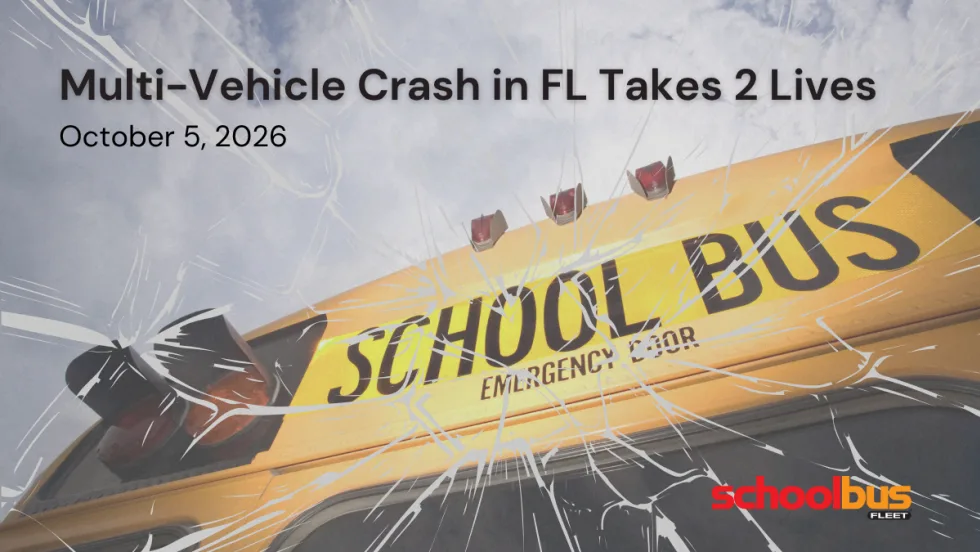
2 Killed, Dozens Injured in Florida School Bus Crash
A multi-vehicle collision caused a Polk County school bus carrying 37 students to overturn on its way to Winter Haven High School.
Read More →
Illegal School Bus Passing Drops 24% in New York Districts
With fewer than 5% of citations involving repeat offenders, Westchester County officials said enforcement, education, and community partnerships are helping change driver behavior.
Read More →
School's Back. Here's What Happened to Traffic, Speeding & Distraction
What happens to traffic when school resumes? New data analysis examines changes in distracted driving, congestion, and speeding around schools.
Read More →
Geotab Expands Fleet Safety Tools With Video Coaching, Risk Insights
New safety and video capabilities aim to help fleet managers assess risk, support drivers, and take targeted action through video coaching, red-light violation detection, and more.
Read More →
How to Build a Better School Bus Driver Training Program
Is it time to strengthen your driver training? Here’s how to pick the right talent and improve recruitment, retention, and safety. This video is brought to you by IC Bus.
Read More →
Recent School Bus Accidents Leave 2 Dead, 2 Injured
Four school bus crashes in Florida, Illinois, and Georgia highlight risks in transportation lots, at bus stops, and during student loading and unloading.
Read More →
When Every Second Matters, Clarity Keeps Routes Moving
From routine delays to urgent incidents, strong communication practices help drivers, dispatchers, schools, and families respond with confidence.
Read More →
What Happens When a School Bus Catches Fire — and What Can Help
School bus fires are rare but can be devastating. Learn how advances in fire suppression and asset protection help fleets detect fires earlier, reduce damage, and improve safety.
Read More →
Geotab Launches Tool to Help Fleets Investigate Road Incidents
Geotab Investigations combines telematics data, video, documents, and other evidence to help fleets reconstruct incidents, resolve claims, and determine what happened.
Read More →
Texas Sixth Grader Wins 2026 National School Bus Safety Poster Contest
Sai Darshana Yekolu of Moseley Middle School in Prosper, Texas, was named the newest winner for her artwork, bringing the theme of “Safe Rides, Everyday Heroes” to life.
Read More →