




Apprentice, Intern Programs Groom Great Workers
In addition to giving students work skills and experience, districts get employees who are already familiar with the shop and its practices.

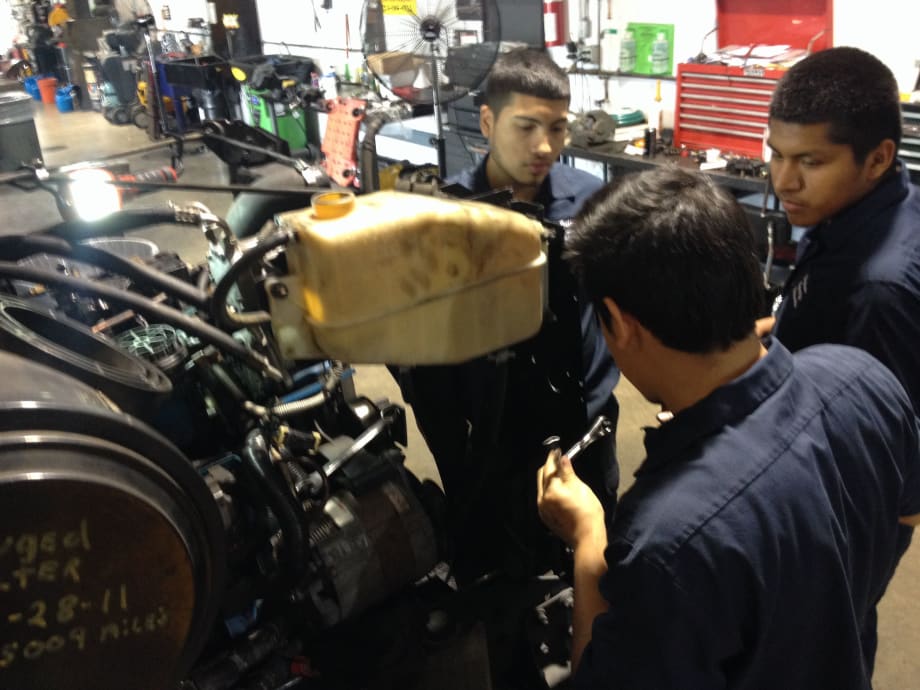
The Dallas County Schools co-op program is designed for students seeking careers in vehicle maintenance. They learn the trade, earn extra money, and some are hired by the district after they graduate.
Some districts are using maintenance apprenticeship programs to grow their applicant pools, teach work and life skills, and give back to the community by contributing skilled technicians. Students, in turn, gain experience for their resumes, earn some money — in some cases while attending college — and sometimes find a career path resulting in a full-time job with the district.
Expanding the applicant pool
Started approximately 15 years ago, the Tulsa (Okla.) Bridges Project, a Department of Rehabilitation Services intern program, provides high school juniors and seniors with work opportunities in the Tulsa Public Schools (TPS) transportation department, creating well-trained potential employees who already know the shop and how it works.
The program was introduced as a way to give special-needs students with high-functioning capabilities vocational, hands-on experience in the garage and other areas of the transportation department. Students help mechanics with tasks such as changing tires and oil, learn about vehicle maintenance and safety, and review diagnostics. They also assist in the routing and scheduling department with data entry, documentation, taking phone calls and dispatch.
Developing essential skills for the real-world work environment, such as punctuality and responsibility, is another aspect of the program, says Rosalyn Vann-Jackson, assistant director of transportation at TPS. These are emphasized in what she calls the three As: attendance, appearance and attitude.
The program grooms the students to be good employees and provides an additional application pool, Vann-Jackson says. She cites as an example Casey Middleton, a mechanic for TPS who started his career in the program and recently won first place as America’s Best School Bus Inspector at the National Association for Pupil Transportation’s School Bus Technician Training and Skills Competition.
David Anderson, director of transportation and fleet for Colorado’s Adams 12 Five Star Schools, agrees that the extra manpower from an apprenticeship he founded is a major benefit, especially since there are now significantly fewer candidates applying than just a few years ago.
“I used to get 50 applications if I had an opening; now I am happy if I get 10,” he says.
Giving back
Since he wanted to help young people in the field advance as he once had, Anderson established apprenticeship programs at Colorado’s Cherry Creek School District in 1995 and Adams 12 Five Star Schools in 2006 to train the next generation of mechanics.
When he was starting out as a mechanic, Anderson went through a two-year apprenticeship and used that experience to get his associate and bachelor’s degrees while working at Cherry Creek. Years later, when he became a fleet manager, he partnered with that district’s automotive program to start a student apprenticeship program as a way to give back.
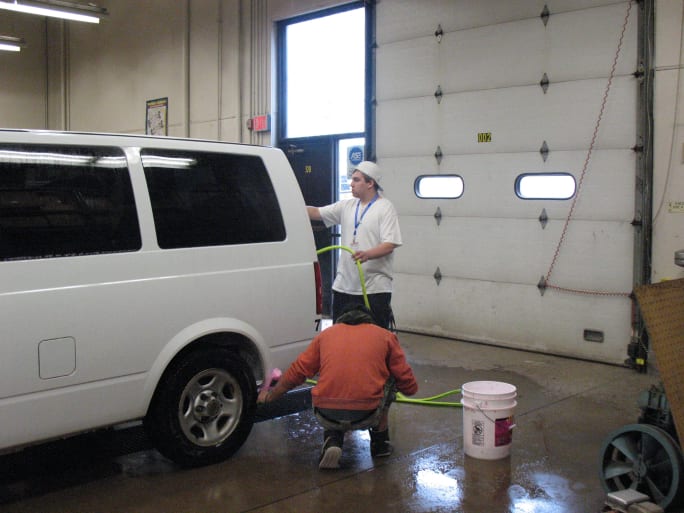
Brainerd (Minn.) Public Schools’ Paul Bunyan Transition Plus Program teaches special-needs students ages 18 to 21 independent living and job skills. The bus shop plays an integral role by having them detail the district’s vehicles.
Junior- and senior-year high school students are interviewed and selected for the automotive program, which entails completing a minimum number of hours learning about transmissions, engines, steering and brakes. Once they graduate from high school, participants are required to get an associate degree in automotive technology while working for the district.
“By the end of three or four years, if they are a junior, they’ve got their two-year degree and three or four years of hands-on experience,” Anderson explains.
Cherry Creek has hired two of its apprentices. Others have found positions in local automotive, truck or bus shops, not only benefiting the transportation department but also various businesses.
Anderson adds that, at about 23 years old, program participants have about four years of hands-on experience and a degree in automotive technology, which is an advantage not many other job applicants have at that age.
One example is Tyler Huston, a former apprentice and now master technician at Adams 12 Five Star Schools. He took the two-year automotive program in high school and then attended college part time and worked in the shop part time, handling small repairs and shadowing mechanics. While attending college he also earned his Automotive Service Excellence (ASE) certification and was hired full time by the district.
The biggest value of the program, Huston says, is that it allows students to get started in a career and work their way up.
“I’m 24 years old, and I already have eight years into our retirement program,” Huston adds.

David Anderson, director of transportation and fleet for Adams 12 Five Star Schools, started an apprenticeship program to train the next generation of mechanics. Anderson (left) is pictured with Tyler Huston, a former apprentice and now master technician at the district.
Helping students find a career path
The Dallas (Texas) County Schools (DCS) co-op program began in 2005. A Skyline High School auto shop teacher was interested in starting a program that would give juniors and seniors a place to work part time during their last years of school, and the teacher discussed the possibility with the district, says Paul Jacobs, senior fleet manager.
The program is designed for students seeking a career in vehicle care and maintenance, with training provided by various vendors holding classes several times during the year to accommodate students’ schedules. Students learn about basic preventive maintenance and about more technical jobs from lead technicians and the shop foreman, Jacobs explains.
Annually, there are 10 to 12 Skyline High School students who work for DCS through the program, Jacobs says. They learn the trade, earn extra money, and in some cases are hired by DCS after they graduate. DCS has hired one or two students from the program each year.
“This is beneficial to both the student and to DCS; they end up with a full-time job with benefits, and we secure a trained mechanic,” Jacobs says.
Teaching work, life skills
For the last eight years, Brainerd (Minn.) Public Schools’ Paul Bunyan Transition Plus Program has taught special-needs students ages 18 to 21 independent living and job skills. The bus shop plays an integral role by having them detail the district’s vehicles, says Kala Henkensiefken, transportation coordinator at Brainerd Public Schools.
The Paul Bunyan Education Cooperative, a special-education cooperative, started the program for high school graduates. When a staff position that involved taking care of the 23 vehicles was cut, the district would have had to assign cleaning them to another employee, or take them elsewhere to be detailed, which would have been costly, Henkensiefken adds.
Approximately 12 to 22 students work in the program each year.
In addition to cleaning the vehicles, students learn a work ethic and soft skills such as effectively communicating with others and taking pride in their work.
The program has helped the district save annually approximately $5,000 in car wash fees and about $15,000 in detailing fees.
It also enables students to demonstrate work experience when they apply for jobs. One participant was hired by a local detail shop after completing the program because of his experience.
More Maintenance
The Essential Guide to School Bus Maintenance and Student Safety
Your district's buses carry students to school every day. This guide shows how predictive maintenance powered by fleet data helps keep buses reliable, drivers accountable and students safer from the first bell to the last stop.
Read More →
Kerry Brothers Grows Michigan School Bus Repair Network
The acquisition of Downriver Truck and Bus expands Kerry Brothers’ school bus maintenance footprint across southeast Michigan, adding repair capacity, diagnostic resources, and state inspection support.
Read More →
Noregon Introduces CAN Bus Diagnostic Tool, Expands JPRO Features
CAN Mentor and the latest JPRO update aim to simplify vehicle network diagnostics and improve repair efficiency for technicians of all experience levels.
Read More →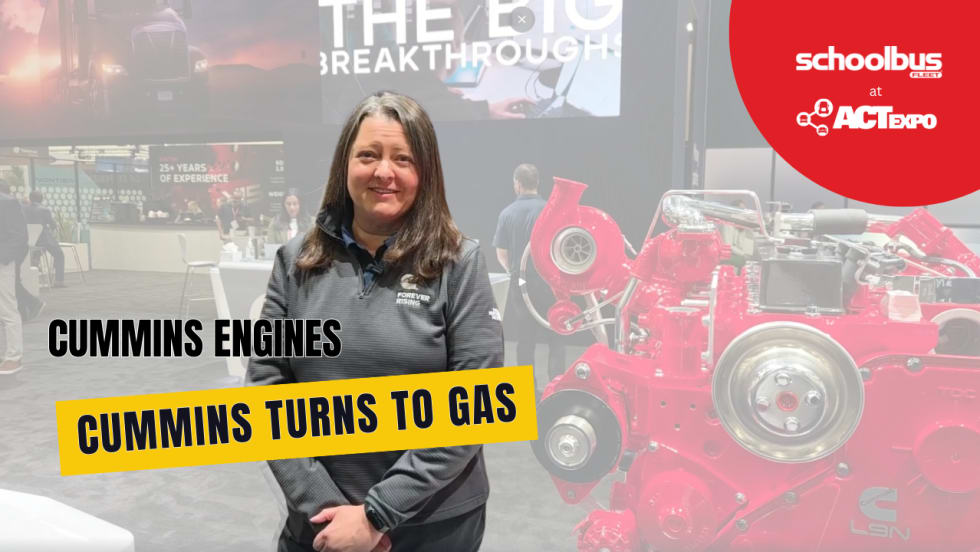
Cummins on Smarter, Simpler Engine Innovation
Cummins discusses its first-ever gasoline engine for school buses, EPA 2027, and why bus fleets still want durable, simpler internal combustion options.
Read More →
Report: 72% of Diesel School Buses Now Use Advanced Low-Emission Engines
New data shows advanced low-emission diesel technology continues expanding across school bus fleets, even as electric bus adoption gains momentum.
Read More →
Vampire Tools' CAIMAN 7.5-Inch Multi-Purpose Screw Extractor Long-Nose Pliers with Crimper
Vampire Tools introduced the VAMPLIERS Caiman 7.5-inch multi-purpose pliers, combining screw extraction, cutting, crimping, and gripping functions into a single tool designed for fleet maintenance professionals.
Read More →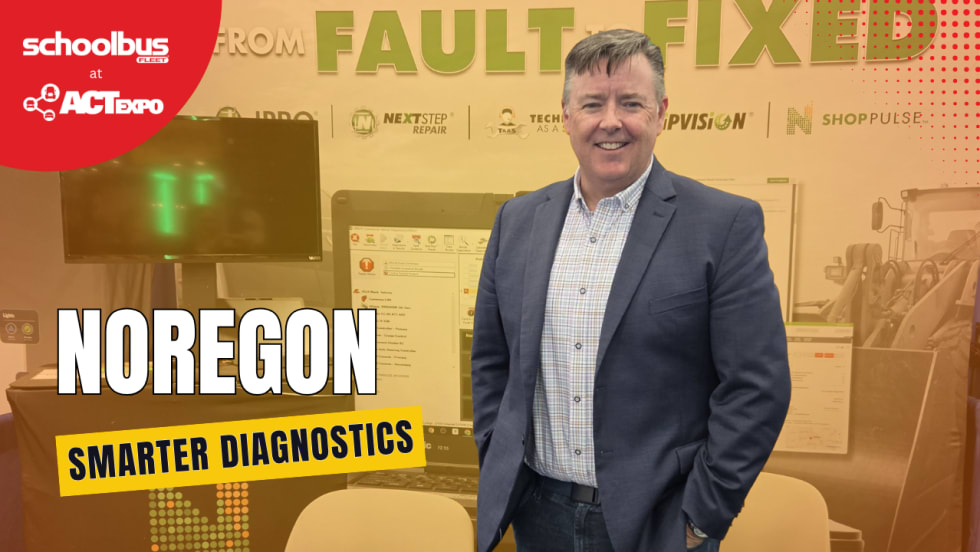
How Advanced Diagnostics Helps Bus Fleets Stay Ahead of Repairs
Chat with Noregon’s Kevin Smallhorn at ACT Expo about bus diagnostic tools, telematics integration, CNG maintenance support, and strategies to help reduce downtime and improve uptime.
Read More →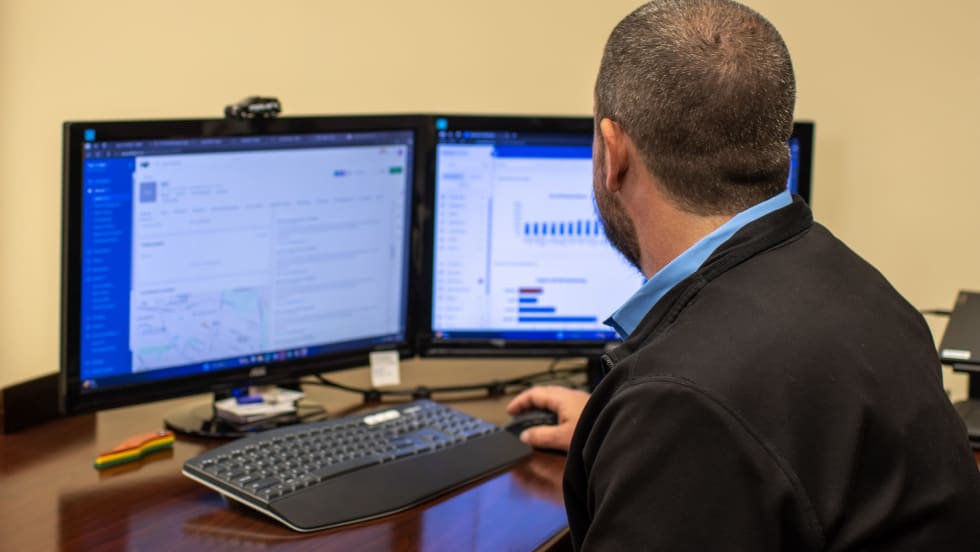
How School Bus Fleets are Getting Ahead of Breakdowns
Don’t let bus downtime wear you down. Here’s how bus operators are shifting from manual processes to AI-powered, data-driven maintenance systems for improved reliability and safety.
Read More →
Pennsylvania School Bus Maintenance Team Praised for Dedication to Safety
Matthews Bus Company’s West Jefferson received a letter of commendation from the Pennsylvania State Police for their fleet inspections.
Read More →
From Chaos to Clarity: How School Districts Are Running Leaner Transportation Operations
Covering 38 routes on a Friday afternoon. Buses idling while routes overlap. Parents calling nonstop about late arrivals. Sound familiar? This whitepaper explores how district transportation leaders solved these exact problems — and what measurable results followed.
Read More →