




6 Tips for Stepping Up Driver Recruitment
With a heightened shortage of bus drivers, Salem-Keizer Public Schools overhauls its approach to recruitment. Collaborating with other district departments, developing an attractive brand, and streamlining the hiring process are key steps.

Photo by Scott Goble
Staffing has been a constant challenge for the school bus community. Transportation departments are often their own recruiters, and yet somehow we manage to deal with the staffing challenge each year.
In the past couple of years, many school districts across the country — including Salem-Keizer Public Schools in Oregon — have been experiencing an increased shortage of qualified school bus drivers, mechanics, supervisors, and other staff. Multiple factors play into the problem, and, as our school district has found, it takes a multi-faceted approach to address it.
Workforce factors
What is fueling the driver shortage? For starters, the economy has improved, and the cost of living has increased.
The numbers of Family and Medical Leave Act cases, on-the-job injuries, and workers’ compensation claims are rising, and employees’ longevity is decreasing. There are more early retirements.
Companies are competing for workers in a thriving economy. Applicants can often pick from multiple job offers and take the time to decide what is best for them and their life situation. They consider who they work with and for, how flexible their work environment will be, and what benefits package will be provided.
School bus drivers have a split shift, in which their day is typically 10 hours long for six hours of pay. For some prospective employees, this is not the ideal work schedule.
With a high number of Baby Boomers retiring, companies lose their long-earned institutional knowledge and loyalty, both of which are invaluable. Millennials are coming in with the feeling that they bring value and expertise learned straight from college, with little or no real-world experience. With the best of intentions, the millennials enter the workforce looking to make changes that they feel are important and invaluable. The clash between generations can cause friction, morale issues, and turnover if it is not recognized and addressed.
Issue awareness
At Salem-Keizer Public Schools, we decided to make sure our organization was aware of these issues, and we asked for help. We went to the chief operating officer and the executive director for human resources in April 2015. The chief operating officer committed more budget dollars. The HR department streamlined the application process.
Still, awareness of the magnitude of the problem really did not sink in until fall 2015, when all transportation staff and mechanics were driving to cover routes. Articles about other school districts’ driver shortages were shared with our executives to show that this was a national issue. Data was tracked and collected, allowing us to measure the problem.
There were some days when we did not have sufficient drivers, so we split runs. We talked of running some of our schools late and some early to allow us to use the same buses and drivers. When we reached this point, a sense of urgency was realized.
As the transportation staffing issue came to the forefront, the superintendent and other district departments stood behind us, and a team was formed to develop an action plan. The team was composed of the lead auditor from our business services department, a confidential support person from HR, and the transportation director and manager.
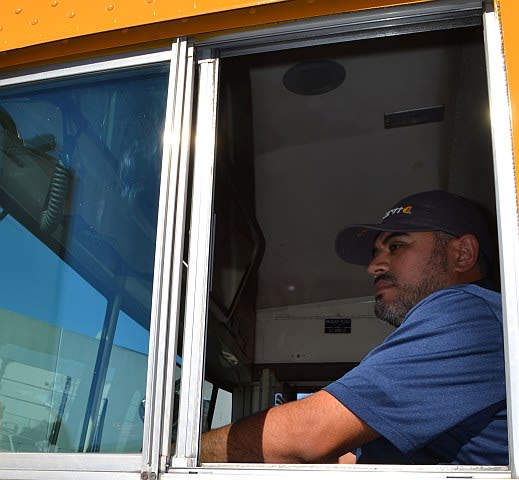
Broadening the opportunities for school bus drivers to earn wages is one way to strengthen retention.
Recruiting a recruiter
We already had two school bus drivers who had experience working in our community to garner driver applicants. Now, the chief operating officer gave approval for our transportation department to hire its own recruiter.
As we proceeded in this direction to find a recruiter, there was an understanding that the district needed not only school bus drivers, but also classroom instructional assistants, custodians, mechanics, crossing guards, and many other support positions.
The transportation director took the initiative and spent a weekend researching and writing a draft job description for our district to consider. Our executive team approved the position, HR reviewed and edited the job description, and the go-ahead was given to hire a recruiter who would focus on positions other than licensed teachers.
One of the advantages that this new position provides is freeing up managers and supervisors to focus on other duties. They can work on reducing the turnover with current employees while the recruiter works on bringing in new, qualified employees.
Also, additional maintenance, training, and clerical positions were added, or hours were increased, to ensure that the transportation department had sufficient support.
New initiatives
On the recruiting front, Salem-Keizer Public Schools as a whole has ventured out and started advertising in our local theaters and on our local television and radio stations.
Other elements of the effort have included radio interviews, newspaper stories about the staffing shortage, job fairs, buses with employment banners, and incentive programs. Also, we provided all staff and drivers with business cards that have “now hiring” information on the back.
We will also update our employment website to tell our applicants a story. The webpage will be interactive, with stories from executives, other current employees, and students.
Our superintendent announced at our fall all-administrator meeting that the No. 1 priority of the HR department would be school bus driver hiring. Our goal was to show why Salem, Oregon, was the place to be, promoting a sense of community from the get-go.
Analyzing our efforts
One of our action items was to establish a weekly recruitment meeting. During this meeting, we discuss things we have done, what their success rates have been, what we are currently doing, and what we can change.
Through these meetings, we have learned and grown a lot. For example, we discovered that our school bus driver application and job posting were wanting. We rewrote the posting and streamlined the school bus driver application process on our district website.
We also analyzed our current hiring and training process for new drivers. Surprisingly, we discovered that we were getting a fair number of applications, but we were losing applicants during the training process.
To that end, we changed our paid training process to keep applicants engaged and supported from the time we interview them until the point when they are on their own route. Employees need to feel that they are part of the team and that they bring value to the organization.
Bolstering retention
On the retention front, we are collaborating with our bargaining unit to review areas in which changes could be made to improve school bus driver retention.
The district committed to raising all drivers one pay level, in addition to cost-of-living increases. We also changed our substitute driver pay structure.
Another effort has been to broaden the opportunities for drivers to earn wages. We are working with other district departments to find ways for more of our drivers to be considered for summer employment.
The goal is to have employees talk highly about their job and work environment so that others will want what they have. The most effective recruitment tool, proven time and time again, is employee referrals.
Branching out
To increase our recruiting pool, we no longer require a GED for school bus drivers, and we are attempting to interview every single applicant who is qualified for the position.
We also changed our interview format and questions. As we meet with each person who walks in the door, we have focused on learning more about them than what their application states.
All of our school bus drivers enjoy their jobs, the core of which is serving each and every child who rides their bus. We pride ourselves in knowing that our department is like a big family.
With this in mind, we have changed our strategy from heavy advertisement to creating a brand that will attract people to come and work for us. The goal is to have employees talk highly about their job and work environment so that others will want what they have.
The most effective recruitment tool, proven time and time again, is employee referrals. That continues to be the No. 1 way in which applicants hear about our positions.
Tell your story and support it with data. For example: In February 2015, our staff members and mechanics had to drive 173 times. In February 2016, our staff and mechanics drove 1,133 times.
Six tips
Here are some key pieces of advice and lessons learned from our recruitment project:
1. It takes time and money.
Nothing happens overnight when you are working for a public agency. Seemingly simple tasks took weeks of meetings with the recruitment work group and managers from other departments. Keep in mind that all the members of the work group still had their own jobs to perform, and the time spent on this initiative added to already-busy calendars. Some departments had to be convinced that the driver shortage was a problem for the whole district. Without kids getting to school, the rest of the mission is impossible.
2. Marshal your resources.
When the transportation department has always just “made it work,” it is difficult to convince management and others that this is not just a short-term problem, and that ongoing action is needed. In the beginning, we sent out weekly reports showing that the situation was dire, and it seemed that we were getting little response or understanding. Transportation needed cooperation from other departments to make changes to underlying processes. To that end, be patient yet proactive. Tell your story, and support it with data. For example: In February 2015, our staff members and mechanics had to drive 173 times. In February 2016, our staff and mechanics drove 1,133 times.
3. Organization structure and processes must change.
If you keep doing the same things, you will keep getting the same results. We needed additional staffing redundancy and capacity for training new drivers. Existing job duties had to be expanded, and new positions were created that required budget authority and negotiations with union representatives. Training protocols had to be identified and reorganized to shorten the six-week driver training regimen. Further, advertising efforts had to be developed to reach a broader audience — again, more money.
4. Roll up your sleeves and get busy.
The first response we got from several departments was “oh,” or they would give us advice but no help. Don’t count on other departments to solve your problem — they have their own. We had to knock on the door several times before they answered it, and if they didn’t answer, we did the work ourselves or went to the executive level (through proper channels) to tell our story.
5. It is not over.
Many of the changes will not pay immediate dividends. We ran ads on radio, local theaters, and television, but applicants did not flock to our doors. We hope that people will remember the ads as the new school year begins. We improved efficiency and hired a dedicated recruiter, which will help us in the long term. The factors we are up against still exist, and we have little control over them: an improving economy, low driver pay, a short schedule, and low status. Our efforts now are to work on retaining the drivers we have and provide them with a reliable career path.
6. Anticipate the problem.
Forecast your driver staffing needs by considering the following:
Number of anticipated retirements, Family and Medical Leave Act cases, on-the-job injuries, leaves, call outs, trips, etc.
Enrollment growth or decline — adjust bus routes, change bell times, and review program locations.
Work through generational differences.
Monitor the economy.
Track and utilize your data. This is a business, and numbers can speak for you.
Review and revise timelines and processes from HR to training.
Team effort
At Salem-Keizer Public Schools, we’ve made organizational awareness central to our efforts in dealing with driver shortage. Executive support and understanding are critical, and we are utilizing collective problem solving, a multi-department team, and union collaboration.
As you form your own approach to the driver shortage problem, be sure to capture your journey and log what you are doing. Develop a project management plan that details what you are doing, how you are getting there, what you need, and who needs to be involved or aware.

Michael Shields, shown left, is director of transportation and auxiliary services at Salem-Keizer Public Schools in Salem, Ore. Christina Flynn is a classified recruiter for the district, and Mike Halbirt is lead auditor.
More Management

Logan Bus Company Rolls Out AI Phone System for NYC School Bus Families
A summer pilot found that AI agents could handle most routine calls, freeing up time for customer service staff to focus on emergencies and complex family concerns.
Read More →
From Intent to Impact: What I Learned About Leadership from TAPT
A Texas transportation supervisor shares lessons on self-awareness, accountability, managing stress and building trust — and why investing in leadership development matters at every stage of your career.
Read More →
NAPT Names 2026 Award Recipients
Who earned national recognition for their work in student transportation? This year, NAPT named five recipients of its 2026 awards for service, safety, and leadership.
Read More →

2026 State of Student Transportation Report
Driver shortages. Rising costs. Growing safety expectations. More data, but not enough time to act on it. The 2026 State of Student Transportation Report reveals what transportation leaders say is putting the most pressure on their operations—and where they’re investing next. See how your priorities compare.
Read More →
How to De-Escalate an Angry Person: 5 Steps for Handling Workplace Conflict
What makes emotions run high, and how should you handle an angry colleague or parent? Follow these steps for staying calm, listening, showing empathy, and resolving conflict.
Read More →
What Readiness Looks Like This School Year
Learn about the challenges shaping the 2026–2027 school year, from persistent driver shortages and budget pressure to technology and readiness gaps. See how school districts are responding and adapting in Zonar’s 2026 Back-to-School Readiness Report.
Read More →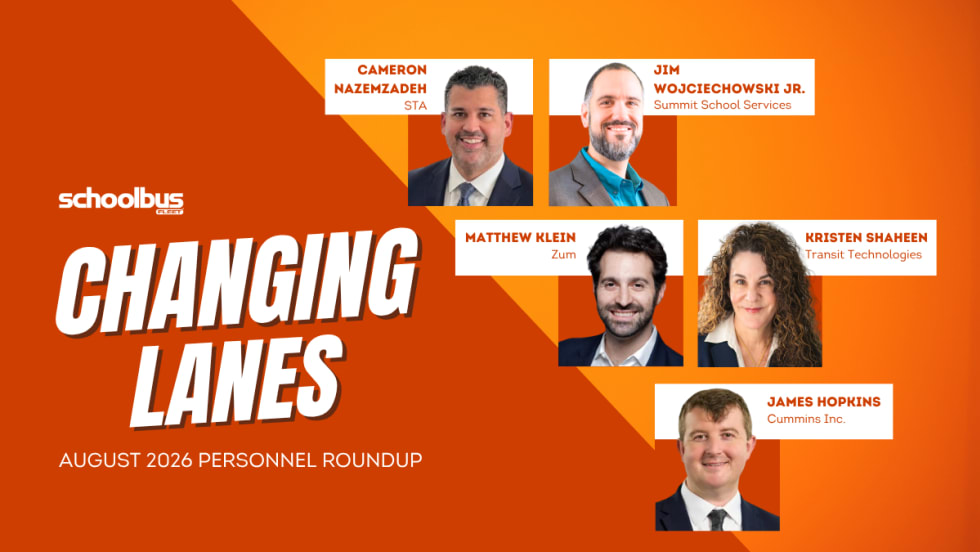
Changing Lanes: Executive Moves at Summit School Services, Zum, STA, Cummins, Transit Technologies, Driventic, & Cadex
See who's been hired, promoted, and appointed to leadership positions at various school transportation industry suppliers and private contractors.
Read More →
Industry Moves: Companies Expand Fleet Service & EV Infrastructure Footprints
The new facilities and regional hubs could mean faster access to shop equipment, charging support, and transportation technology for fleet operators.
Read More →
Doing More With Less: How Transportation Directors Can Prioritize Safety Amid Budget Uncertainty
With diesel prices soaring and nearly one-third of transportation directors expecting budget cuts, maintaining student safety has never been more challenging. Download this guide to learn how leading districts are prioritizing risk, funding critical safety technology, and building stronger budget cases with data.
Read More →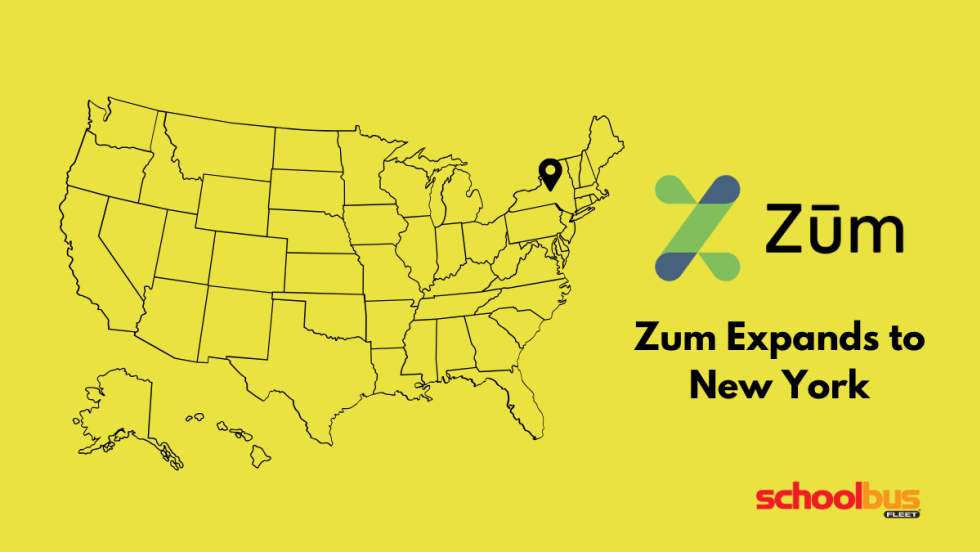
Zum Reaches 19 States With New York Expansion
The addition of the Empire State to the student transportation company's roster marks a growing expansion in the Northeast as it scales its tech and school bus services.
Read More →