


 MENU
 SEARCHMENUSEARCH
Loading data...
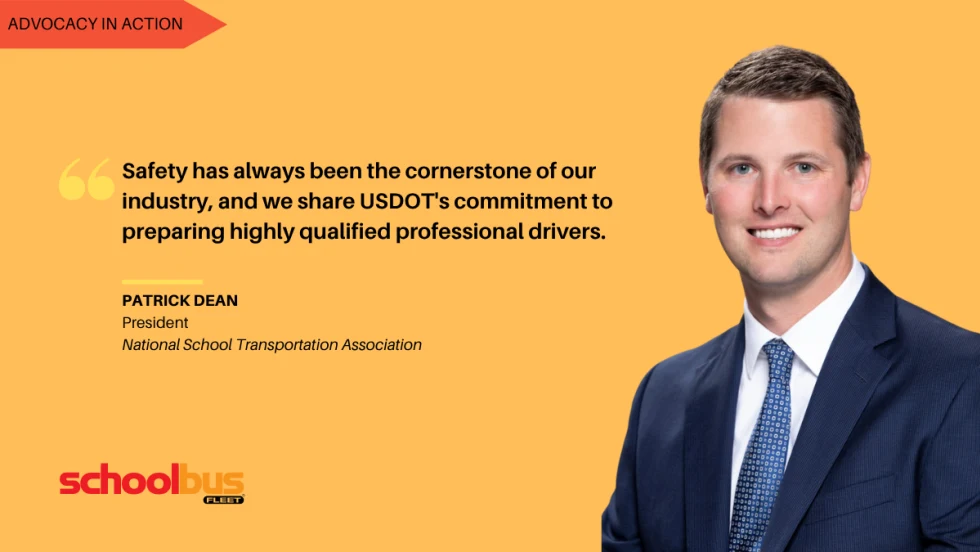
Contractor association leaders met with U.S. Transportation Secretary Sean Duffy and Rep. Tom Barrett to discuss illegal passing, CDL requirements, driver recruitment, and other back-to-school priorities.
Read More →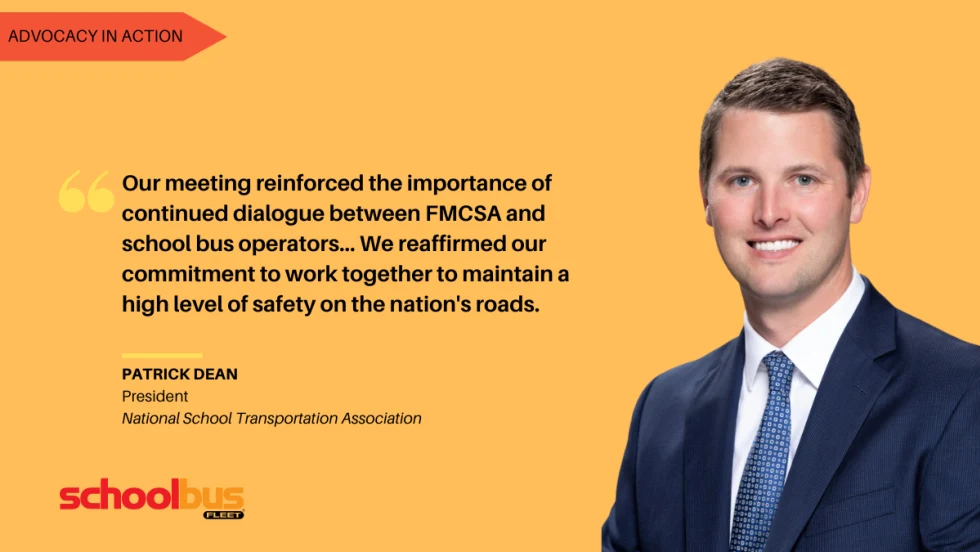



Federal policy, CDL testing, insurance, and compliance were among the key topics as NSTA leaders met with FMCSA to advance priorities for school bus contractors.
Read More →A federal court has paused new FMCSA rules restricting non-domiciled CDL holders, as lawsuits from drivers and local governments proceed.
Read More →Federal officials say that the clearinghouse would make it easier to determine whether a truck or bus driver is prohibited from operating a commercial motor vehicle for failing to comply with drug and alcohol regulations. A spokesperson for the Federal Motor Carrier Safety Administration says that all employers of CDL holders, including school bus drivers, would have to have programs to satisfy the proposed rule.
Read More →The new software aims to help fleet managers cut delays, track compliance, and streamline driver management with automated tools and smart alerts.
Read More →Starting in 2020, the database will contain records of violations of FMCSA’s drug and alcohol testing program by CDL holders, including school bus drivers.
Read More →The Federal Motor Carrier Safety Administration's Drug & Alcohol Clearinghouse has been in effect for a little over a year – but there are still some stumbling blocks fleets can run into.
Read More →The federal agency’s clearinghouse will contain records of violations of FMCSA’s drug and alcohol testing program by commercial drivers, including school bus drivers.
Read More →The agency bolsters return-to-duty and removes exemption requirements for drivers with diabetes and some types of vision impairment. Meanwhile, it introduces a medication information form and clarifies sleep apnea testing requirements.
Read More →The proposed rulemaking seeks to prevent commercial vehicle drivers with substance abuse violations from being licensed by closing an information gap with real-time information from the Drug and Alcohol Clearinghouse.
Read More →