




Virginia District Welcomes 25 Electric School Buses
Lynchburg City Schools’ new buses are replacing older diesel models and now make up 40% of the district’s fleet. They come thanks to funding from the EPA’s Clean School Bus Program.

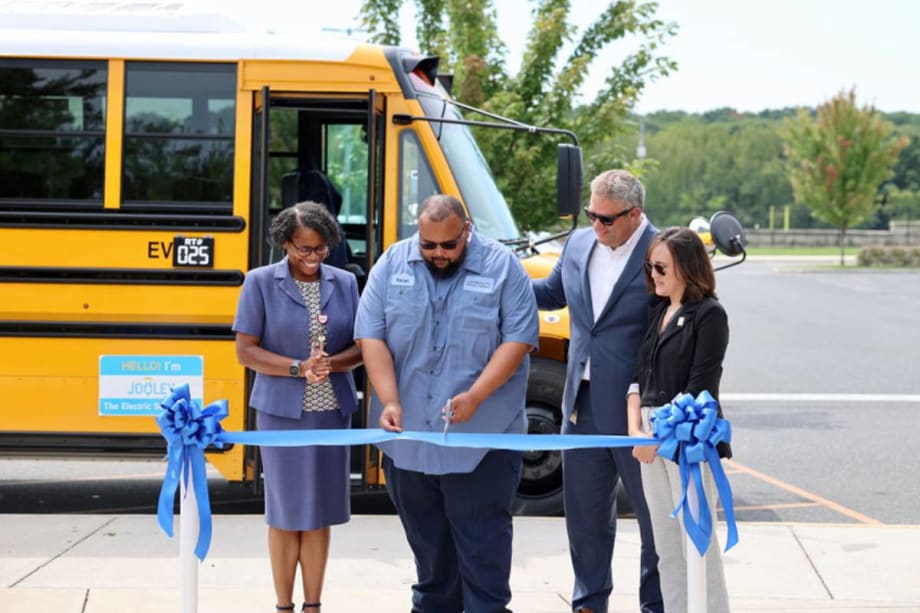
The district was awarded $9.875M in funding during the first round of EPA funding in 2022, allowing them to purchase the 25 buses received this year.
Photo: Lynchburg City Schools
Lynchburg City Schools (LCS) acquired 25 electric school buses thanks to $9.8 million in federal funding. A step toward the LCS commitment to increase environmental and economic sustainability across the division, the electric buses will reduce greenhouse gas emissions while providing cost savings.
“These buses will help move us into a greener, more sustainable future,” said LCS Director of Transportation Hope Watts. “They’ll help improve the environment for generations to come by taking diesel buses and pollutants off the road.”
Converting to Electric
Replacing their diesel counterparts, electric vehicles (EVs) now make up about 40% of the LCS fleet. In addition to being environmentally friendly, the buses are also wallet-friendly saving the division a net total of $125-$150 thousand a year on fuel after taking electricity costs into consideration. With fewer parts and fluids the buses are also cheaper and less wasteful to maintain each year.
The Environmental Protection Agency’s (EPA) Clean School Bus Rebate Program and tax credits made possible by the federal Inflation Reduction Act (IRA) have allowed LCS to get the vehicles and their charging stations at no cost.
“In addition to the positive environmental impacts of electric transportation, the financial return on investment can’t be understated. These new buses will allow us to save funds that can be allocated toward teaching and instruction,” said LCS deputy Superintendent of Operations and Strategic Planning Reid Wodicka.
LCS received the highest number of electric buses in the state in 2022 under the EPA’s grant program. As divisions across the nation slowly incorporate EVs, this grant puts LCS ahead of the curve and makes them a regional leader in sustainable transportation.
Getting Behind the Wheel
Drivers are being trained on the EVs on a rolling basis, and most emerge singing their praises.
“If there’s anyone interested in electric buses, I say give them a chance,” said LCS auto serviceman and bus driver Kazan Johnson. “You will love them. I like my electric bus over diesel buses.”
Johnson has been driving with LCS for 11 years and first sat behind the wheel of an electric bus in October 2023. Watts arranged for one electric bus to be delivered early in the fall in order to slowly start training bus drivers on the new vehicles. The bus became a regular member of the LCS fleet in December.
I tell our drivers, ‘just try it.’ People can be hesitant to learn to drive a new type of bus, especially if they’ve been driving diesel for many years,” Watts said. “But the drivers like them when they try them. The amenities make it a better experience.
Keeping the Noise Down
The new buses look virtually identical to the diesel models, but one difference is immediately apparent: the noise level.
Electric buses run whisper-quiet, with none of the noise pollution of their diesel cousins. Drivers can communicate with passengers over the new vehicle’s PA systems without shouting over the roar of the engine, and students can enjoy more peaceful journeys to and from school.
The new models won’t sneak up on unsuspecting pedestrians or drivers on the road either. They have been programed with safety in mind to play a humming sound when driving at speeds below 20 miles per hour, alerting those nearby to their presence.
Another notable difference is the lack of toxic fumes emitted by the electric buses. By nature, EVs trump diesel vehicles in terms of their impacts on the health and safety of those who interact with them.
“The biggest things for me as a parent are air pollution and air quality,” said LCS parent Erik Nygaard. “Putting little kids with sensitive lungs next to diesel engines emitting harsh fumes isn’t great for their health. Electric vehicles use cleaner technology and will have a positive impact on students.”
Modern Amenities
Look closer and you’ll find a host of features that explain driver’s affinity for the new buses.
Each has a highly effective heating and cooling system, heated driver’s seats and mirrors for cold weather, an AM/FM radio, and blind-spot-free interior cameras for safety.
Each seat folds into an integrated child seat, which can be used for pre-K or disabled passengers or removed and placed on any other bus to accommodate students across the division.
Because there are key differences from diesel vehicles, Lynchburg Fire Department first responders have been trained on emergency procedures to follow in the event of an accident involving an electric bus. Thorough training paired with state-of-the art features make for an overall safer and more comfortable experience for all.
Improving Air Quality
“My son is excited for the chance to ride an electric bus,” Nygaard said. “I have an EV at home, and we talk about it all the time. These buses are a cheaper and healthier solution for our city. I think this is a really positive development.”
Students and bus drivers aren’t the only ones who will benefit from this transition. Reducing diesel emissions will benefit the community at large by keeping pollutants out of neighborhoods across the city.
“We have an obligation to teach students about civic responsibility,” Wodicka said. “By prioritizing sustainable infrastructure, from electric buses to forest gardens and tree planting at our schools, we’re showing students what it looks like to invest in our local community and consider the social impacts of our choices.”
A Commitment for the Future
EVs are part of the LCS commitment to increase sustainability across the board. This sometimes entails less flashy changes.
This summer new air-conditioning systems were installed at E.C. Glass High School and Dunbar Middle School. They also installed LED lighting to replace less efficient systems at Perrymont and Paul Munro elementary schools.
Swaps like these make a huge difference in terms of the division’s energy use and cost savings. They also enhance learning experiences for teachers and students alike.
Green solutions are more comfortable than traditional ones, high-efficiency AC cools buildings better, and LED lights are brighter. They’re also less costly over time saving money that can be spent on instruction instead.
“We want to make sure we’re providing quality learning environments for our students. That commitment goes hand in hand with our commitment to sustainability,” Wodicka said.
This is only the beginning of the division’s sustainability journey. LCS plans to eventually transition its fleet to include at least 50% electric vehicles.
More Alternative Fuels

CALSTART and Forth Combine to Form Catalyst Mobility
The new name represents a renewed vision for the nonprofit focused on advancing clean, equitable, and affordable transportation solutions that move people and goods.
Read More →
Alt-Fuel Moves: New Buses, Charging Hubs & Real-World EV Testing
Propane and electric school bus deployments continue to grow as districts add new vehicles, expand charging infrastructure, and gather more real-world operating data.
Read More →
Fewer Electric School Bus Models Reshape the U.S. Market
WRI’s latest buyer’s guide points to a consolidating electric school bus market, but fewer options may reflect a maturing industry rather than fewer meaningful choices for school bus operators.
Read More →
The Fuel Budget You Can Actually Predict: How Propane Autogas Keeps Money in the Classroom
Learn how propane autogas helps school districts manage fuel costs with predictable pricing, lower maintenance, and reduced emissions from former transportation director Joel Stutheit.
Read More →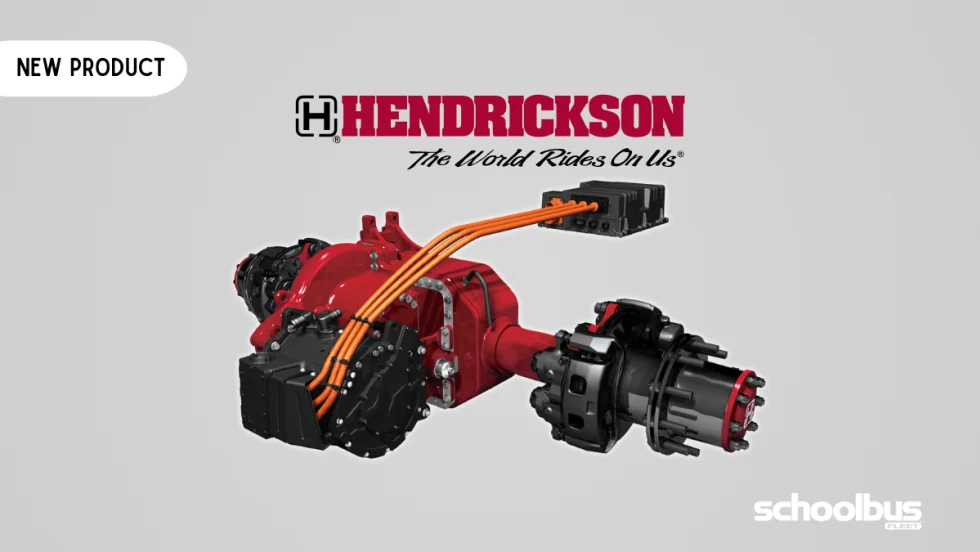
Hendrickson, Driventic Introduce New Electric Powertrain for School Buses
ELECTRAAX, the electrified, lightweight drive axle offers integrated ePowertrain efficiency and modular flexibility for Class 6–7 school bus use.
Read More →
The Mobility House Joins PowerFlex in Fleet Electrification Deal
The acquisition combines intelligent charging software, bidirectional charging expertise, and fleet electrification services to support the growing adoption of electric school buses across North America.
Read More →
Alt-Fuel Moves: Electric School Bus Investments Hit the Road
See which districts across the U.S. are putting electric school buses into service, expanding charging infrastructure, and planning the next phase of fleet electrification.
Read More →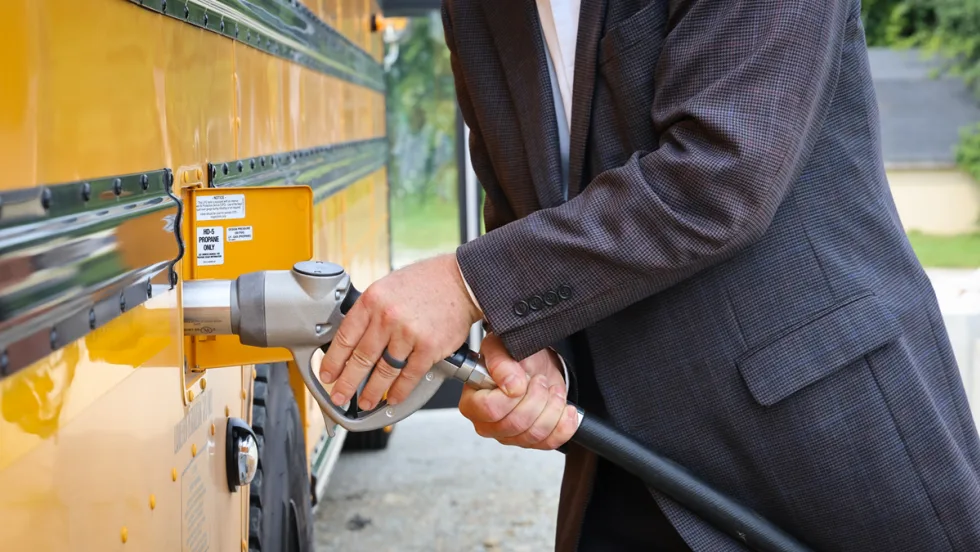
With Fuel Volatility Ahead, School Districts Turn to Propane
While diesel prices peaked above $5 this spring, districts with propane autogas-powered fleets paid under $2 per gallon, according to PERC.
Read More →
EPA Unveils Proposed Changes to 2027 Heavy-Duty Engine Rules
The federal agency has proposed changes to next year’s targets that would eliminate DEF derates, ease warranty requirements, and retain current NOx emissions standards.
Read More →
Alt-Fuel Moves: EV Charging & Infrastructure Projects Gain Momentum
The latest developments include new funding, charging infrastructure, utility investments, and fleet technologies designed to support the transition to electric school buses nationwide.
Read More →