




Update: District switches to 3-tier transportation
The board at Minnesota’s South Washington County Schools approves a plan to adjust bell times from four to three tiers, which will go into effect for the 2014-15 school year. However, the board decides against shortening walking distances to the levels at which they had been up until last school year.

COTTAGE GROVE, Minn. — Bell times at South Washington County Schools will change from four to three tiers, but student walking distances will remain at their increased levels.
Those are the key transportation-related outcomes of the South Washington school board’s meeting on Thursday. Bell times and walking distances were the subjects of several proposals to improve the district’s transportation service, as SBF previously reported.
Under the option that the board selected last week, an 8:10 a.m. start time tier will be eliminated, shifting three elementary schools to the 7:55 a.m. tier and eight elementary schools to the 8:40 a.m. tier. Also, a non-public school and a public charter school will be aligned with the late tier, which is a 9:20 a.m. start time.
The move is expected to increase on-time bus performance — the district has struggled with late buses in the afternoon for the elementary schools in the 8:10 a.m. to 2:40 p.m. tier.
Ron Meyer, South Washington’s director of transportation services, told SBF that cutting the 8:10 a.m. tier will also eliminate the district’s need for contracted busing for its regular-education routes.
The switch to three tiers will take effect at the start of the 2014-15 school year.
Another proposal that South Washington County Schools officials had been considering was to reduce walking distances from 1.5 miles to 1 mile for middle school students and from 2 to 1.5 miles for high school students. The shorter distances were in place before the current school year, when they were increased as a budget reduction measure. The cost to revert to the shorter walking distances for the 2014-15 school year would have been an estimated $143,751.
At last week’s meeting, the school board decided against reverting to the shorter walking distances. Meyer said that the combination of keeping the increased walking distances and eliminating contracted busing will result in an anticipated savings of $268,000.
More Management
How to Build a Better Driver Training Program
Ready to boost up your school bus instructor training? Here’s how to pick the right talent and improve recruitment, retention, and safety.
Read More →
CALSTART and Forth Combine to Form Catalyst Mobility
The new name represents a renewed vision for the nonprofit focused on advancing clean, equitable, and affordable transportation solutions that move people and goods.
Read More →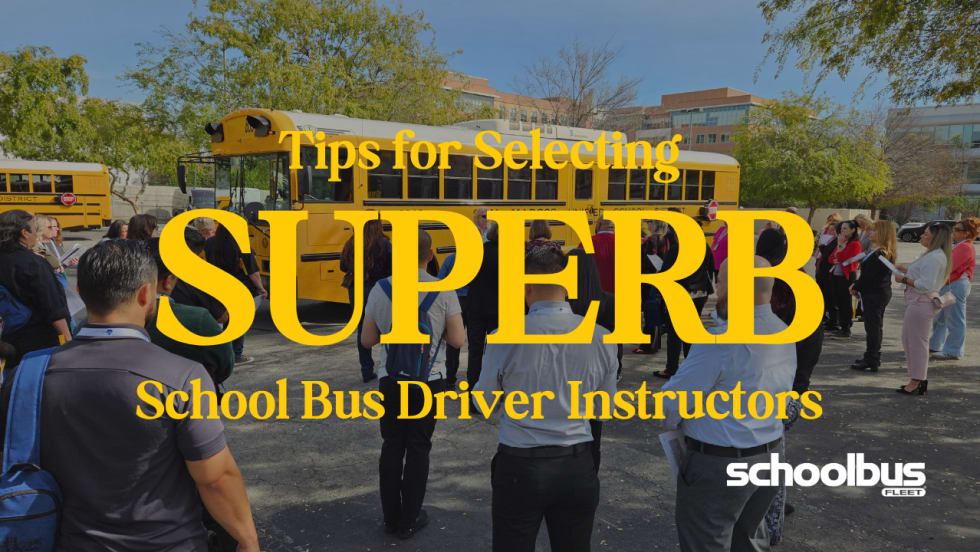
What Makes a Great School Bus Driver Trainer?
Choosing the right school bus driver trainer takes more than experience. Learn six keys to selecting and developing trainers and evaluating program effectiveness.
Read More →

School Bus Contractors Expand Through New Deals, Acquisitions & Partnerships
STA's Canadian division acquires Ontario-based G&L Stevenson Transport while Durham School Services adds a new district contract in California, First Student adds a New Jersey contract, and Minnesota Coaches acquires Halo Transportation.
Read More →
Logan Bus Company Rolls Out AI Phone System for NYC School Bus Families
A summer pilot found that AI agents could handle most routine calls, freeing up time for customer service staff to focus on emergencies and complex family concerns.
Read More →
From Intent to Impact: What I Learned About Leadership from TAPT
A Texas transportation supervisor shares lessons on self-awareness, accountability, managing stress and building trust — and why investing in leadership development matters at every stage of your career.
Read More →
NAPT Names 2026 Award Recipients, Hall of Fame Inductee
Who earned national recognition for their work in student transportation? This year, NAPT named five recipients of its 2026 awards for service, safety, and leadership, plus its newest Hall of Famer.
Read More →
2026 State of Student Transportation Report
Driver shortages. Rising costs. Growing safety expectations. More data, but not enough time to act on it. The 2026 State of Student Transportation Report reveals what transportation leaders say is putting the most pressure on their operations—and where they’re investing next. See how your priorities compare.
Read More →
How to De-Escalate an Angry Person: 5 Steps for Handling Workplace Conflict
What makes emotions run high, and how should you handle an angry colleague or parent? Follow these steps for staying calm, listening, showing empathy, and resolving conflict.
Read More →
What Readiness Looks Like This School Year
Learn about the challenges shaping the 2026–2027 school year, from persistent driver shortages and budget pressure to technology and readiness gaps. See how school districts are responding and adapting in Zonar’s 2026 Back-to-School Readiness Report.
Read More →