




Thomas Built Buses Invests $3 Million in Energy-Saving Initiatives
The school bus OEM will add energy-efficient heating systems and LED lighting in its offices and manufacturing facilities.

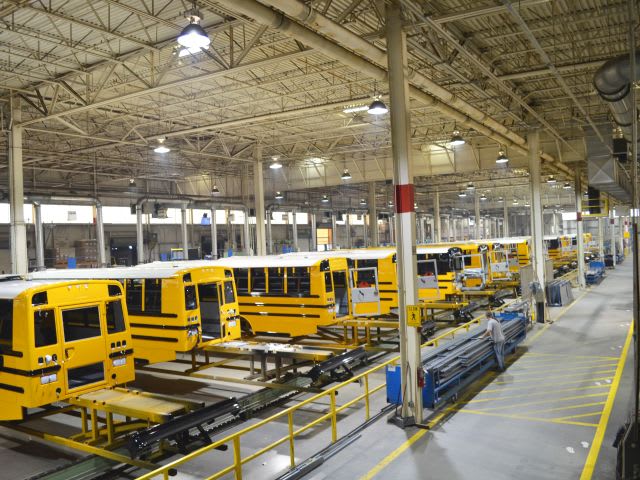
Thomas Built Buses will add energy-efficient heating systems and LED lighting in its offices and manufacturing facilities. Seen here is the Saf-T-Liner C2 plant.
Thomas Built Buses will add energy-efficient heating systems and LED lighting in its offices and manufacturing facilities. Seen here is the Saf-T-Liner C2 plant.
HIGH POINT, N.C. — Thomas Built Buses is expanding its eco program with a $3 million investment in energy-saving initiatives over the next two to three years.
The changes include energy-efficient heating systems and a $2 million investment to replace lighting fixtures with new energy-efficient LED lighting in the school bus OEM’s corporate offices and manufacturing plants.
Also, Thomas Built has invested in new hybrid security vehicles and plug-in electric pool vehicles that have the capacity to operate completely on electric power for local travel.
“While each of these initiatives may seem trivial, together they make a huge impact,” said Caley Edgerly, president and CEO of Thomas Built Buses. “In fact, lighting upgrades alone will save $475,000 per year in energy usage. These new initiatives will help us to further reduce our carbon footprint and become even cleaner in our operations.”
The new investment follows other sustainability initiatives that the company has embarked on over the past eight years.
In 2011, Thomas Built Buses achieved zero-waste-to-landfill operations, which means that everything received or produced by the company is used, reused, recycled, or sold, and nothing is sent to landfills. According to the company, that commitment decreased waste from more than 1,100 pounds per bus to zero waste being shipped to landfills.
In 2010, Thomas Built partnered with Duke Energy under a 25-year contract to create a photovoltaic solar field, which produces about 389 kilowatts of renewable energy for the Duke Energy power grid.
Also, all of Thomas Built’s manufacturing facilities are ISO 14001 certified, meeting an internationally recognized set of standards for environmental performance.
“With these new initiatives plus our zero-waste-to-landfill facility, solar panels, and a growing list of alternative-fuel and low-emissions school buses, we are proud to manufacture some of the best school buses on the road, all while preserving the environment and resources provided to us,” Edgerly said.
More Management

How to Build a Better Driver Training Program
Ready to boost up your school bus instructor training? Here’s how to pick the right talent and improve recruitment, retention, and safety.
Read More →
CALSTART and Forth Combine to Form Catalyst Mobility
The new name represents a renewed vision for the nonprofit focused on advancing clean, equitable, and affordable transportation solutions that move people and goods.
Read More →
What Makes a Great School Bus Driver Trainer?
Choosing the right school bus driver trainer takes more than experience. Learn six keys to selecting and developing trainers and evaluating program effectiveness.
Read More →

School Bus Contractors Expand Through New Deals, Acquisitions & Partnerships
STA's Canadian division acquires Ontario-based G&L Stevenson Transport while Durham School Services adds a new district contract in California, First Student adds a New Jersey contract, and Minnesota Coaches acquires Halo Transportation.
Read More →
Logan Bus Company Rolls Out AI Phone System for NYC School Bus Families
A summer pilot found that AI agents could handle most routine calls, freeing up time for customer service staff to focus on emergencies and complex family concerns.
Read More →
From Intent to Impact: What I Learned About Leadership from TAPT
A Texas transportation supervisor shares lessons on self-awareness, accountability, managing stress and building trust — and why investing in leadership development matters at every stage of your career.
Read More →
NAPT Names 2026 Award Recipients, Hall of Fame Inductee
Who earned national recognition for their work in student transportation? This year, NAPT named five recipients of its 2026 awards for service, safety, and leadership, plus its newest Hall of Famer.
Read More →
2026 State of Student Transportation Report
Driver shortages. Rising costs. Growing safety expectations. More data, but not enough time to act on it. The 2026 State of Student Transportation Report reveals what transportation leaders say is putting the most pressure on their operations—and where they’re investing next. See how your priorities compare.
Read More →
How to De-Escalate an Angry Person: 5 Steps for Handling Workplace Conflict
What makes emotions run high, and how should you handle an angry colleague or parent? Follow these steps for staying calm, listening, showing empathy, and resolving conflict.
Read More →
What Readiness Looks Like This School Year
Learn about the challenges shaping the 2026–2027 school year, from persistent driver shortages and budget pressure to technology and readiness gaps. See how school districts are responding and adapting in Zonar’s 2026 Back-to-School Readiness Report.
Read More →