




Thomas Built Buses Debuts Pedestrian Detection Prototype
When a pedestrian is detected, the system will alert the driver on an in-cabin tablet as well as through caution lights on the cross-view mirrors.

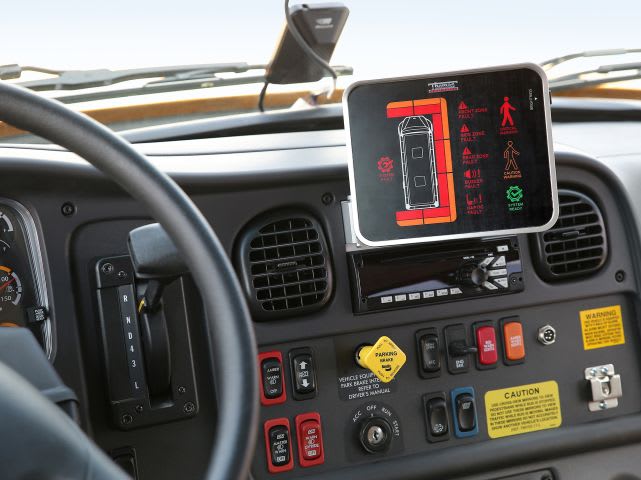
When a pedestrian is detected, Thomas Built’s new system will alert the driver on an in-cabin tablet and through caution lights on the cross-view mirrors.
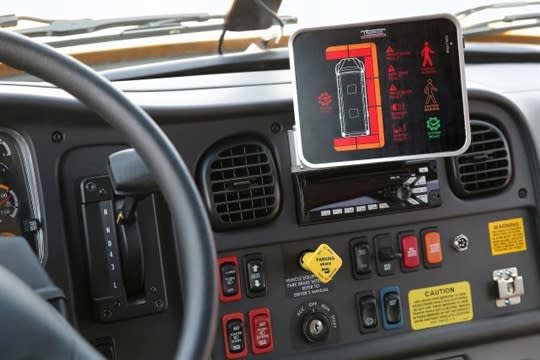
When a pedestrian is detected, Thomas Built’s new system will alert the driver on an in-cabin tablet and through caution lights on the cross-view mirrors.
HIGH POINT, N.C. — Thomas Built Buses debuted a prototype of its new pedestrian detection technology at the STN Expo on Tuesday.
Leslie Kilgore, vice president of engineering for Thomas Built Buses, said that the company has been working with MITO Corp. and CUB Group to develop the pedestrian detection system, and “the technology is 90% there.” The goal is to prevent accidents in the danger zone around the school bus, such as when students step too close or kneel down to pick something up.
“As diligent as bus drivers may be, sometimes they just can’t see a child around certain areas of the outside of the bus,” Kilgore said. “That’s the problem we are hoping to solve. With our new pedestrian detection system, we hope to avoid unnecessary pedestrian accidents in the front, back, and sides of our buses, even within blind spots.”
Part of the BusWise Technologies suite, the new pedestrian detection feature will consist of LED ground lights on the cross-view mirrors as well as multiple radar units on the 77GHz frequency band, which will be installed around a Thomas Built bus. These higher-frequency radars, which are used for autonomous vehicles and high-resolution meteorological observations, allow for more precise detection and measurement of a pedestrian or object within 10 feet of the school bus, according to Thomas Built Buses. When a pedestrian is detected, the system will alert the driver on an in-cabin tablet as well as through caution lights on the cross-view mirrors.
“We are fortunate to have partners like Thomas Built Buses that share the values of protecting the lives of school children,” said Dan Maloney, president of MITO Corp. “Along with our partners at CUB, our team strives to continually provide the finest and most thorough technology available to mitigate a tremendous issue facing the school transportation industry.”
“CUB is extremely excited to work with the industry leader, Thomas Built Buses, on such an important feature,” said Augustin Leung, vice president of the ADAS (advanced driver-assistance systems) division of CUB Group North America. “Saving lives and mitigating accidents is a key focus to CUB since we are an industry leader in ADAS and driver safety devices.”
Thomas Built Buses will show the pedestrian detection system at other upcoming shows and will announce a production date in the near future.
More Safety
Illegal School Bus Passing Drops 24% in New York Districts
With fewer than 5% of citations involving repeat offenders, Westchester County officials said enforcement, education, and community partnerships are helping change driver behavior.
Read More →
School's Back. Here's What Happened to Traffic, Speeding & Distraction
What happens to traffic when school resumes? New data analysis examines changes in distracted driving, congestion, and speeding around schools.
Read More →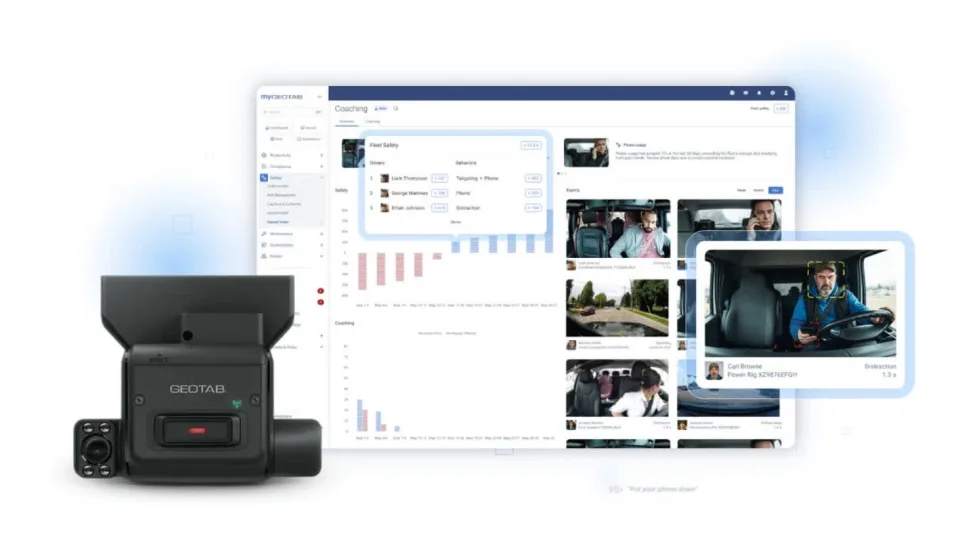
Geotab Expands Fleet Safety Tools With Video Coaching, Risk Insights
New safety and video capabilities aim to help fleet managers assess risk, support drivers, and take targeted action through video coaching, red-light violation detection, and more.
Read More →
How to Build a Better School Bus Driver Training Program
Is it time to strengthen your driver training? Here’s how to pick the right talent and improve recruitment, retention, and safety. This video is brought to you by IC Bus.
Read More →
Recent School Bus Accidents Leave 2 Dead, 2 Injured
Four school bus crashes in Florida, Illinois, and Georgia highlight risks in transportation lots, at bus stops, and during student loading and unloading.
Read More →
When Every Second Matters, Clarity Keeps Routes Moving
From routine delays to urgent incidents, strong communication practices help drivers, dispatchers, schools, and families respond with confidence.
Read More →
What Happens When a School Bus Catches Fire — and What Can Help
School bus fires are rare but can be devastating. Learn how advances in fire suppression and asset protection help fleets detect fires earlier, reduce damage, and improve safety.
Read More →
Geotab Launches Tool to Help Fleets Investigate Road Incidents
Geotab Investigations combines telematics data, video, documents, and other evidence to help fleets reconstruct incidents, resolve claims, and determine what happened.
Read More →
Texas Sixth Grader Wins 2026 National School Bus Safety Poster Contest
Sai Darshana Yekolu of Moseley Middle School in Prosper, Texas, was named the newest winner for her artwork, bringing the theme of “Safe Rides, Everyday Heroes” to life.
Read More →
Doing More With Less: How Transportation Directors Can Prioritize Safety Amid Budget Uncertainty
With diesel prices soaring and nearly one-third of transportation directors expecting budget cuts, maintaining student safety has never been more challenging. Download this guide to learn how leading districts are prioritizing risk, funding critical safety technology, and building stronger budget cases with data.
Read More →