




Study: Masks, Open Windows on Buses Reduce Potentially Infectious Particles
Not-for-profit MITRE’s research shows that opening windows, using fans can reduce exhaled airborne particles on the bus by up to 84%. Simply wearing a mask can reduce particle spread by 50% or more.
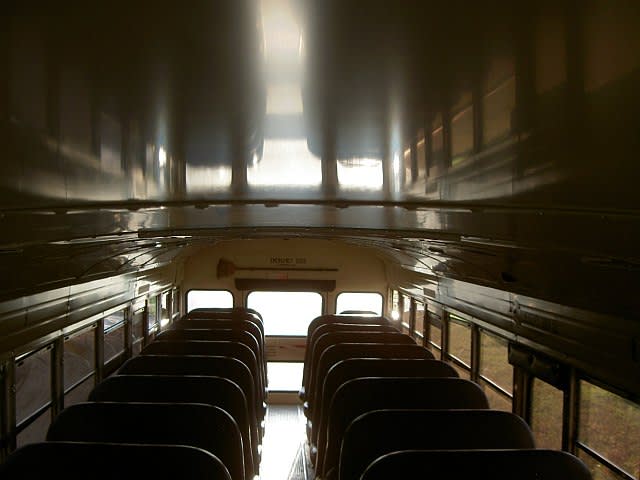
Not-for-profit MITRE’s research shows that opening windows and using fans on the bus can reduce exhaled airborne particles on the bus by up to 84%. Simply wearing a mask can reduce particle spread by 50% or more.
File photo courtesy John Horton
A study conducted by the not-for-profit organization MITRE shows that lowering windows, using fans, and having drivers and passengers on a bus wear masks cuts down significantly on the spread of potentially infectious particles.
Opening windows and using fans on a bus can reduce exhaled airborne particles by up to 84%, potentially lowering the risk of COVID-19 exposure. Meanwhile, wearing a mask alone can also reduce the spread of potentially infectious particles by 50% or more, depending on the quality of the mask, according to a MITRE news release on the study.
In its research, the organization used buses provided by the City of Colorado Springs Mountain Metro Transit and Colorado Springs School District 11 to test aerosol dispersion on buses and determine the best methods to control potentially infectious airborne particles such as the coronavirus.
When an infected person exhales, sneezes, or coughs, they create small aerosol particles containing the disease, which then spreads or is dispersed throughout the air space in the bus.
The study included more than 84 test runs on both school buses and low-floor transit buses using a mechanical cough simulator that dispersed the test aerosol while the buses drove normal routes over 10 days between Aug. 3 and Sept. 4. The safe sodium chloride test aerosol generated a variety of particle sizes down to 300 nanometers — similar to a human cough. The particles were detected by 28 sensors placed throughout the passenger areas. No passengers were on the buses during the study.
Unlike a highly engineered passenger cabin of a commercial aircraft, buses have turbulent environments where the airflow is not steady, making this type of study complex, according to MITRE.
MITRE has posted a video that shows the experiments in action.
Transportation Leaders Share Reopening Plans, Experiences
After 78.3 million data points and 124 miles of on-the-road testing, key results include:
Wearing masks reduced the overall particle count released into the bus by an average of 50% or more and reduced the dispersion distance by several feet.
When masks were not worn, dispersed particles spread through the entire bus.
Having all the windows open and dashboard fans running reduced the particle counts by an average of 84% on school buses and 50% on transit buses.
Likewise, the windows and fans also reduced the time that particles remain aloft by 80% in school buses and 60% in transit buses.
Bus HVAC systems, when used with air filters that have a MERV rating of MERV-13, eliminated airborne particles within four minutes. (This finding is only applicable to transit buses.)
The back row of seats tends to accumulate more particles.
The MITRE team, led by scientist Nathan Edwards, worked to understand the risk of airborne particle transmission while riding on school and public transportation buses, and to bring scientific clarity of the best protection options for all public transportation systems.
VIDEO: Washington District Details COVID School Bus Safety Measures
While the results and recommendations seem intuitive, the data may help inform decisions on the best COVID-19 risk mitigation options for public transit, according to MITRE.
The key recommendations from this study are:
Require all passengers and drivers to wear masks on buses.
Open windows partially or fully to make a significant difference in reducing airborne risks.
Drivers and operators can reduce their risk of exposure by using a dashboard fan to create airflow in the driver seat area.
Consider seating arrangements that only allow for same-household passengers to sit together.
Social distancing of 6 feet is not practical on most buses, but any extra distance allows the air movement to reduce exposure to infectious particles.
When it is safe and possible to do so, open transit bus doors at every stop to allow for better air exchange.
When it is not possible to open windows and doors due to weather, or to add better filtration to the buses, consider canceling bus services.
More Safety
School's Back. Here's What Happened to Traffic, Speeding & Distraction
What happens to traffic when school resumes? New data analysis examines changes in distracted driving, congestion, and speeding around schools.
Read More →
Geotab Expands Fleet Safety Tools With Video Coaching, Risk Insights
New safety and video capabilities aim to help fleet managers assess risk, support drivers, and take targeted action through video coaching, red-light violation detection, and more.
Read More →
How to Build a Better School Bus Driver Training Program
Is it time to strengthen your driver training? Here’s how to pick the right talent and improve recruitment, retention, and safety. This video is brought to you by IC Bus.
Read More →

Recent School Bus Accidents Leave 2 Dead, 2 Injured
Four school bus crashes in Florida, Illinois, and Georgia highlight risks in transportation lots, at bus stops, and during student loading and unloading.
Read More →
When Every Second Matters, Clarity Keeps Routes Moving
From routine delays to urgent incidents, strong communication practices help drivers, dispatchers, schools, and families respond with confidence.
Read More →
What Happens When a School Bus Catches Fire — and What Can Help
School bus fires are rare but can be devastating. Learn how advances in fire suppression and asset protection help fleets detect fires earlier, reduce damage, and improve safety.
Read More →
Geotab Launches Tool to Help Fleets Investigate Road Incidents
Geotab Investigations combines telematics data, video, documents, and other evidence to help fleets reconstruct incidents, resolve claims, and determine what happened.
Read More →
Texas Sixth Grader Wins 2026 National School Bus Safety Poster Contest
Sai Darshana Yekolu of Moseley Middle School in Prosper, Texas, was named the newest winner for her artwork, bringing the theme of “Safe Rides, Everyday Heroes” to life.
Read More →
Doing More With Less: How Transportation Directors Can Prioritize Safety Amid Budget Uncertainty
With diesel prices soaring and nearly one-third of transportation directors expecting budget cuts, maintaining student safety has never been more challenging. Download this guide to learn how leading districts are prioritizing risk, funding critical safety technology, and building stronger budget cases with data.
Read More →
Walton County Schools Adds Gatekeeper Stop-Arm Enforcement System
The Florida district will deploy Gatekeeper’s updated Student Protector technology, which now incorporates AI to improve video evidence.
Read More →