




School bus veteran, alt-fuel advocate Jerry Rineer to retire
Rineer, who has more than 40 years of experience in school transportation, has become a “go-to guy” for colleagues across the country who are interested in alternative fuels.

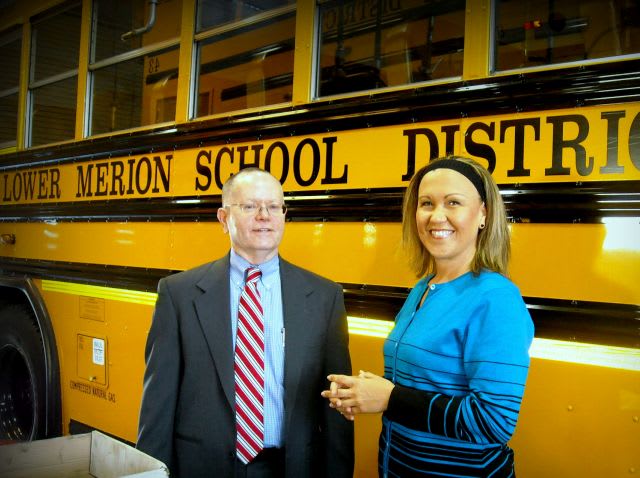
Jerry Rineer of Lower Merion School District is pictured with Yolanda Vazquez, a reporter for MotorWeek, which profiled the district’s CNG buses.
ARDMORE, Pa. — After several decades in the pupil transportation industry, Jerry Rineer didn’t expect to become a “go-to guy” for colleagues across the country who are interested in alternative fuels.
But operating 61 school buses powered by compressed natural gas (CNG) — which makes up nearly half of Lower Merion School District’s fleet of 117 buses — has given Rineer considerable experience and insight that he enthusiastically shares with anyone who asks.
“Lower Merion is known as a national leader in the use of CNG buses, and I get daily calls from fleet managers, university researchers and even hosted federal agency employees who were studying CNG vehicle safety,” Rineer said.
PHOTO GALLERY: To view a variety of photos of Rineer, his staff and family, and a recent trip to India, go here.
Now, with more than 40 years in school transportation, Rineer will retire from his position as Lower Merion’s supervisor of transportation at the end of December.
Rineer’s yellow bus career began in 1973, when he was hired at Romano’s School Bus Service in Pennsylvania. During his time with the contractor, he worked as a driver, a mechanic’s helper, a dispatcher and a manager for the company’s Philadelphia location.
Rineer also recruited his father, Earl Rineer, to become a school bus driver for Romano’s. Earl Rineer, a World War II veteran, soon started training new drivers, and he continues to work in that role for Sague Bus Service, also in Pennsylvania.
In 1984, Jerry Rineer joined the School District of Philadelphia as a route coordinator for the office of desegregation. Over the years, he rose through the ranks and eventually became general manager of transportation, overseeing the operation of 700 district school buses, 450 support vehicles, 700 contracted bus routes and the distribution of public transit passes to 58,000 students.
Rineer’s experience with cleaning up school bus emissions began at the School District of Philadelphia. The district received grants to transition to ultra-low-sulfur diesel and to retrofit 250 buses with clean-burning technology.
It was when he joined Lower Merion School District in 2011 that Rineer started to move into the forefront of alternative fuels in pupil transportation. Working with Philadelphia Clean Cities and a grant consultant, the district has received annual grants to purchase CNG-powered vehicles.
Rineer has given presentations in web seminars and in person to explain the operational and environmental benefits of using CNG in transportation.
A couple of years ago, public television program MotorWeek did a segment highlighting Lower Merion’s CNG buses. The district has also won awards for its green fleet initiatives.
Rineer said that his ties to pupil transportation and clean fuels won’t end with his retirement.
“I have met the most amazing people dedicated to the safe transport of our most precious cargo. ... [I] hope to stay connected to a career that I love and have been dedicated to for all these years,” Rineer said, adding, “I look forward to being involved in clean fuel fleet efforts in the future, because I really believe in the benefits to our country from using domestic fuels.”
More Alternative Fuels
Alt-Fuel Moves: Electric Bus Rollouts, Bidirectional Charging & Propane Growth
See which fleets are adding electric and propane school buses as districts and operators invest in charging infrastructure, bidirectional technology, and alternative-fuel expansion.
Read More →
Nobody Told Diesel Prices They Were Supposed to Come Down
With diesel prices surging, school bus fleets have new reason to stress-test fuel costs, consider diversification, and calculate what each route really costs to operate.
Read More →
Why Gasoline School Buses Are Making a Comeback
Gasoline is gaining ground in full-size school buses. See how today’s options stack up against diesel on cost, maintenance, emissions, performance, and more.
Read More →
EPA Opens $180M DERA Funding Round for Diesel Upgrades
The 2026 Diesel Emissions Reduction Act program seeks applications from eligible organizations to accelerate the retirement of legacy diesel vehicles.
Read More →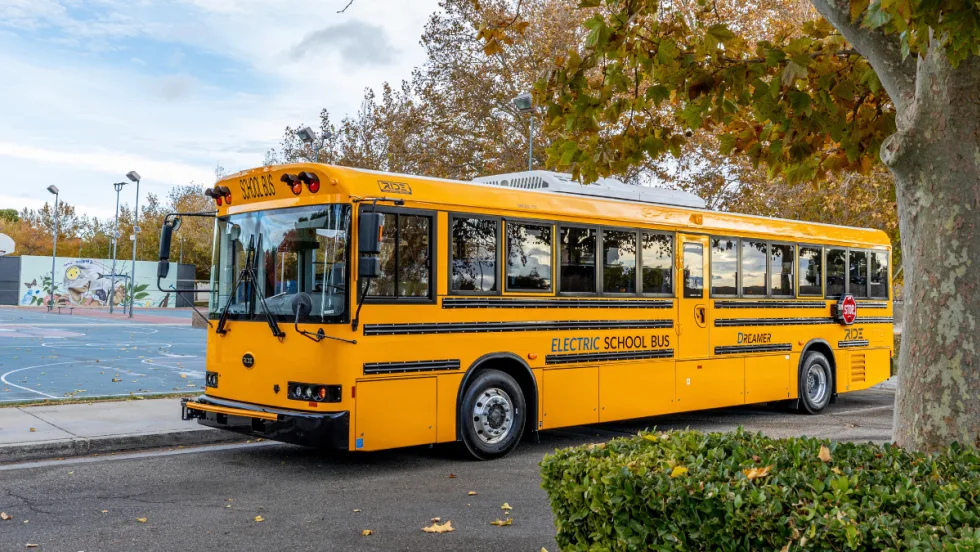
The Secret Life of an Electric School Bus Battery
Batteries change throughout years of daily routes, but degradation doesn’t necessarily mean the end. Here’s what operators should know about performance, safety, and second life.
Read More →
CALSTART and Forth Combine to Form Catalyst Mobility
The new name represents a renewed vision for the nonprofit focused on advancing clean, equitable, and affordable transportation solutions that move people and goods.
Read More →
Alt-Fuel Moves: New Buses, Charging Hubs & Real-World EV Testing
Propane and electric school bus deployments continue to grow as districts add new vehicles, expand charging infrastructure, and gather more real-world operating data.
Read More →
Fewer Electric School Bus Models Reshape the U.S. Market
WRI’s latest buyer’s guide points to a consolidating electric school bus market, but fewer options may reflect a maturing industry rather than fewer meaningful choices for school bus operators.
Read More →
The Fuel Budget You Can Actually Predict: How Propane Autogas Keeps Money in the Classroom
Learn how propane autogas helps school districts manage fuel costs with predictable pricing, lower maintenance, and reduced emissions from former transportation director Joel Stutheit.
Read More →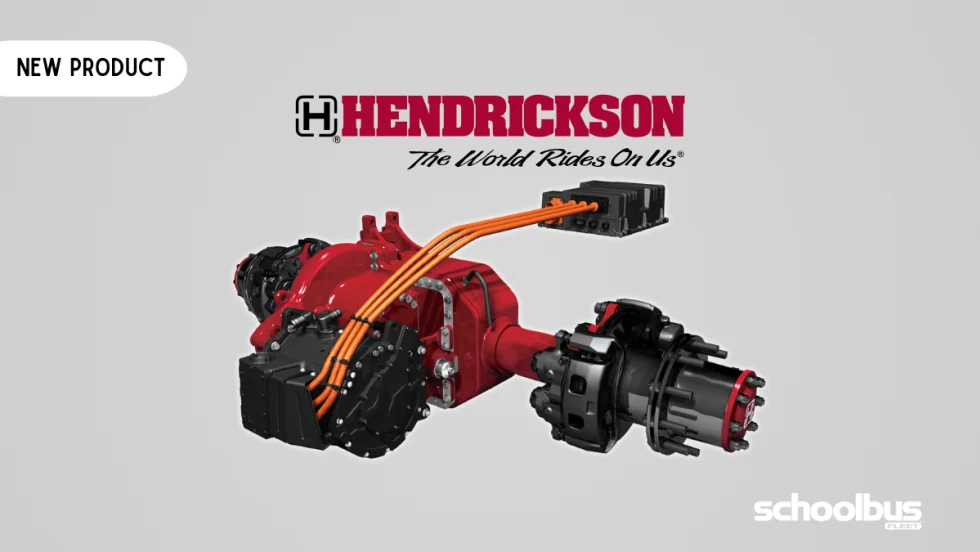
Hendrickson, Driventic Introduce New Electric Powertrain for School Buses
ELECTRAAX, the electrified, lightweight drive axle offers integrated ePowertrain efficiency and modular flexibility for Class 6–7 school bus use.
Read More →