




School Bus eXchange attendees discuss keys for success
At the inaugural SBX event, school transportation officials share ideas on such topics as efficiency, technology and identifying the outputs of a successful operation.

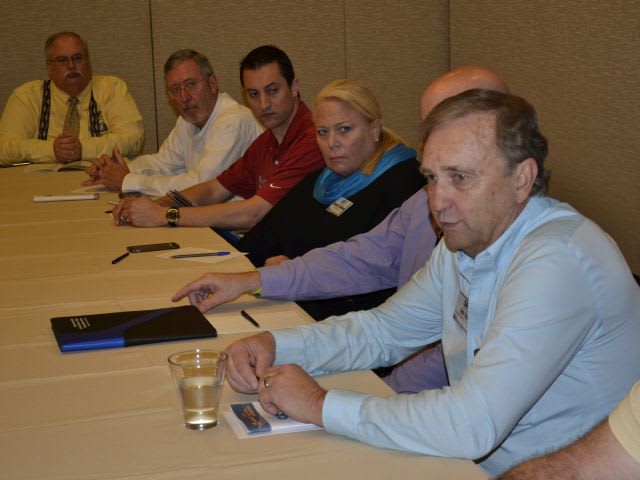
Bob Young (right), director of transportation at Boulder (Colo.) Valley School District, talks with other SBX attendees during a roundtable on operational efficiency.
ROCKWALL, Texas — More than two dozen school transportation officials from across the country gathered here this week to share ideas and to network during the inaugural School Bus eXchange (SBX).
The two-day event, held by the National Association for Pupil Transportation and School Bus Fleet, focused on connecting public and private school bus operators and industry suppliers to discuss solutions for common challenges in the industry.
Keynote speaker Mark Aesch set the tone by encouraging attendees to identify the outputs of success for their operations. Examples for school transportation might include standards like 95% on-time school drop-offs, no preventable accidents, 90% parent/student satisfaction and operating within budget.
“If we don’t define success, guess who does: everybody else,” Aesch said. “We have to define success.”
He recommended developing a scorecard with various factors that boil down to one number. The goal, he said, is to “demonstrate that taxpayers are getting a return on their investment.”
Also on the agenda at SBX was a series of roundtables. Attendees discussed challenges and solutions in four key areas: operational efficiency, fleet metrics, school bus driver shortage, and technology and software.
“We’re here from all over the country, but we have a lot of the same problems,” said Brian Weisinger, who led the roundtable on fleet metrics. “One is keeping buses under 15 years. How do you get rid of these old buses? How do you justify getting new ones?”
Walter Prothro, director of transportation for Georgetown (Texas) Independent School District, pointed to a term he learned in the military: “uneconomically repairable,” meaning that a vehicle has gotten to the point in which maintenance has become too expensive. He suggested using data from a fleet management system to show the school board when a bus has become uneconomically repairable.
The fleet metrics discussion also touched on tracking the frequency and cost of road calls, trying to develop a sustainable fleet replacement program, and assessing the advantages of buying or leasing buses.
Peter Mannella led the roundtable on driver shortage. Attendees shared a variety of ideas, such as implementing hiring bonuses, recruiting retirees and holding an event to let prospective drivers get behind the wheel of a bus.
Another element of the SBX event was one-on-one consultations, in which school bus operators were given scheduled times to meet with school bus manufacturers and equipment suppliers. The idea was to help attendees learn about potential solutions for the challenges that their operations are facing.
Look for more coverage of SBX online in the coming week and in the June issue of School Bus Fleet.
More Management
EverDriven Launches Route Consolidation Calculator to Estimate Diesel Savings
As diesel prices hit record highs, the largest alternative transportation provider says a 10% route consolidation could save a 120-route district more than $78,000 a year in fuel alone.
Read More →
Zum Secures Continued Financing Support for School Bus Expansion
Generate Private Credit has financed approximately $75 million in school bus deployments across three states, supporting more than 500 buses as Zum expands across the county.
Read More →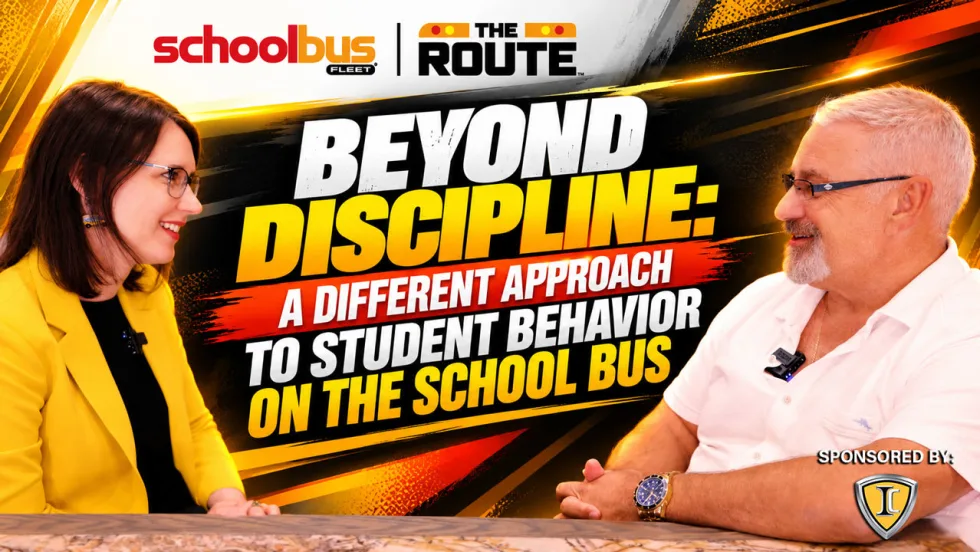
Beyond Discipline: A Different Approach to Student Behavior on the Bus
After implementing a dean of students program in Oregon, North Clackamas is seeing positive improvements. Here’s how it worked. The Route is brought to you by IC Bus.
Read More →
A Dean of Transportation's Different Approach to Student Behavior on the School Bus
After implementing a dean of students program in Oregon, North Clackamas is seeing positive improvements on the bus. Here’s how it worked.
Read More →
Inside NAPT ACTS 2026: Highlights from Louisville
From federal updates and student behavior strategies to new school bus technology and industry awards, see highlights from NAPT ACTS 2026 in Louisville.
Read More →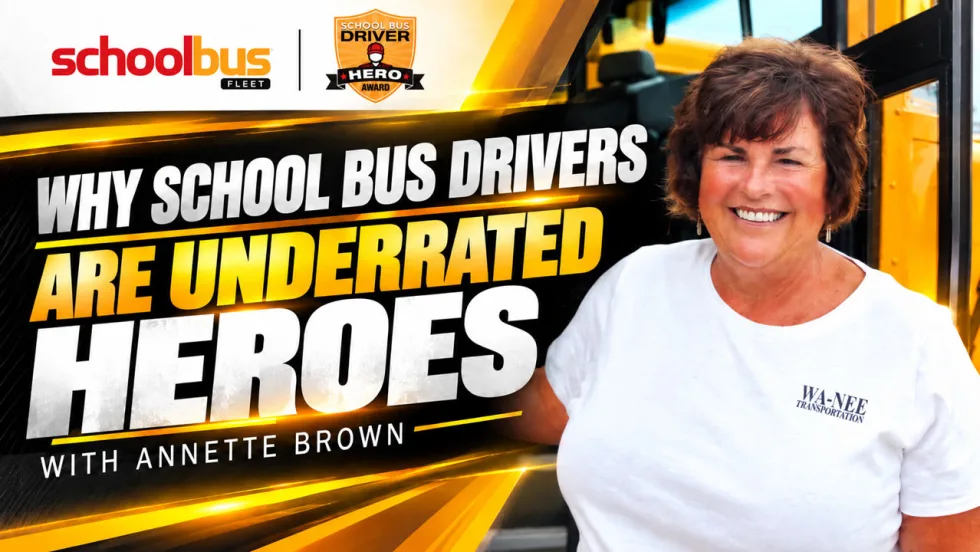
Meet the 2025 School Bus Driver Hero Winner: Annette Brown
We caught up with Wa-Nee Community Schools' Annette Brown on site at SBFX, where she was named the 2026 School Bus Driver Hero Award winner. Hear about her reaction, what she loves most about being a school bus driver, and more!
Read More →
Predictability Is Like Ketchup (According to 6-Year-Olds)
To students, a different school bus can feel like a full-blown crisis. One driver reflects on why familiar routines, showing up on time, and being reliably boring matter more than we think.
Read More →
Samsara Launches Free Driver Rewards Program
The new Driver Perks program gives eligible professional drivers access to discounts and offers without adding a cost for participating fleets.
Read More →
How Tax-Exempt Municipal Leases Can Help Finance School Buses
Let’s explore school bus financing options, including municipal leases, vendor payable accounts, and balloon payments, and how they can help stretch fleet budgets.
Read More →
Nominate Rising School Transportation Pros Under 40!
We’re searching for the next generation of leaders making an impact across the K-12 student transportation industry to recognize as SBF’s 2027 Trailblazers. Nominations are open now!
Read More →