




School bus company goes blue for bullying prevention
More than 750 drivers, monitors and other employees at All-Star Transportation don blue T-shirts calling for students to “Be Nice on My Bus!” The move is part of the fourth annual Blue Shirt Day, the World Day of Bullying Prevention.

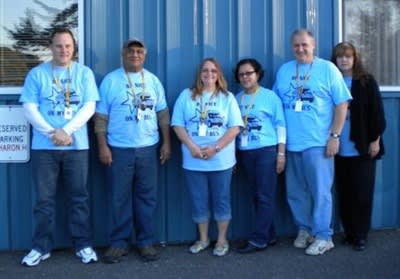
Staff at All-Star Transportation’s Seymour, Conn., location wear blue T-shirts with a call to “Be Nice on My Bus!” as part of the World Day of Bullying Prevention. From left: Manager Steve Gardner and drivers Luke Ishman, Mary Banks, Ana Molina, Robert Stow and Debra MacGregor.
WATERBURY, Conn. — More than 750 school bus drivers, monitors and other employees at All-Star Transportation on Monday donned blue T-shirts calling for students to “Be Nice on My Bus!”
The move is part of the fourth annual Blue Shirt Day, the World Day of Bullying Prevention, which is held on the first Monday of October. Also, October is National Bullying Prevention Awareness Month.
“There is no such thing as 'sticks and stones will break my bones but names will never hurt me’ in real life,” said Safety Supervisor Brenda Bass, who spearheaded the effort at All-Star Transportation. “A child who is bullied is scarred, and it can affect them for the rest of their life.”
Connecticut school bus drivers are mandated by state law (since January 2012) to report in writing any potential bullying issues on buses within 24 hours of the incident. All-Star Transportation drivers have received awareness and prevention training.
"Our buses need to have a safe and secure climate so that each child can feel comfortable and safe," said Leslie Sheldon, co-owner of All-Star Transportation.
Company officials noted the unique environment of a school bus, with one driver responsible for up to 78 children per route while driving a 40-foot vehicle and facing away from the passengers.
“Drivers are expected to maintain the safety inside the bus while facing roads with the challenges that they bring," Bass said.
In 2009, a federal rule went into effect requiring that all new school buses be equipped with 24-inch-high seat backs, which was a 4-inch increase on the height previously mandated.
All-Star officials said that while the increase was made to improve safety in a crash, it makes it even more challenging for the driver to see younger children over the height of the seats.
All-Star Transportation is owned and operated by the Dufour family, which has been in the school transportation business in Connecticut for more than 45 years. The company operates solely in Connecticut, providing school bus transportation services to 30 communities in Litchfield, New Haven, Hartford and upper Fairfield counties.
Other recent articles related to bullying:
• Study: Students with disabilities more likely to be bullied
More Safety
HopSkipDrive Reports Progress on Safety Advisory Council
More than a year after forming the council, independent safety experts have helped shape new rider-safety features and policy progress, with a new goal to address rider behavior.
Read More →
What the 2026 National School Bus Safety Month Resolution Means for Student Transportation
The bipartisan resolution highlights illegal school bus passing, student safety during loading and unloading, and the need for driver training and public education.
Read More →
School Bus Stop-Arm Violations Decline 53% Across Verra Mobility Programs
Verra Mobility shares how school bus stop-arm cameras and school zone safety programs are changing driver behavior, reducing violations, and protecting students.
Read More →
Most Bus Crashes Aren’t Your Fault. Here’s How to Prove It.
A guide for what to do in between a school bus crash and a claim: what to preserve, who to notify, and how to keep the facts available when they matter.
Read More →
National School Bus Safety Week 2026: Tips, Toolkits & Resources to Keep Students Safe
School bus safety takes more than awareness. Explore expert tips, enforcement strategies, and free resources to help protect students on every ride.
Read More →
2 Killed, Dozens Injured in Florida School Bus Crash
A multi-vehicle collision caused a Polk County school bus carrying 37 students to overturn on its way to Winter Haven High School.
Read More →
Illegal School Bus Passing Drops 24% in New York Districts
With fewer than 5% of citations involving repeat offenders, Westchester County officials said enforcement, education, and community partnerships are helping change driver behavior.
Read More →
School's Back. Here's What Happened to Traffic, Speeding & Distraction
What happens to traffic when school resumes? New data analysis examines changes in distracted driving, congestion, and speeding around schools.
Read More →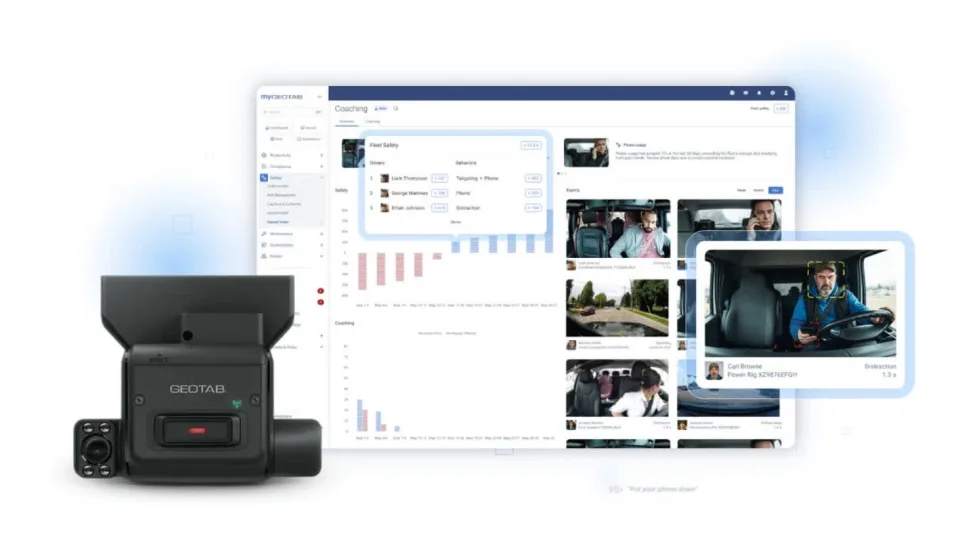
Geotab Expands Fleet Safety Tools With Video Coaching, Risk Insights
New safety and video capabilities aim to help fleet managers assess risk, support drivers, and take targeted action through video coaching, red-light violation detection, and more.
Read More →
How to Build a Better School Bus Driver Training Program
Is it time to strengthen your driver training? Here’s how to pick the right talent and improve recruitment, retention, and safety. This video is brought to you by IC Bus.
Read More →