




Safety hotline keeps bus drivers in check
When a North Carolina student noticed that her school bus driver wasn’t wearing a seat belt, she knew whom to call. The reason? An innovative pilot program has stickers inside buses with a phone number for reporting violations.

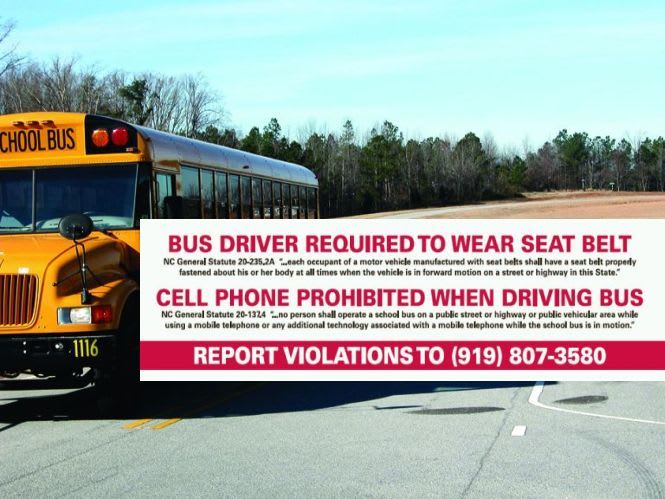
In an innovative pilot program in North Carolina, a sticker inside school buses explains that drivers must wear their seat belts and refrain from talking on cell phones while driving. Below those state statutes is a number to call to report violations.
When a North Carolina student noticed that her school bus driver wasn’t wearing a seat belt, she knew whom to call.
The reason? There is a sticker inside the bus explaining that drivers must wear their seat belts and refrain from talking on cell phones while driving. Below those state statutes is the note “Report violations to (919) 807-3580.”
Derek Graham, section chief of transportation services for the North Carolina Department of Public Instruction, told SBF that the idea of this pilot program is “to remind drivers to comply with the law and that students are watching them.”
Currently, there are four school districts participating in the program, which began about a year and a half ago. Calls to the hotline go to a voicemail, and Graham and his staff retrieve the messages periodically and send reports of violations to the districts.
In the aforementioned case, in January, the middle school student called the hotline and left a message that her driver wasn’t buckled up. The pupil noted the bus number but not the name of the school or district.
The morning after retrieving the call, Graham sent the student a text message thanking her and asking what school the bus served. That afternoon, the student texted back the name of the school. About a minute later, she sent Graham another text: “And she’s not wearing it again, NOW.”
Graham sent a report to the district’s transportation director, who uses a Blackberry and got the e-mail right away. The district has GPS on all of its buses and so was able to quickly identify the location of the bus in question. A supervisor was sent to confirm that the driver was indeed not wearing her seat belt, and the driver was disciplined.
Graham said that the hotline has not been inundated with calls since the pilot program began — about 50 last school year and 10 this year.
“The small number of calls indicates to me that our bus drivers are, for the most part, doing what they are supposed to,” he said. “But there are always some people — in all professions — that might try to take the easy way out sometimes.”
Graham emphasizes how, in the recent case, the technology used by the student, the state and the district helped to correct the situation.
“And we hope the word will spread,” he added, “so other drivers might think twice if they are tempted.”
More Safety
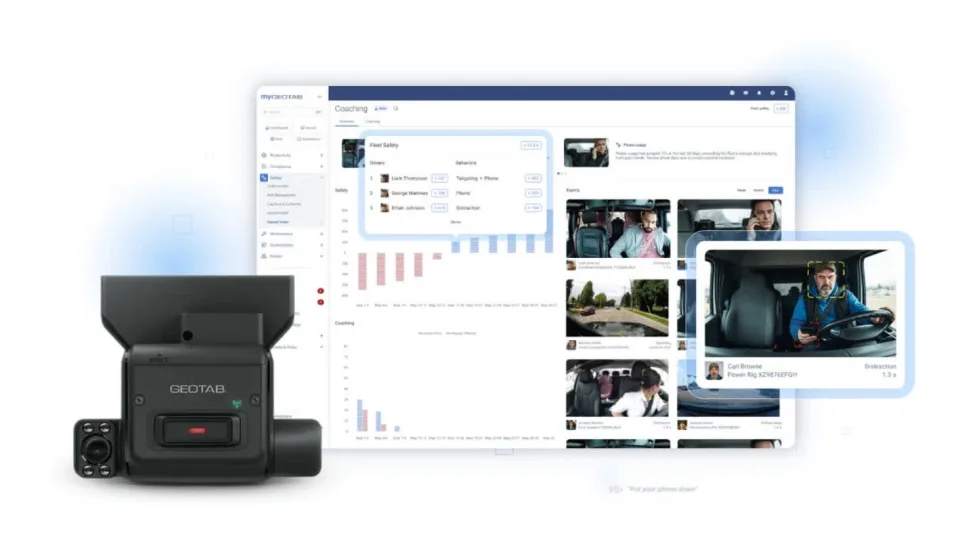
Geotab Expands Fleet Safety Tools With Video Coaching, Risk Insights
New safety and video capabilities aim to help fleet managers assess risk, support drivers, and take targeted action through video coaching, red-light violation detection, and more.
Read More →
How to Build a Better School Bus Driver Training Program
Is it time to strengthen your driver training? Here’s how to pick the right talent and improve recruitment, retention, and safety. This video is brought to you by IC Bus.
Read More →
Recent School Bus Accidents Leave 2 Dead, 2 Injured
Four school bus crashes in Florida, Illinois, and Georgia highlight risks in transportation lots, at bus stops, and during student loading and unloading.
Read More →

When Every Second Matters, Clarity Keeps Routes Moving
From routine delays to urgent incidents, strong communication practices help drivers, dispatchers, schools, and families respond with confidence.
Read More →
What Happens When a School Bus Catches Fire — and What Can Help
School bus fires are rare but can be devastating. Learn how advances in fire suppression and asset protection help fleets detect fires earlier, reduce damage, and improve safety.
Read More →
Geotab Launches Tool to Help Fleets Investigate Road Incidents
Geotab Investigations combines telematics data, video, documents, and other evidence to help fleets reconstruct incidents, resolve claims, and determine what happened.
Read More →
Texas Sixth Grader Wins 2026 National School Bus Safety Poster Contest
Sai Darshana Yekolu of Moseley Middle School in Prosper, Texas, was named the newest winner for her artwork, bringing the theme of “Safe Rides, Everyday Heroes” to life.
Read More →
Doing More With Less: How Transportation Directors Can Prioritize Safety Amid Budget Uncertainty
With diesel prices soaring and nearly one-third of transportation directors expecting budget cuts, maintaining student safety has never been more challenging. Download this guide to learn how leading districts are prioritizing risk, funding critical safety technology, and building stronger budget cases with data.
Read More →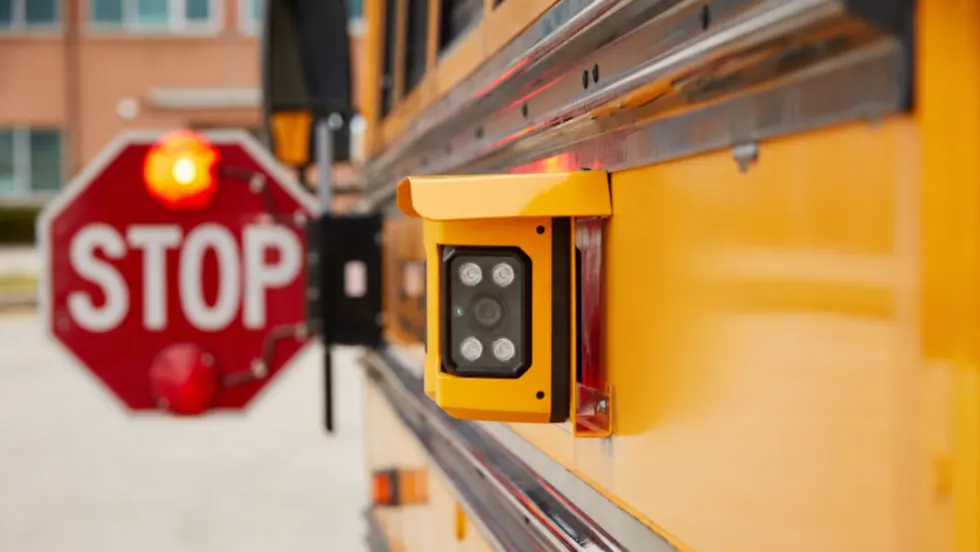
Walton County Schools Adds Gatekeeper Stop-Arm Enforcement System
The Florida district will deploy Gatekeeper’s updated Student Protector technology, which now incorporates AI to improve video evidence.
Read More →
How To Build a More Secure School Bus Yard During and After Hours
As thefts and overnight security threats continue, school transportation leaders are combining stronger operational practices with AI-enabled surveillance to better protect buses, facilities, and staff.
Read More →