





Related: Bus Parts Supplier Manufacturing Protective Equipment for Medical Professionals
Rosco Joins Efforts to Supply Medical Equipment to N.Y. Health Care Workforce
The vision systems supplier is helping to manufacture personal protective equipment, ventilator splitters, and other equipment for medical workers in New York, the state hit hardest by COVID-19.
April 22, 2020
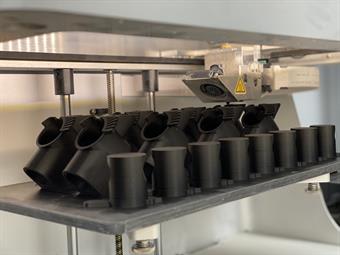
Rosco connected with Keep Breathing Inc., a nonprofit created to provide equipment to medical workers. Photo courtesy Rosco Vision Systems
2 min to read
Rosco connected with Keep Breathing Inc., a nonprofit created to provide equipment to medical workers. Photo courtesy Rosco Vision Systems
A version of this story initially appeared inMetro Magazine, School Bus Fleet’s sister publication.
JAMAICA, N.Y. — Rosco Vision Systems has joined an initiative to help supply much-needed personal protective equipment (PPE) and other equipment to medical workers in New York, the state that has been hit hardest by the COVID-19 pandemic.
Before the pandemic hit New York earlier this year, Rosco formed a Coronavirus Committee within the company to stay ahead of emergency situations, and to help protect health and job security for all employees, according to a news release from the vision systems supplier. Weeks ahead of the peak in New York, Rosco split the workforce into two shifts to introduce social distancing into the manufacturing process and implemented overtime hours for manufacturing employees to prepare for a shutdown when needed.
“As a member partner of the Critical Manufacturing Sector of the Department of Homeland Security, we moved quickly to make sure that we maintained our operation for our customers who are critical to the defense industrial base, the transportation sector, and so many other vital sectors,” said Ben Englander, Rosco’s CEO.
Rosco is part of the essential workforce supply chain for markets including military, school bus, fire and rescue, transit bus, commercial bus, truck, and delivery/work vans. The supplier worked to ensure all customers’ needs were met before any potential shutdown.
As a preemptive measure during the projected peak of COVID-19 in New York City, Rosco shut down manufacturing facilities for 10 days from April 1 to 10 for a professional deep clean of the 150,000 square-foot location and offices. During this halt in manufacturing, Rosco concentrated efforts into 3D printing of ventilator splitters, assembling face shields, and working with suppliers to source and donate PPE for health care workers in the local community.
Rosco connected with Keep Breathing Inc., a nonprofit founded by Angel Pai and Timothy Phillips, and created in an evolving response to provide COVID-19 relief. Keep Breathing is comprised of a team of multi-disciplinary philanthropists, formed to provide open-source designs, as well as manufacture and donate 3D-printed ventilator splitters, intubation boxes, ear savers, and powered air-purifying respirators for medical staff on the front line.
The fully volunteer-based, grassroots organization grew to over 300 individual volunteers and companies in less than three days, sparking worldwide initiatives in over 10 countries. Using 3D printer files designed by Philip Sweeting, the vast groups of volunteers, including Rosco, were deployed for printing.
The ventilator splitters and ear savers have been donated to the NY State of Health, the state’s health insurance marketplace exchange, as well as directly to hospitals for testing and made available for use in case of emergency, according to Rosco.
More Safety

How to Build a Better School Bus Driver Training Program
Is it time to strengthen your driver training? Here’s how to pick the right talent and improve recruitment, retention, and safety. This video is brought to you by IC Bus.
Read More →
Recent School Bus Accidents Leave 2 Dead, 2 Injured
Four school bus crashes in Florida, Illinois, and Georgia highlight risks in transportation lots, at bus stops, and during student loading and unloading.
Read More →
Sponsored•September 8, 2026
When Every Second Matters, Clarity Keeps Routes Moving
From routine delays to urgent incidents, strong communication practices help drivers, dispatchers, schools, and families respond with confidence.
Read More →

What Happens When a School Bus Catches Fire — and What Can Help
School bus fires are rare but can be devastating. Learn how advances in fire suppression and asset protection help fleets detect fires earlier, reduce damage, and improve safety.
Read More →
Geotab Launches Tool to Help Fleets Investigate Road Incidents
Geotab Investigations combines telematics data, video, documents, and other evidence to help fleets reconstruct incidents, resolve claims, and determine what happened.
Read More →
Texas Sixth Grader Wins 2026 National School Bus Safety Poster Contest
Sai Darshana Yekolu of Moseley Middle School in Prosper, Texas, was named the newest winner for her artwork, bringing the theme of “Safe Rides, Everyday Heroes” to life.
Read More →
Sponsored•August 27, 2026
Doing More With Less: How Transportation Directors Can Prioritize Safety Amid Budget Uncertainty
With diesel prices soaring and nearly one-third of transportation directors expecting budget cuts, maintaining student safety has never been more challenging. Download this guide to learn how leading districts are prioritizing risk, funding critical safety technology, and building stronger budget cases with data.
Read More →
Walton County Schools Adds Gatekeeper Stop-Arm Enforcement System
The Florida district will deploy Gatekeeper’s updated Student Protector technology, which now incorporates AI to improve video evidence.
Read More →
How To Build a More Secure School Bus Yard During and After Hours
As thefts and overnight security threats continue, school transportation leaders are combining stronger operational practices with AI-enabled surveillance to better protect buses, facilities, and staff.
Read More →
FMCSA Names New Chief Safety Officer: What School Bus Operators Should Know
Steve Dowling is set to lead the federal agency's efforts to advance commercial motor vehicle safety and reduce crashes, fatalities, and injuries on the nation's roadways.
Read More →