




Report: Condition of state highways has improved
The Reason Foundation’s 19th Annual Highway Report indicates that nationally, the percentage of urban interstates that are congested fell below 50 percent for the first time since 2000. Pavement conditions on urban interstates are the best they’ve been since 1993, and traffic fatalities have fallen to the lowest levels seen since the 1960s.

State highway conditions are the best they’ve been in 19 years, according to Reason Foundation’s 19th Annual Highway Report. The recession is partly responsible for the improvement in road conditions: People are driving less, which has helped slow pavement deterioration and reduced traffic congestion and fatalities.
The Reason Foundation study measures the condition and cost-effectiveness of state-owned roads in 11 categories, including deficient bridges, urban traffic congestion, fatality rates, pavement condition on urban and rural interstates and on major rural roads, and the number of unsafe narrow rural lanes. National performance in all of those key areas improved in 2008, the most recent year with complete data available.
California, Minnesota, Maryland, Michigan and Connecticut have the worst traffic. Over 65 percent of all urban interstates are congested in each of those five states. Nationally, however, the percentage of urban interstates that are congested fell below 50 percent for the first time since 2000, when congestion standards were revised.
Moreover, motorists in California and Hawaii have to look out for the most potholes on urban interstates. In those two states, 25 percent of urban interstate pavement is in poor condition. Alaska and Rhode Island have the bumpiest rural pavement, each with about 10 percent in poor condition. However, nationally, pavement conditions on urban interstates are the best they’ve been since 1993.
With the recession reducing driving, and engineering improving road design and car safety features, traffic fatalities have steadily fallen to the lowest levels since the 1960s. Massachusetts has the safest roads, with just 0.67 fatalities per 100 million miles driven. Montana and Louisiana have the highest fatality rates, at 2.12 and 2.02 fatalities per million miles driven, respectively.
Overall, North Dakota, Montana and Kansas have the most cost-effective state highway systems. Rhode Island, Alaska, California, Hawaii and New York have the least cost-effective roads.
Over the last two years, New Jersey has moved up from last to 45th in the rankings, but it still spends dramatically more than every other state. New Jersey spends $1.1 million per mile on state roads. The second biggest spender, Florida, spends $671,000 per mile and California spends $545,000 per mile. South Carolina had the lowest expenses, with just $34,000 per mile.
“We’re seeing several factors combine to produce significant improvement in highway conditions,” said David T. Hartgen, author of the report and emeritus professor of transportation studies at the University of North Carolina at Charlotte. “Over the last several years, states invested a lot more money to improve pavement and bridges. Spending increased 8 percent from 2007 to 2008, and per-mile spending on state roads has almost tripled since 1984, so you’d hope and expect to see improved performance. As pavement gets better, roads are widened and bridges get repaired, you’d also expect safety to improve. And the significant reduction in vehicle miles traveled during the recession has also played a role in slowing system decay. But as the states run short of money and deal with large budget deficits, we’ll see if this progress can be continued.”
To read the full report, click here.
More Safety
School's Back. Here's What Happened to Traffic, Speeding & Distraction
What happens to traffic when school resumes? New data analysis examines changes in distracted driving, congestion, and speeding around schools.
Read More →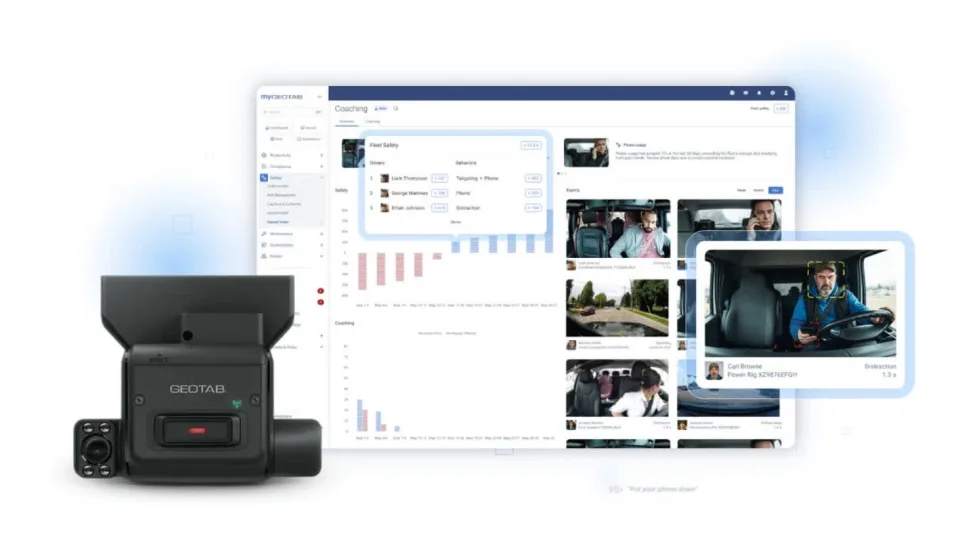
Geotab Expands Fleet Safety Tools With Video Coaching, Risk Insights
New safety and video capabilities aim to help fleet managers assess risk, support drivers, and take targeted action through video coaching, red-light violation detection, and more.
Read More →
How to Build a Better School Bus Driver Training Program
Is it time to strengthen your driver training? Here’s how to pick the right talent and improve recruitment, retention, and safety. This video is brought to you by IC Bus.
Read More →

Recent School Bus Accidents Leave 2 Dead, 2 Injured
Four school bus crashes in Florida, Illinois, and Georgia highlight risks in transportation lots, at bus stops, and during student loading and unloading.
Read More →
When Every Second Matters, Clarity Keeps Routes Moving
From routine delays to urgent incidents, strong communication practices help drivers, dispatchers, schools, and families respond with confidence.
Read More →
What Happens When a School Bus Catches Fire — and What Can Help
School bus fires are rare but can be devastating. Learn how advances in fire suppression and asset protection help fleets detect fires earlier, reduce damage, and improve safety.
Read More →
Geotab Launches Tool to Help Fleets Investigate Road Incidents
Geotab Investigations combines telematics data, video, documents, and other evidence to help fleets reconstruct incidents, resolve claims, and determine what happened.
Read More →
Texas Sixth Grader Wins 2026 National School Bus Safety Poster Contest
Sai Darshana Yekolu of Moseley Middle School in Prosper, Texas, was named the newest winner for her artwork, bringing the theme of “Safe Rides, Everyday Heroes” to life.
Read More →
Doing More With Less: How Transportation Directors Can Prioritize Safety Amid Budget Uncertainty
With diesel prices soaring and nearly one-third of transportation directors expecting budget cuts, maintaining student safety has never been more challenging. Download this guide to learn how leading districts are prioritizing risk, funding critical safety technology, and building stronger budget cases with data.
Read More →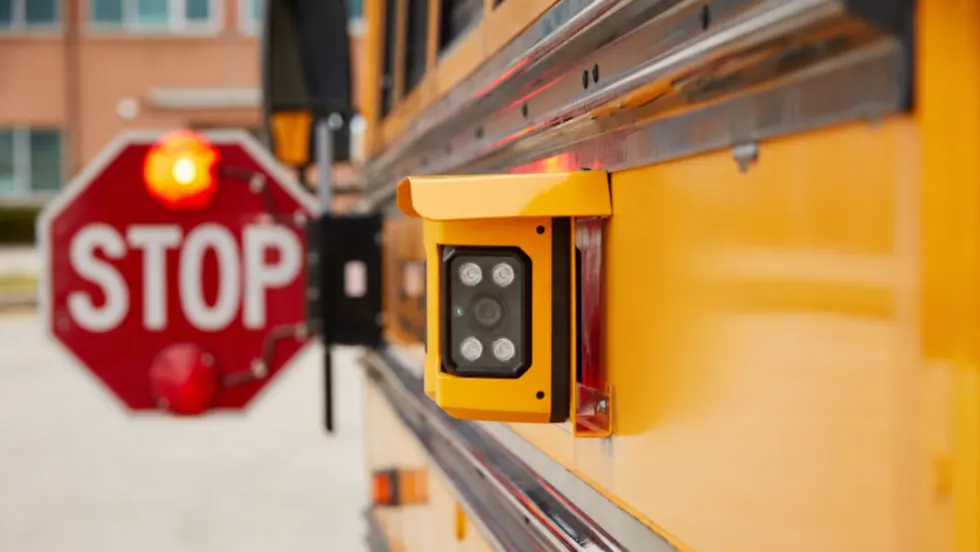
Walton County Schools Adds Gatekeeper Stop-Arm Enforcement System
The Florida district will deploy Gatekeeper’s updated Student Protector technology, which now incorporates AI to improve video evidence.
Read More →