




Proterra EV Charging Solutions Enable Full Fleet Electrification for Commercial Vehicles
Developed in partnership with Power Electronics, the new Proterra charging systems offer transit agencies and fleet operators a customizable vehicle charging solution.
With more fleet operators transitioning to full battery-electric vehicles, charging solutions that can efficiently and cost-effectively power large fleets of vehicles will play a critical role in transportation electrification.
Proterra
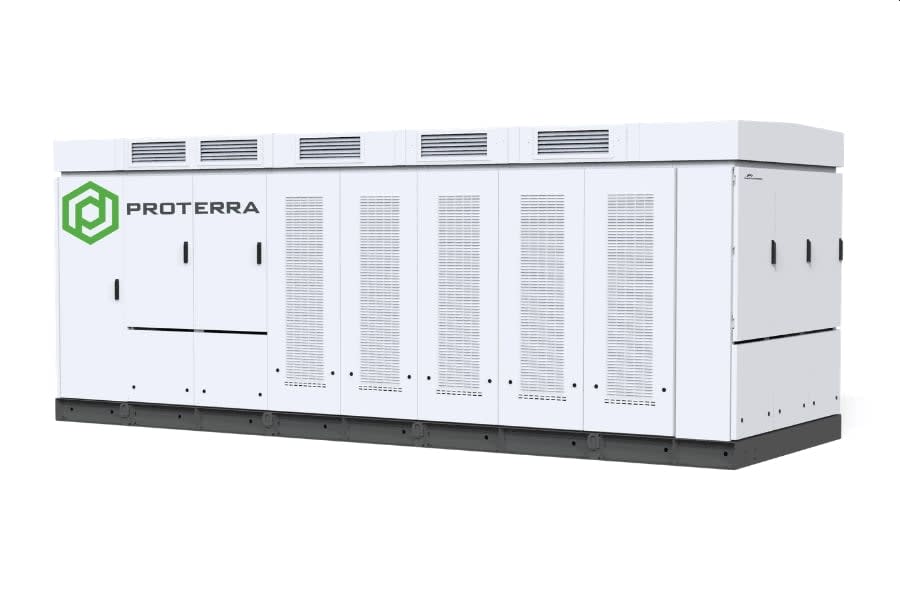
Proterra unveiled its new, high-powered charging solution designed to enable the electrification of large-scale vehicle fleets.
Developed in partnership with Power Electronics, the new Proterra charging systems offers fleet operators and transit agencies a customizable vehicle charging solution.
Proterra’s new charging systems can be configured at a broad range of power levels. For large fleets of vehicles, where customers need to address the challenge of charging dozens or hundreds of vehicles in a single fleet yard, Proterra’s new charging systems can be configured with up to 1.5 megawatts to power up to 20 vehicles simultaneously. The new Proterra 1.5 megawatt fleet-scale charging system can also tie directly into higher voltage utility power lines (up to 35kV), which avoids the footprint and complication of costly switchgear.
The chargers will also be able to meet the needs of smaller electric vehicle fleets, with 75 kilowatt, 150 kilowatt, 250 kilowatt, and 500 kilowatt power levels.
The new chargers utilize interoperable, universal charging technology and are equipped to power a diverse range of 100% battery-electric vehicles, including battery-electric transit buses, school buses, delivery vans, coach buses, and other commercial vehicles. The chargers are also capable of powering personal passenger electric vehicles.
“Cities, states, schools, airports, and many more are going all-in on zero-emission transportation. Large-scale charging infrastructure will play a vital role in achieving important transportation electrification goals. Proterra is excited to work with Power Electronics to help fuel this transition with our new, next generation charging systems,” said Proterra CEO Jack Allen.
Power Electronics is a leader in power systems design and brings more than 30 years of experience in the design, development, manufacturing, and service of power conversion technology.
The new chargers are available as both overhead and plug-in options, offering greater flexibility and optionality for customers. In addition, the systems feature bi-directional power flow that enables chargers to be smart-grid ready for vehicle-to-grid applications. All Proterra systems can incorporate multi-dispensers which can reduce the overall space, cost, and aggregate power levels needed by a fleet yard. When coupled with the 1.5 megawatt charging system, the multi-dispenser capability enables up to 40 vehicles to charge sequentially, one after the other at full power.
Leveraging Power Electronics’ technology, the new chargers have the capability to interconnect with stationary storage and solar to provide fleet operators with a clean, resilient source of power for their vehicles.
Originally posted on Metro
More Alternative Fuels

CALSTART and Forth Combine to Form Catalyst Mobility
The new name represents a renewed vision for the nonprofit focused on advancing clean, equitable, and affordable transportation solutions that move people and goods.
Read More →
Alt-Fuel Moves: New Buses, Charging Hubs & Real-World EV Testing
Propane and electric school bus deployments continue to grow as districts add new vehicles, expand charging infrastructure, and gather more real-world operating data.
Read More →
Fewer Electric School Bus Models Reshape the U.S. Market
WRI’s latest buyer’s guide points to a consolidating electric school bus market, but fewer options may reflect a maturing industry rather than fewer meaningful choices for school bus operators.
Read More →
The Fuel Budget You Can Actually Predict: How Propane Autogas Keeps Money in the Classroom
Learn how propane autogas helps school districts manage fuel costs with predictable pricing, lower maintenance, and reduced emissions from former transportation director Joel Stutheit.
Read More →
Hendrickson, Driventic Introduce New Electric Powertrain for School Buses
ELECTRAAX, the electrified, lightweight drive axle offers integrated ePowertrain efficiency and modular flexibility for Class 6–7 school bus use.
Read More →
The Mobility House Joins PowerFlex in Fleet Electrification Deal
The acquisition combines intelligent charging software, bidirectional charging expertise, and fleet electrification services to support the growing adoption of electric school buses across North America.
Read More →
Alt-Fuel Moves: Electric School Bus Investments Hit the Road
See which districts across the U.S. are putting electric school buses into service, expanding charging infrastructure, and planning the next phase of fleet electrification.
Read More →
With Fuel Volatility Ahead, School Districts Turn to Propane
While diesel prices peaked above $5 this spring, districts with propane autogas-powered fleets paid under $2 per gallon, according to PERC.
Read More →
EPA Unveils Proposed Changes to 2027 Heavy-Duty Engine Rules
The federal agency has proposed changes to next year’s targets that would eliminate DEF derates, ease warranty requirements, and retain current NOx emissions standards.
Read More →
Alt-Fuel Moves: EV Charging & Infrastructure Projects Gain Momentum
The latest developments include new funding, charging infrastructure, utility investments, and fleet technologies designed to support the transition to electric school buses nationwide.
Read More →