




Program promotes student pedestrian safety
The YOLO (“you only live once”) Walk Safe campaign alerts high school students of the dangers of “distracted walking” caused by texting and other activities.

The YOLO Walk Safe campaign includes posters with stark messages about the dangers of “distracted walking.”
The Montgomery County (Md.) Department of Transportation’s YOLO Walk Safe program is the culmination of four years of focused efforts to develop pedestrian safety awareness among high school students.
YOLO stands for “you only live once.” It is a program developed by students for students to help combat “distracted walking” caused by activities such as texting, playing hand-held games, listening to music or talking on the phone.
“We began working with one high school that was located in one of our high incidence areas in 2010,” said Nadji Kirby, Safe Routes to School coordinator for the Montgomery County Department of Transportation. “We worked with the school administration to establish a pedestrian safety working group that included students, and we worked with those students to develop pedestrian safety awareness activities. Due to this success, we knew that some of the same strategies we used at this school could be used at other high schools.”
Sadly, it was in the midst of efforts to broaden the program that a Montgomery County high school student, Christina Morris Ward, was fatally struck while walking to school.
“At that point, our County Council felt this was a priority, so they wanted us to develop a specific high school pedestrian safety program,” Kirby said. “We started with the ‘Walk Your Way’ project in late October 2013.”
That project provided grants of up to $2,000 for high school groups to create and implement their own pedestrian safety campaign. This generated the second part of the program, the YOLO toolkit.
“The toolkit was created to basically serve as an inspiration, motivator and idea generator for even more schools and student groups to get involved in developing their own pedestrian safety programs at their respective schools,” Kirby said.
The YOLO toolkit, which is available online here, contains:
• A guidebook on developing and implementing a school pedestrian safety education program
• Ideas for events/education campaigns that could be conducted by a partnership of students, parents and PTAs
• A USB drive with digital resources, including web banners, electronic poster files and a video public service announcement titled “Moment of Silence”
• Campaign posters
• Static clings for restroom mirrors
• Sample morning announcements
• Pledge banners
• A customizable letter/e-mail for parents in English and Spanish
• A parent tip sheet in English and Spanish
• A social media plan, including graphics and pre-written tweets and posts
• Talking points for meetings or assemblies
“Currently, only public schools are included in the receipt of a toolkit,” Kirby said. “However, the great thing about our website is that anyone can access and utilize the posters, tweets, announcements, guidebook, etc. as they see fit for their school. I am hopeful that some private schools will utilize the resources.”
Kirby cited statistics that show that one in five high school students cross the street while engaging in distracted behavior. “In Montgomery County, for pedestrians at fault between 10 and 29 years of age, the age range found most at fault was 15 to 19, so this data supported our outreach efforts aimed at this age group,” she said.
In addition to making the YOLO toolkits available, the Montgomery County Department of Transportation conducts pedestrian safety assemblies that include the county police as well as Gwen Ward, the mother of Christina Morris Ward.
“We will work one-on-one with high schools to help them plan and implement various pieces of the overall program,” Kirby said. “That may take the form of an assembly or a presentation for specific groups of high school students. Each school varies. We just hope that each school will do something to help make their staff and students really understand the dangers of the road and what they can do to help keep themselves safe.”
Patrick Willi, product development manager for School Training Solutions, a division of Smart Horizons, was among attendees who learned about the YOLO Walk Safe program at the 2014 National Association of State Directors of Pupil Transportation Services conference in Kansas City, Missouri, in November.
“I was extremely impressed with the YOLO Walk Safe campaign,” Willi said. “It is a well crafted, simple message that I was able to immediately identify. I think it is a message that should be taught across the country, especially as texting and smartphones continue to grow in accessibility and popularity.”
More Safety
North Carolina Student Killed While Boarding School Bus, Two Die in Utah Bus Crash
A Southern Nash High School student died after being struck by a pickup truck while approaching her school bus. In a separate incident, two people were killed after crashing into a school bus in Utah.
Read More →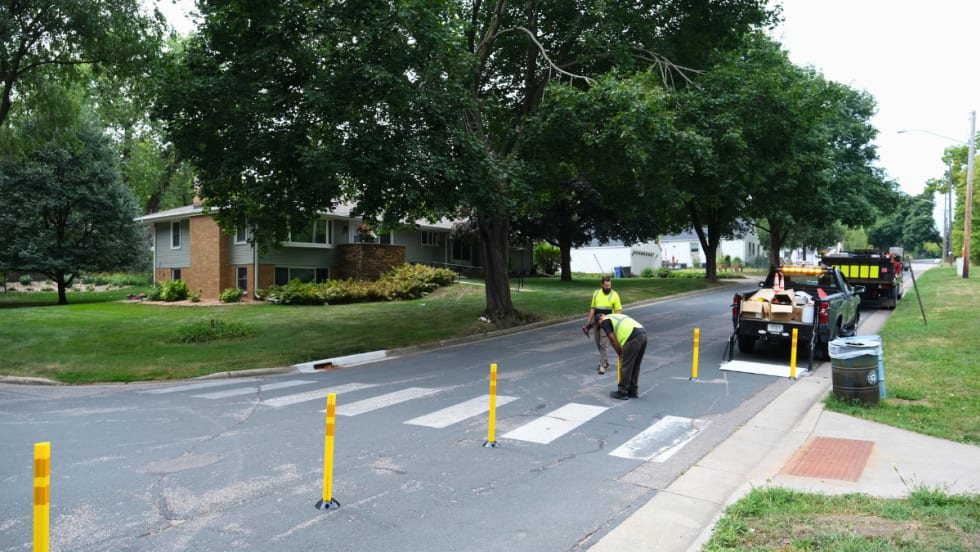
Minneapolis School Zone Pilot Cuts Speeding 41% with Low-Cost Street Design Changes
In a pilot project in Minnesota, two school-area intersections had low-cost, temporary road and traffic flow improvements made to measure the impact on roadway and student safety. Here's what they found.
Read More →
Sitestream, Safety Vision Partner with Connecticut City to Launch School Bus Stop-Arm Camera Program
The new enforcement initiative combines camera technology and violation management software to document illegal school bus passing, encourage driver compliance, and enhance student safety.
Read More →
From Reactive to Proactive: Making Every Ride Visible
Smart technology only delivers its full value when it works together. See how Catalyst connects proven industry platforms to move student transportation from reactive to proactive.
Read More →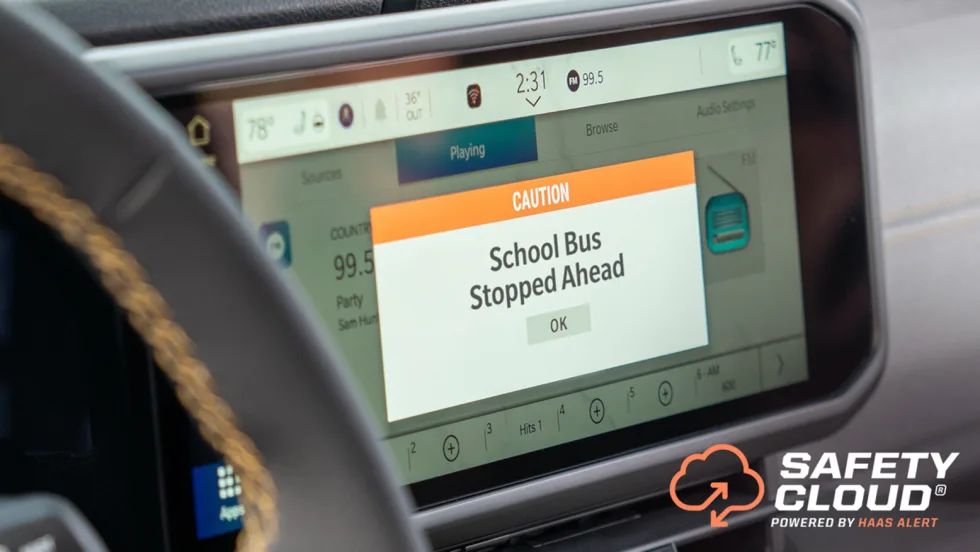
HAAS Alert’s Safety Cloud Warns Motorists of Stopped School Buses
Through a transponder or Samsara connection, the product lets school bus fleets send advance warnings to approaching drivers through in-vehicle alerts.
Read More →
HopSkipDrive Reports Progress on Safety Advisory Council
More than a year after forming the council, independent safety experts have helped shape new rider-safety features and policy progress, with a new goal to address rider behavior.
Read More →
What the 2026 National School Bus Safety Month Resolution Means for Student Transportation
The bipartisan resolution highlights illegal school bus passing, student safety during loading and unloading, and the need for driver training and public education.
Read More →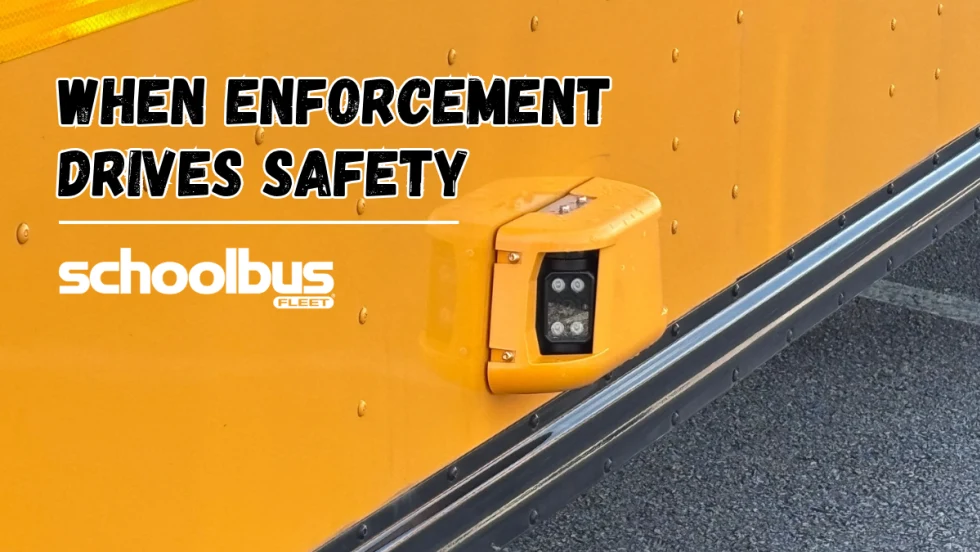
School Bus Stop-Arm Violations Decline 53% Across Verra Mobility Programs
Verra Mobility shares how school bus stop-arm cameras and school zone safety programs are changing driver behavior, reducing violations, and protecting students.
Read More →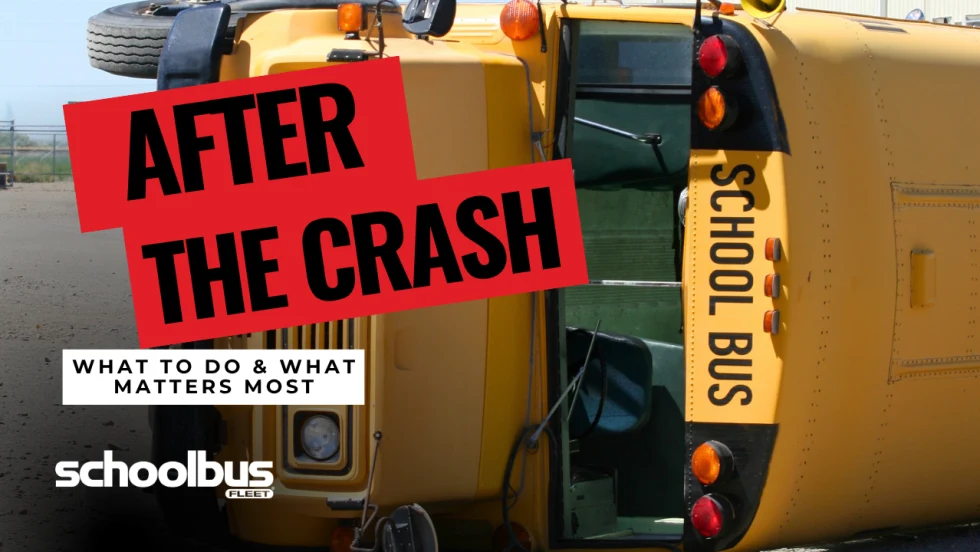
Most Bus Crashes Aren’t Your Fault. Here’s How to Prove It.
A guide for what to do in between a school bus crash and a claim: what to preserve, who to notify, and how to keep the facts available when they matter.
Read More →
National School Bus Safety Week 2026: Tips, Toolkits & Resources to Keep Students Safe
School bus safety takes more than awareness. Explore expert tips, enforcement strategies, and free resources to help protect students on every ride.
Read More →