




Oregon District Fixing School Buses After 2 Fires
Following two recent bus fires, Klamath County School District sidelined 14 buses of the same model and year. Now the district is making changes to wires and hydraulic lines.

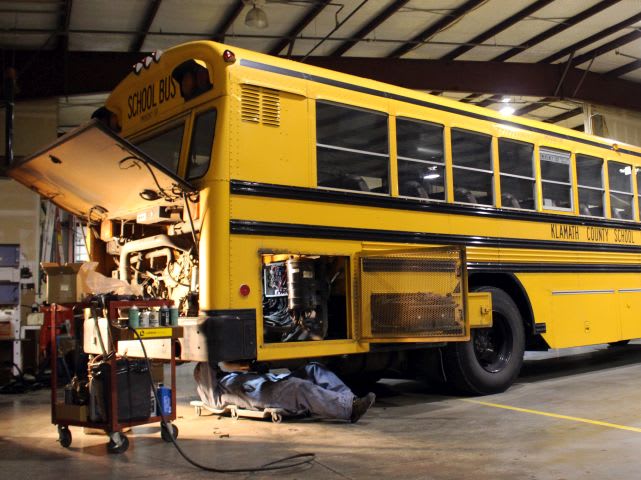
Following two recent bus fires, Klamath County School District sidelined 14 buses of the same model and year. Now the district is making changes to wires and hydraulic lines. Photo courtesy Klamath CSD
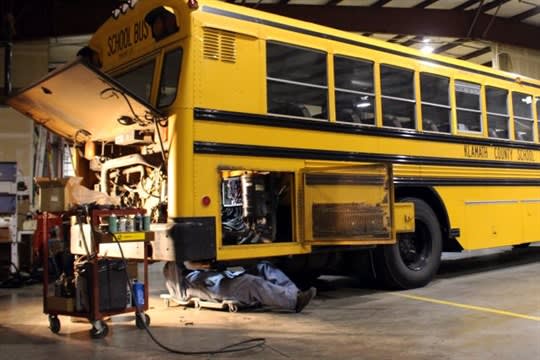
Following two recent bus fires, Klamath County School District sidelined 14 buses of the same model and year. Now the district is making changes to wires and hydraulic lines. Photo courtesy Klamath CSD
KLAMATH FALLS, Ore. — A school district here is making mechanical changes in more than a dozen school buses after experiencing two bus fires in recent months.
On Dec. 14, a Klamath County School District bus caught fire after it had finished its route. No students were on or near the bus at the time. The district launched an investigation into the cause of the fire.
Less than two months later, on Feb. 7, another Klamath school bus caught fire. The bus was of the same make, model, and year as the bus in the December incident. Again, there were no students on board.
In both cases, the drivers had parked and turned off the buses at their homes after completing their routes, according to Klamath County School District.
After the second fire, the district took 14 other school buses of the same kind out of service. All of them are 2005 Blue Bird All American models that the district bought in 2005.
Klamath County School District deployed spare buses from its total fleet of 90 buses to cover the routes of the sidelined 2005 models.
The district had three inspectors look into the cause of the fires: a deputy state fire marshal, an investigator from the district’s insurance provider, and an investigator from Blue Bird. Scott Rice, the Klamath Falls deputy state fire marshal, said in February that both fires started in the engine compartments and were accidental.
Last week, Klamath County School District announced that the inspectors had determined the general cause and area of the fires. All three agreed that the fires started in an area where hydraulic lines and wires run close together, and an abrasion between the two was the likely cause.
“They’re pretty sure it started in that area, but nobody could say which wire it was,” Shawn Snoozy, the district’s transportation supervisor, said in the announcement. “There wasn’t a direct smoking gun.”
The district reported that Snoozy and his team inspected all of the wires and hydraulic lines in the 14 buses. Then they began rerouting, reconstructing, replacing, and insulating those wires and lines, aiming to complete the work and get the buses approved and back into service by the end of March.
Klamath County School District said that a dealer representative will inspect the 14 buses before they go back on the road to transport students. (The two buses that caught fire will not go back into service, the district said.)
“With everybody’s input, I’m very confident that this solution will keep everybody safe,” Snoozy said.
A recent federal report found that school bus fires in the U.S. occur slightly more than daily, with most starting in the engine area, running gear, or wheel area. The study, conducted by Volpe for the Federal Motor Carrier Safety Administration, found that for the incidents in which the area of origin was known, 68% of school bus fires originated in one of those areas. In “a significant number” of those fires, an electrical wire was cited as the first item to have been ignited.
More Safety

School's Back. Here's What Happened to Traffic, Speeding & Distraction
What happens to traffic when school resumes? New data analysis examines changes in distracted driving, congestion, and speeding around schools.
Read More →
Geotab Expands Fleet Safety Tools With Video Coaching, Risk Insights
New safety and video capabilities aim to help fleet managers assess risk, support drivers, and take targeted action through video coaching, red-light violation detection, and more.
Read More →
How to Build a Better School Bus Driver Training Program
Is it time to strengthen your driver training? Here’s how to pick the right talent and improve recruitment, retention, and safety. This video is brought to you by IC Bus.
Read More →

Recent School Bus Accidents Leave 2 Dead, 2 Injured
Four school bus crashes in Florida, Illinois, and Georgia highlight risks in transportation lots, at bus stops, and during student loading and unloading.
Read More →
When Every Second Matters, Clarity Keeps Routes Moving
From routine delays to urgent incidents, strong communication practices help drivers, dispatchers, schools, and families respond with confidence.
Read More →
What Happens When a School Bus Catches Fire — and What Can Help
School bus fires are rare but can be devastating. Learn how advances in fire suppression and asset protection help fleets detect fires earlier, reduce damage, and improve safety.
Read More →
Geotab Launches Tool to Help Fleets Investigate Road Incidents
Geotab Investigations combines telematics data, video, documents, and other evidence to help fleets reconstruct incidents, resolve claims, and determine what happened.
Read More →
Texas Sixth Grader Wins 2026 National School Bus Safety Poster Contest
Sai Darshana Yekolu of Moseley Middle School in Prosper, Texas, was named the newest winner for her artwork, bringing the theme of “Safe Rides, Everyday Heroes” to life.
Read More →
Doing More With Less: How Transportation Directors Can Prioritize Safety Amid Budget Uncertainty
With diesel prices soaring and nearly one-third of transportation directors expecting budget cuts, maintaining student safety has never been more challenging. Download this guide to learn how leading districts are prioritizing risk, funding critical safety technology, and building stronger budget cases with data.
Read More →
Walton County Schools Adds Gatekeeper Stop-Arm Enforcement System
The Florida district will deploy Gatekeeper’s updated Student Protector technology, which now incorporates AI to improve video evidence.
Read More →