




Ontario consortium launches bus stop safety program
The Northwestern Ontario Student Services Consortium implements the “Be Seen, Be Safe” initiative after reading in SBF about its implementation at a school district in Texas. As General Manager Judi Green tells SBF, children in junior kindergarten through third grade wear flashing amber lights to improve their visibility when getting to bus stops in times of limited daylight and extreme weather.
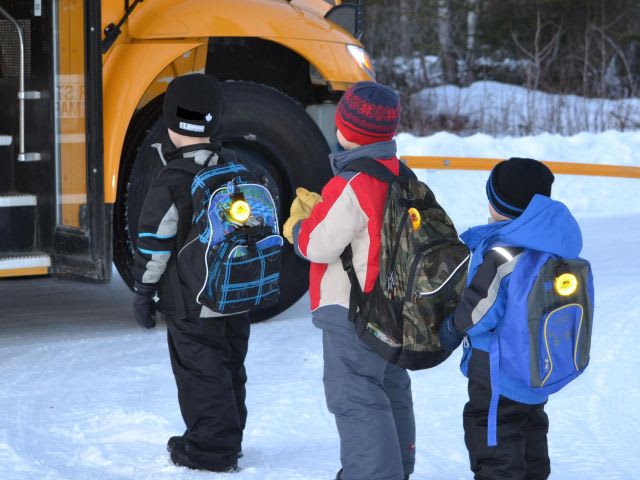
Children in junior kindergarten through third grade transported by the Northwestern Ontario Student Services Consortium wear these flashing amber lights to improve their visibility when getting to bus stops.
DRYDEN, Ontario — School bus passengers served by the Northwestern Ontario Student Services Consortium (NWOSSC) are having a safer journey to and from school under an initiative that increases students’ visibility as they get to their bus stops.
The consortium launched the “Be Seen, Be Safe” program earlier this year. Approximately 4,000 flashing, reflective amber lights, which can be clipped to students’ backpacks or jackets, were distributed to children in junior kindergarten (4 years old) through third grade.
Judi Green, general manager for NWOSSC, got the idea for the program after reading about its implementation at Eanes Independent School District (ISD) in Austin, Texas, in SBF’s October 2011 issue (pg. 6). (The editorial was also featured on our Along for the Ride blog here.)
Green reached out to Eanes ISD Transportation Director Timothy Wysong, who provided her with information that helped to launch the program in Ontario.
“We believed our kids could benefit from this program, especially knowing that we have even less daylight [than Texas], compounded with our extreme weather conditions,” Green told SBF in an interview. “To our knowledge, the Be Seen, Be Safe program is one of the first of its kind in Ontario, and possibly Canada.”
NWOSSC’s area of service is about 55,000 square miles, and it is located just north of Minnesota — Green described it as being in the “heart of Canada.” She said that the operation runs school buses in snowy, frigid conditions with limited visibility from early November to mid-April.
“It’s not uncommon for the Celsius and Fahrenheit scales to meet at 40 below zero, with wind chill factors also 30 to 55 below zero,” Green said, adding that daylight is limited during this time. “Our shortest day is in December, where it would get light around 8:20 a.m. and be dark at about 3:50 p.m.”
Moreover, most of the students who attend the four school districts that the consortium serves live in remote and rural areas, and due to the geographic conditions, Green said it’s difficult to provide door-to-door service.
“In a lot of cases, students have to get to their bus stops, and I would say that less than 10 percent of our road infrastructure is paved. It’s either a hard top or gravel,” she explained.
Green’s idea to implement the Be Seen, Be Safe program within NWOSSC’s area of service was well received. Each of the four school district boards contributed money toward the purchase of the amber lights, and the school bus companies that the consortium has contracts with each contributed $800 for the lights. The cost of the program for the consortium was around $3,000 to $4,000.
“It truly was a shared initiative, and we hope that on that basis, we’ll be able to afford it again,” Green said, noting that this year’s program is still in place, and another launch is planned for the fall in preparation for the next school year.
She added that response to the program from parents and teachers has been positive, and there is potential for implementation at other consortia in the province.
“I sent information to my colleagues, and about eight of them contacted us for information on where they could buy the lights. They want to launch a program for their consortia as well,” Green said.
More Safety
School's Back. Here's What Happened to Traffic, Speeding & Distraction
What happens to traffic when school resumes? New data analysis examines changes in distracted driving, congestion, and speeding around schools.
Read More →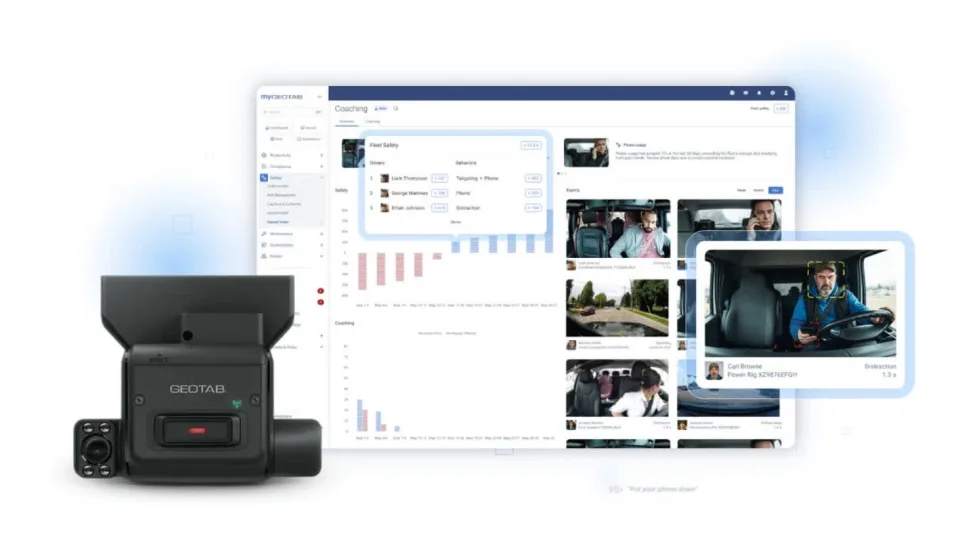
Geotab Expands Fleet Safety Tools With Video Coaching, Risk Insights
New safety and video capabilities aim to help fleet managers assess risk, support drivers, and take targeted action through video coaching, red-light violation detection, and more.
Read More →
How to Build a Better School Bus Driver Training Program
Is it time to strengthen your driver training? Here’s how to pick the right talent and improve recruitment, retention, and safety. This video is brought to you by IC Bus.
Read More →

Recent School Bus Accidents Leave 2 Dead, 2 Injured
Four school bus crashes in Florida, Illinois, and Georgia highlight risks in transportation lots, at bus stops, and during student loading and unloading.
Read More →
When Every Second Matters, Clarity Keeps Routes Moving
From routine delays to urgent incidents, strong communication practices help drivers, dispatchers, schools, and families respond with confidence.
Read More →
What Happens When a School Bus Catches Fire — and What Can Help
School bus fires are rare but can be devastating. Learn how advances in fire suppression and asset protection help fleets detect fires earlier, reduce damage, and improve safety.
Read More →
Geotab Launches Tool to Help Fleets Investigate Road Incidents
Geotab Investigations combines telematics data, video, documents, and other evidence to help fleets reconstruct incidents, resolve claims, and determine what happened.
Read More →
Texas Sixth Grader Wins 2026 National School Bus Safety Poster Contest
Sai Darshana Yekolu of Moseley Middle School in Prosper, Texas, was named the newest winner for her artwork, bringing the theme of “Safe Rides, Everyday Heroes” to life.
Read More →
Doing More With Less: How Transportation Directors Can Prioritize Safety Amid Budget Uncertainty
With diesel prices soaring and nearly one-third of transportation directors expecting budget cuts, maintaining student safety has never been more challenging. Download this guide to learn how leading districts are prioritizing risk, funding critical safety technology, and building stronger budget cases with data.
Read More →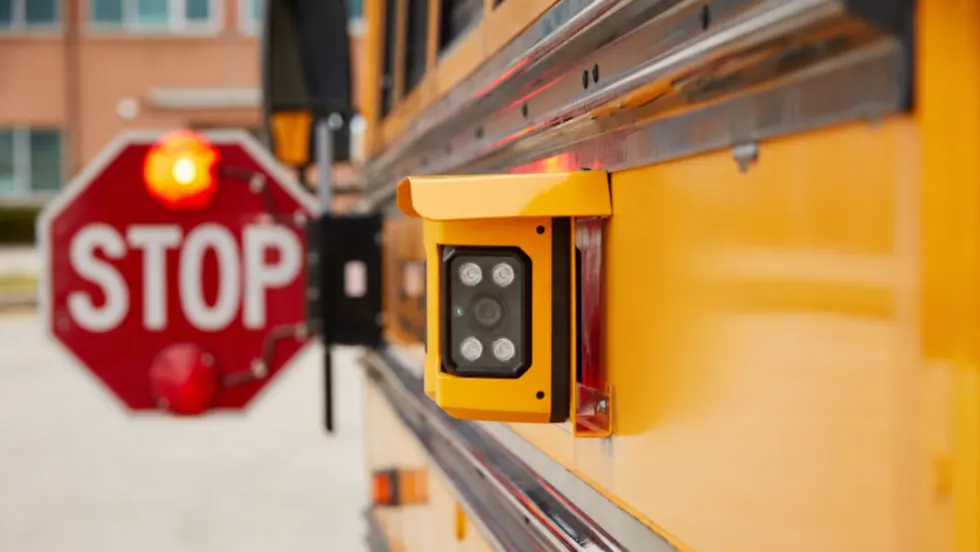
Walton County Schools Adds Gatekeeper Stop-Arm Enforcement System
The Florida district will deploy Gatekeeper’s updated Student Protector technology, which now incorporates AI to improve video evidence.
Read More →