




NSTA Recommends Passing STOP Act in Response to NTSB Findings on Ind. Crash
The National School Transportation Association is calling for the passage of the Stop for School Buses Act of 2019, which would conduct a comprehensive review of existing laws and programs in all 50 states and recommend best practices.

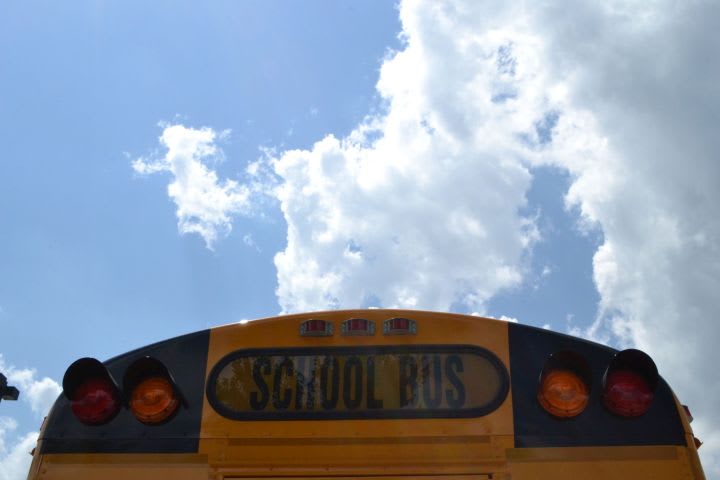
The National School Transportation Association is calling for the passage of the Stop for School Buses Act of 2019, which would conduct a comprehensive review of existing laws and programs in all 50 states and recommend best practices. File photo
The National School Transportation Association is calling for the passage of the Stop for School Buses Act of 2019, which would conduct a comprehensive review of existing laws and programs in all 50 states and recommend best practices. File photo
LANSDALE, Pa. — A national school transportation association is calling for the passage of federal school bus safety legislation in response to the National Transportation Safety Board’s (NTSB’s) release on Tuesday of its findings on the fatal 2018 crash in Indiana.
The National School Transportation Association (NSTA) has reviewed the abstract of the report that the NTSB submitted of its completed investigation of the Oct. 30, 2018, Rochester, Ind., crash that killed three students and injured another when motorist Alyssa Shepherd ran a school bus stop arm. As School Bus Fleet previously reported, the NTSB determined that the crash was caused by Shepherd’s failure to stop her truck despite the bus’s activated and clearly visible warning lights and stop arm, as well as a roadway warning sign for an upcoming school bus stop.
Contributing to the cause of the crash was the Tippecanoe Valley School Corp.’s inadequate safety assessment of school bus routes, resulting in the prevalence of bus stops that required students to cross high-speed roadways to board a bus, according to the report. Additionally, there was no clear policy established by the school corporation for school bus drivers to follow in determining when it was safe to signal students to cross a roadway to board a school bus, the NTSB’s report stated.
The NTSB’s recommendations include addressing deficiencies in establishing safe school bus routes, failure of other drivers to stop or respond safely when approaching a stopped school bus, and a need for greater use of technologies to prevent collisions and mitigate injuries.
The NSTA stated in a news release that it “applauds the pursuit to identify measures that can be immediately taken to eliminate future occurrences of illegal passing collisions.”
The crash, the NSTA added, was the impetus for it to pursue introduction of the STOP for School Buses Act of 2019 (STOP Act) (S. 1254/H.R. 2218).
As SBF previously reported, U.S. Representatives Jackie Walorski (R-Ind.) and Julia Brownley (D-Calif.) introduced the STOP Act in April 2019. The bill aims to improve efforts to prevent illegal passing by directing the U.S. Department of Transportation (U.S. DOT) to conduct a comprehensive review of existing laws and programs in all 50 states, recommend best practices, and create a nationwide public safety campaign.
“The unfortunate Rochester fatal accident, as outlined in these NTSB investigative findings, strengthen the resolve of NSTA to eliminate illegal passings of stopped school buses that have the net effect of placing school children in harm’s way,” said Curt Macysyn, the NSTA’s executive director. “The message should be sent loud and clear to motorists that these incidents are preventable, and distracted driving is not acceptable under any circumstances, let alone around a school bus.”
Macysyn added that the crash “was a tragedy that the school transportation industry wishes to never see repeated.”
The NSTA also pointed to the rising instances of illegal passing as cause for concern and a need for the federal legislation. It cited the 2019 National Association of State Directors of Pupil Transportation Services voluntary stop-arm survey that showed more than 95,000 illegal passings in 39 states that conducted the survey over the course of a single day.
More Management

How to Build a Better Driver Training Program
Ready to boost up your school bus instructor training? Here’s how to pick the right talent and improve recruitment, retention, and safety.
Read More →
CALSTART and Forth Combine to Form Catalyst Mobility
The new name represents a renewed vision for the nonprofit focused on advancing clean, equitable, and affordable transportation solutions that move people and goods.
Read More →
What Makes a Great School Bus Driver Trainer?
Choosing the right school bus driver trainer takes more than experience. Learn six keys to selecting and developing trainers and evaluating program effectiveness.
Read More →

School Bus Contractors Expand Through New Deals, Acquisitions & Partnerships
STA's Canadian division acquires Ontario-based G&L Stevenson Transport while Durham School Services adds a new district contract in California, First Student adds a New Jersey contract, and Minnesota Coaches acquires Halo Transportation.
Read More →
Logan Bus Company Rolls Out AI Phone System for NYC School Bus Families
A summer pilot found that AI agents could handle most routine calls, freeing up time for customer service staff to focus on emergencies and complex family concerns.
Read More →
From Intent to Impact: What I Learned About Leadership from TAPT
A Texas transportation supervisor shares lessons on self-awareness, accountability, managing stress and building trust — and why investing in leadership development matters at every stage of your career.
Read More →
NAPT Names 2026 Award Recipients, Hall of Fame Inductee
Who earned national recognition for their work in student transportation? This year, NAPT named five recipients of its 2026 awards for service, safety, and leadership, plus its newest Hall of Famer.
Read More →
2026 State of Student Transportation Report
Driver shortages. Rising costs. Growing safety expectations. More data, but not enough time to act on it. The 2026 State of Student Transportation Report reveals what transportation leaders say is putting the most pressure on their operations—and where they’re investing next. See how your priorities compare.
Read More →
How to De-Escalate an Angry Person: 5 Steps for Handling Workplace Conflict
What makes emotions run high, and how should you handle an angry colleague or parent? Follow these steps for staying calm, listening, showing empathy, and resolving conflict.
Read More →
What Readiness Looks Like This School Year
Learn about the challenges shaping the 2026–2027 school year, from persistent driver shortages and budget pressure to technology and readiness gaps. See how school districts are responding and adapting in Zonar’s 2026 Back-to-School Readiness Report.
Read More →