




NSTA Meeting Gauges Future of Transportation, Regulatory Climate
The National School Transportation Association’s Midwinter Meeting in Maui covers legislative updates, autonomous vehicles, and other topics.

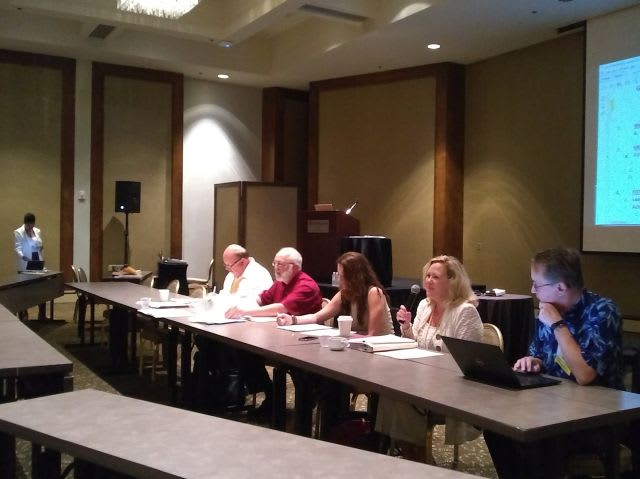
At NSTA’s Midwinter Meeting, presentations and committee meetings covered industry updates, association initiatives, and other topics. Seen here is the government relations committee.
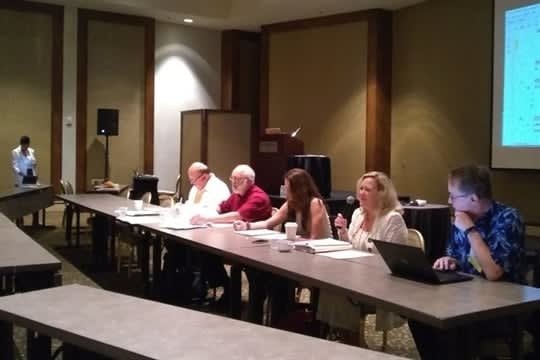
At NSTA’s Midwinter Meeting, presentations and committee meetings covered industry updates, association initiatives, and other topics. Seen here is the government relations committee.
KA’ANAPALI, Hawaii — School bus legislation, autonomous vehicles, and employee management were among the issues discussed at a National School Transportation Association (NSTA) event here this week.
Nearly 80 school bus contractors and industry suppliers gathered at the Westin Maui Resort for NSTA’s 2018 Midwinter Meeting, held from Sunday to Wednesday. Presentations and committee meetings covered industry updates, association initiatives, and other topics.
Perhaps the most thought-provoking presentation came from Dan Kobussen of Kobussen Buses in Wisconsin. Kobussen detailed developments in vehicle autonomy, ridesharing, and related trends that could impact school transportation in the coming years. For example, he said that he sees a decrease in vehicle ownership and an increase in utilization of ridesharing and car subscription services.
“The way the economy is going, young people don’t want to own,” he said. “Cars are a bad economic proposition because of poor utilization and increasing depreciation. Is that different for school buses?”
Kobussen and others in the room also addressed the potential role of automation in school buses, with the consensus seeming to be that parents will always want an adult on the vehicle that takes their kids to and from school. But that adult’s duties might shift in the future.
“As time goes on, the driver is going to do less driving and more student management,” Kobussen said.
NSTA's 2018 Midwinter Meeting was the first since new leadership came on board last year. NSTA President Blake Krapf introduced the new team, including Executive Director Tiffany Boykin and Regulatory Relations Director Les Sokolowski.
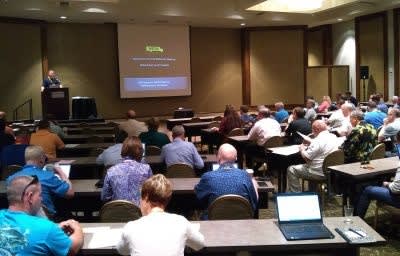
NSTA President Blake Krapf (at podium) welcomes attendees to the Midwinter Meeting. The event drew nearly 80 school bus contractors and industry suppliers.
Also during the event, Barry Stock of Landmark Student Transportation in Ontario gave an update on NSTA’s 2017-2019 strategic plans. Among the association’s goals are growing membership, increasing non-dues revenue, and protecting and growing market share for school bus contractors.
NSTA is also working to boost participation in the School Bus Driver International Safety Competition, which the association hosts in conjunction with its annual meeting in the summer. This year, those events will be held July 21-25 in Philadelphia.
Another upcoming event for NSTA is the Capitol Hill Bus-In, slated for April 24-25 in Washington, D.C. At the Midwinter Meeting, government relations committee members said that last year’s Capitol Hill Bus-In was a good chance to educate legislators about the benefits and safety record of school bus transportation.
Bree Allen of Ethan Allen Transportation in New York said that NSTA members who attended the Bus-In in 2017 and met with congressional representatives “were able to have a good dialogue about our industry and safety” rather than going in with an “ask.”
In previous years, NSTA was more focused on defeating legislation and regulations that the association deemed harmful to the industry. But with the current administration in Washington, NSTA has seen more opportunity to be proactive rather than reactive.
In that vein, last year the association worked with Rep. Scott Perry (R-Pa.) to develop the Buses United for Safety, Regulatory Reform, and Enhanced Growth for the 21st Century Act (BUSREGS-21), which was introduced in the U.S. House of Representatives in April but has yet to pass. The bill proposes a number of initiatives to evaluate and streamline regulations that affect school transportation.
The Midwinter Meeting also provided updates on state legislative activity that NSTA is monitoring. For example, a bill in the New Mexico Legislature would raise the minimum wage for school bus drivers — including those employed by contractors — to $16 per hour. Meanwhile, in both Maine and Washington, lawmakers have introduced bills that would allow students to consume medical marijuana in a “nonsmokeable form” on the school bus.
In another Midwinter Meeting presentation, Grace Kelly of RC Kelly Law Associates shared strategies for managing “difficult and irrational” employees. Kelly provided attendees with sample policies on such pertinent subjects as non-harassment, violence prevention, and anti-bullying in the workplace.
The event also included meetings of NSTA’s board of directors and committees that cover membership, safety and security, and industry development.
More Safety

How to Build a Better School Bus Driver Training Program
Is it time to strengthen your driver training? Here’s how to pick the right talent and improve recruitment, retention, and safety. This video is brought to you by IC Bus.
Read More →
Recent School Bus Accidents Leave 2 Dead, 2 Injured
Four school bus crashes in Florida, Illinois, and Georgia highlight risks in transportation lots, at bus stops, and during student loading and unloading.
Read More →
When Every Second Matters, Clarity Keeps Routes Moving
From routine delays to urgent incidents, strong communication practices help drivers, dispatchers, schools, and families respond with confidence.
Read More →

What Happens When a School Bus Catches Fire — and What Can Help
School bus fires are rare but can be devastating. Learn how advances in fire suppression and asset protection help fleets detect fires earlier, reduce damage, and improve safety.
Read More →
Geotab Launches Tool to Help Fleets Investigate Road Incidents
Geotab Investigations combines telematics data, video, documents, and other evidence to help fleets reconstruct incidents, resolve claims, and determine what happened.
Read More →
Texas Sixth Grader Wins 2026 National School Bus Safety Poster Contest
Sai Darshana Yekolu of Moseley Middle School in Prosper, Texas, was named the newest winner for her artwork, bringing the theme of “Safe Rides, Everyday Heroes” to life.
Read More →
Doing More With Less: How Transportation Directors Can Prioritize Safety Amid Budget Uncertainty
With diesel prices soaring and nearly one-third of transportation directors expecting budget cuts, maintaining student safety has never been more challenging. Download this guide to learn how leading districts are prioritizing risk, funding critical safety technology, and building stronger budget cases with data.
Read More →
Walton County Schools Adds Gatekeeper Stop-Arm Enforcement System
The Florida district will deploy Gatekeeper’s updated Student Protector technology, which now incorporates AI to improve video evidence.
Read More →
How To Build a More Secure School Bus Yard During and After Hours
As thefts and overnight security threats continue, school transportation leaders are combining stronger operational practices with AI-enabled surveillance to better protect buses, facilities, and staff.
Read More →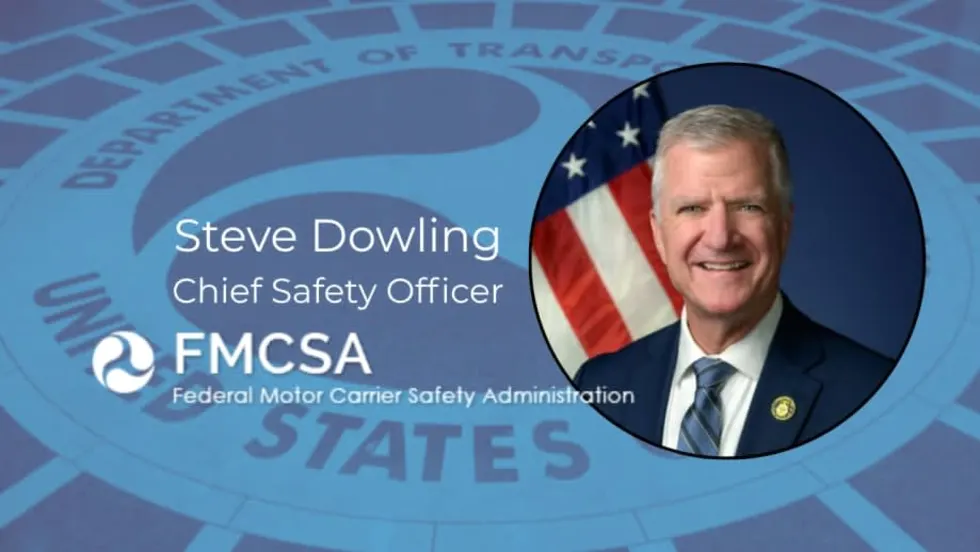
FMCSA Names New Chief Safety Officer: What School Bus Operators Should Know
Steve Dowling is set to lead the federal agency's efforts to advance commercial motor vehicle safety and reduce crashes, fatalities, and injuries on the nation's roadways.
Read More →