





NAPT Session Examines Benefits of Seat Belts on School Buses
NHTSA Releases Report on Optimal School Bus Seat Belt Use
Findings from “Education on Proper Use of Seat Belts on School Buses” by the National Highway Traffic Safety Administration show that the most crucial factors for effective use are training, education, and enforcement.
March 3, 2021
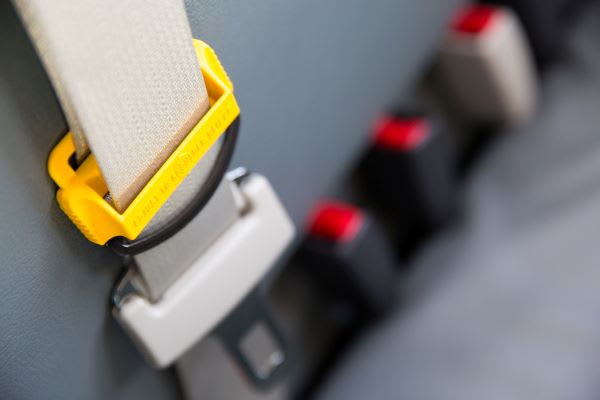
New report findings from the National Highway Traffic Safety Administration show that the most crucial factors for effective seat belt use are training, education, and enforcement.
Photo: Des Moines (Iowa) Public Schools
3 min to read
A new report from a federal agency details the factors that have been found to maximize effective seat belt use on large school buses.
“Education on Proper Use of Seat Belts on School Buses,” from the National Highway Traffic Safety Administration (NHTSA), is the result of a project the agency sponsored to understand how seat belt use on buses impacts student behavior and bus driver distraction. Work on the project began in 2016 and the report was released in January.
It is based on self-reported findings from school bus drivers and transportation directors and incorporates anecdotal information collected from school districts nationwide. (The project reviewed survey results from 215 school bus drivers in 12 states: Arkansas, California, Delaware, Florida, Illinois, Indiana, Minnesota, New Jersey, North Carolina, North Dakota, New York, and Texas.)
More specifically, the project examined ways that states and school districts can maximize the benefits of the decision to implement seat belts on large buses. It also looked at differences between policies and how they impact proper seat belt usage. (The project included feedback on the use of both lap (two-point) belts and lap-shoulder (three-point) belts.
The team conducting the project sought out school districts that were in different phases of considering or implementing seat belts as well as different categories of implementation, including whether seat belts were required by state law and whether they were required to be used, either by state law or the local school district’s policy.
The project, according to NHTSA’s website, also obtained observational data on the impact of seat belts on student behavior on buses and on bus driver distraction. It examined how school bus drivers carried out policies and what the consequences were for non-compliance.
In general, the report found that the most important factors were training, education, and enforcement. Most survey respondents said seat belts on school buses contributed to calmer and less distracted environments for school bus drivers.
In particular, the most significantly improved environment was seen with students in younger grades, who were reported as being more likely to use seat belts. Additionally, although most bus drivers said that their stress levels decreased because students were calmer or safer, some drivers reported increased stress because they need to monitor students and constantly remind them to wear the seat belts. With a required use policy, bus drivers pointed out that even when students were not wearing their seat belts, they often did not move around the bus because they did not want to advertise their non-compliance.
Policy details found to have the greatest impact on use seemed to be the clarity and strength of the policy’s purpose, seat belt implementation and passenger use requirements, and enforcement procedures. Meanwhile, the most important factors found to be successful in policy planning were training and education procedures, and enforcement of passenger use requirements.
NHTSA recommends, according to the report, that states and school districts considering seat belts on large school buses carefully weigh the overall impacts on school transportation safety.
"Since school buses are already very safe, the added benefit of seat belts on large school buses is small relative to other potential safety measures such as improvements in the safety of child pedestrians as they enter or exit the bus," NHTSA states in the report. "Seat belts on large school buses could provide an overall safety benefit if their installation does not result in tradeoffs with other child safety initiatives and if the added cost does not result in a reduction in the availability of buses.”
The report can be found at the U.S. Department of Transportation National Transportation Library and on NHTSA’s Behavioral Research page.
More Safety

How to Build a Better School Bus Driver Training Program
Is it time to strengthen your driver training? Here’s how to pick the right talent and improve recruitment, retention, and safety. This video is brought to you by IC Bus.
Read More →
Recent School Bus Accidents Leave 2 Dead, 2 Injured
Four school bus crashes in Florida, Illinois, and Georgia highlight risks in transportation lots, at bus stops, and during student loading and unloading.
Read More →
Sponsored•September 8, 2026
When Every Second Matters, Clarity Keeps Routes Moving
From routine delays to urgent incidents, strong communication practices help drivers, dispatchers, schools, and families respond with confidence.
Read More →

What Happens When a School Bus Catches Fire — and What Can Help
School bus fires are rare but can be devastating. Learn how advances in fire suppression and asset protection help fleets detect fires earlier, reduce damage, and improve safety.
Read More →
Geotab Launches Tool to Help Fleets Investigate Road Incidents
Geotab Investigations combines telematics data, video, documents, and other evidence to help fleets reconstruct incidents, resolve claims, and determine what happened.
Read More →
Texas Sixth Grader Wins 2026 National School Bus Safety Poster Contest
Sai Darshana Yekolu of Moseley Middle School in Prosper, Texas, was named the newest winner for her artwork, bringing the theme of “Safe Rides, Everyday Heroes” to life.
Read More →
Sponsored•August 27, 2026
Doing More With Less: How Transportation Directors Can Prioritize Safety Amid Budget Uncertainty
With diesel prices soaring and nearly one-third of transportation directors expecting budget cuts, maintaining student safety has never been more challenging. Download this guide to learn how leading districts are prioritizing risk, funding critical safety technology, and building stronger budget cases with data.
Read More →
Walton County Schools Adds Gatekeeper Stop-Arm Enforcement System
The Florida district will deploy Gatekeeper’s updated Student Protector technology, which now incorporates AI to improve video evidence.
Read More →
How To Build a More Secure School Bus Yard During and After Hours
As thefts and overnight security threats continue, school transportation leaders are combining stronger operational practices with AI-enabled surveillance to better protect buses, facilities, and staff.
Read More →
FMCSA Names New Chief Safety Officer: What School Bus Operators Should Know
Steve Dowling is set to lead the federal agency's efforts to advance commercial motor vehicle safety and reduce crashes, fatalities, and injuries on the nation's roadways.
Read More →