




New vehicle lift designed to be faster, more user friendly
Forward Lift’s new CR Series four-post vehicle lifts feature faster rise times for improved productivity and fewer moving parts for reduced maintenance, company officials say.

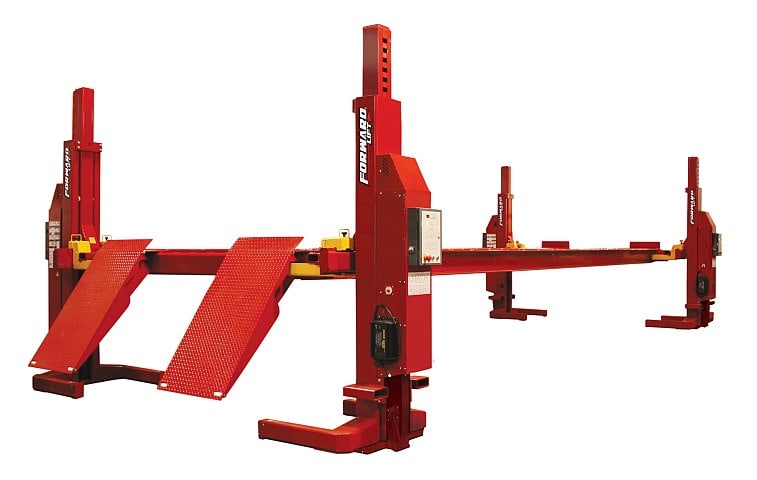
Forward Lift’s new battery-powered CR Series four-post lifts are designed to provide faster rise times, more user-friendly features and fewer moving parts to maintain.
MADISON, Ind. — Forward Lift’s new CR Series four-post vehicle lifts are designed to help heavy duty service facilities efficiently get trucks and buses back on the road, company officials said.
The lifts are engineered to be more user friendly and to provide faster rise times for improved productivity, as well as fewer moving parts for reduced maintenance.
“CR Series lifts offer a new twist on the traditional four-post lift design,” said John Uhl, sales and brand manager for Forward Lift. “All four posts are identical, and each has its own battery-powered hydraulic cylinder. This offers several operational and maintenance advantages over single-cylinder models. CR Series lifts are a cost-effective way for any shop to boost heavy duty service productivity.”
Since each CR Series post has its own hydraulic cylinder, there are no cables, chains or sheaves under the runways to lubricate and maintain, according to the company. The four cylinders are all inverted, so their chrome piston rods remain protected from debris and damage, even in the up position, company officials said.
Identical posts enable a CR Series lift to be operated from any corner of the bay. Each post features a patented control system with a graphic layout of the lift and real-time height reading. The lifts can be configured for pre-programmed lifting cycles, enabling users to quickly turn on the control panels and raise the lift to its desired height.
To minimize installation costs, CR Series lifts are anchored to the shop floor with wedge anchors that can be installed at each post. No site preparation or excavation is needed, according to the company. There is also no need to run 220-volt wiring during installation, since the battery-powered lifts’ onboard chargers require only a standard 110-volt electrical connection.
A CR Series lift’s batteries are able to raise a vehicle 78 inches in 65 seconds, which is higher and faster than a traditional four-post lift, company officials said. CR Series lifts are also designed to be fully functional when the power goes out.
The 50,000-pound capacity CR50 and 60,000-pound capacity CR60 models are each available with runway lengths of 28 or 33 feet.
All CR Series lift configurations have been third-party tested and certified by the Automotive Lift Institute to meet ANSI safety and performance standards, company officials said.
More Maintenance
The Essential Guide to School Bus Maintenance and Student Safety
Your district's buses carry students to school every day. This guide shows how predictive maintenance powered by fleet data helps keep buses reliable, drivers accountable and students safer from the first bell to the last stop.
Read More →
Kerry Brothers Grows Michigan School Bus Repair Network
The acquisition of Downriver Truck and Bus expands Kerry Brothers’ school bus maintenance footprint across southeast Michigan, adding repair capacity, diagnostic resources, and state inspection support.
Read More →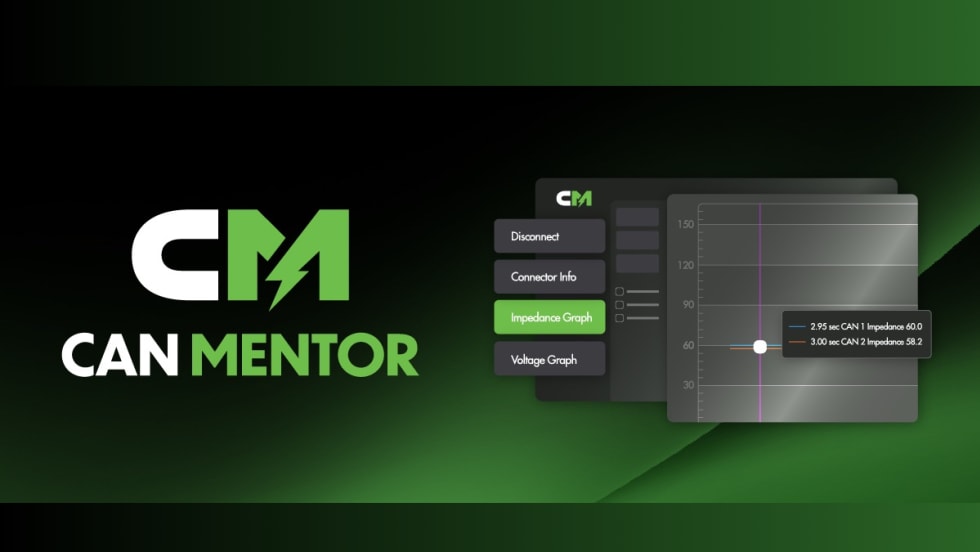
Noregon Introduces CAN Bus Diagnostic Tool, Expands JPRO Features
CAN Mentor and the latest JPRO update aim to simplify vehicle network diagnostics and improve repair efficiency for technicians of all experience levels.
Read More →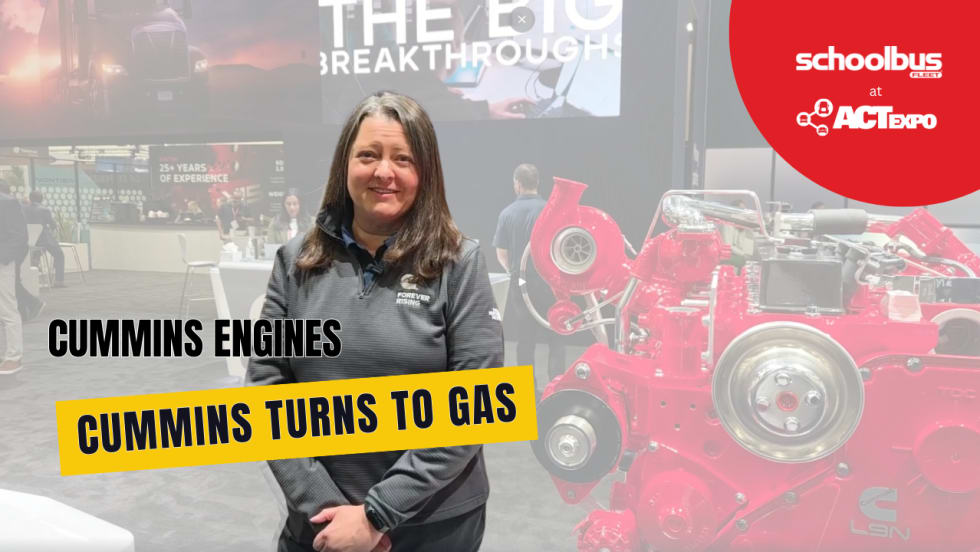
Cummins on Smarter, Simpler Engine Innovation
Cummins discusses its first-ever gasoline engine for school buses, EPA 2027, and why bus fleets still want durable, simpler internal combustion options.
Read More →
Report: 72% of Diesel School Buses Now Use Advanced Low-Emission Engines
New data shows advanced low-emission diesel technology continues expanding across school bus fleets, even as electric bus adoption gains momentum.
Read More →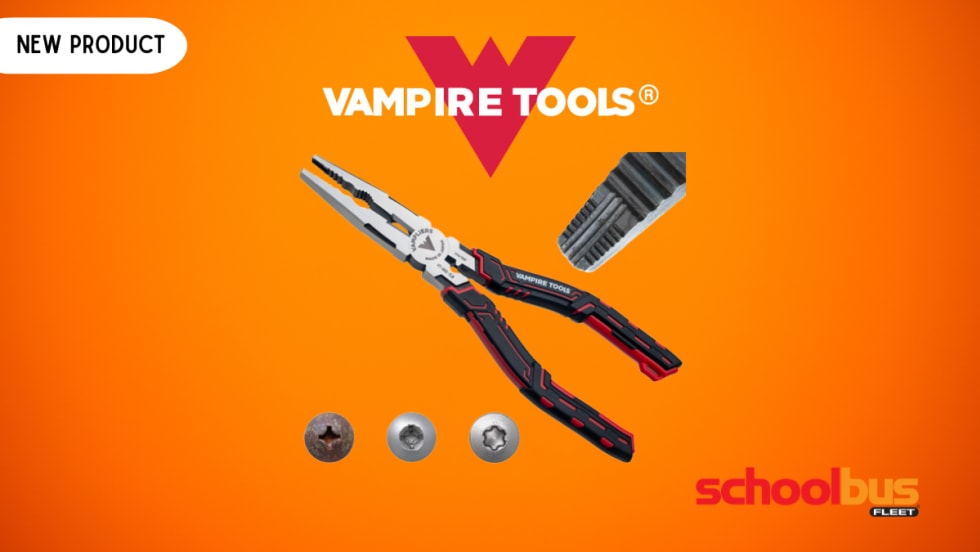
Vampire Tools' CAIMAN 7.5-Inch Multi-Purpose Screw Extractor Long-Nose Pliers with Crimper
Vampire Tools introduced the VAMPLIERS Caiman 7.5-inch multi-purpose pliers, combining screw extraction, cutting, crimping, and gripping functions into a single tool designed for fleet maintenance professionals.
Read More →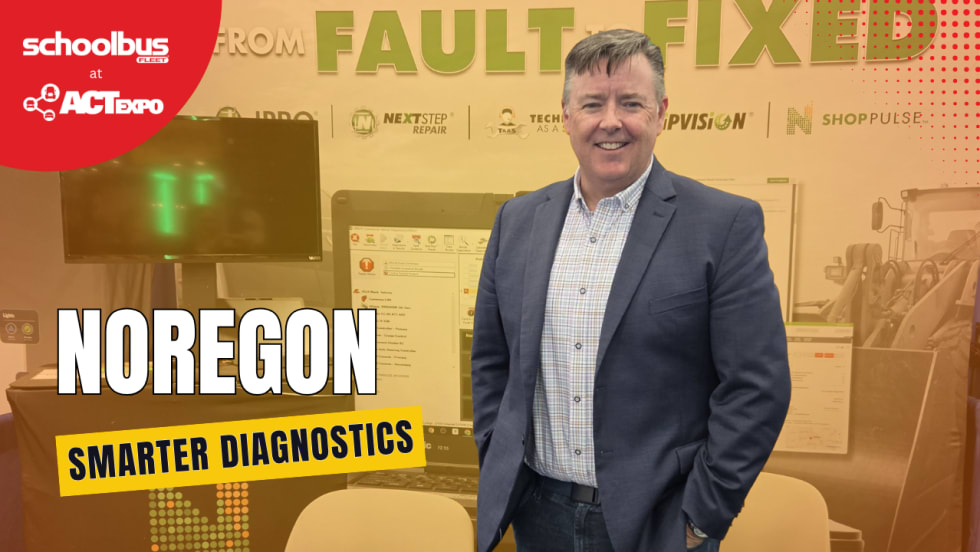
How Advanced Diagnostics Helps Bus Fleets Stay Ahead of Repairs
Chat with Noregon’s Kevin Smallhorn at ACT Expo about bus diagnostic tools, telematics integration, CNG maintenance support, and strategies to help reduce downtime and improve uptime.
Read More →
How School Bus Fleets are Getting Ahead of Breakdowns
Don’t let bus downtime wear you down. Here’s how bus operators are shifting from manual processes to AI-powered, data-driven maintenance systems for improved reliability and safety.
Read More →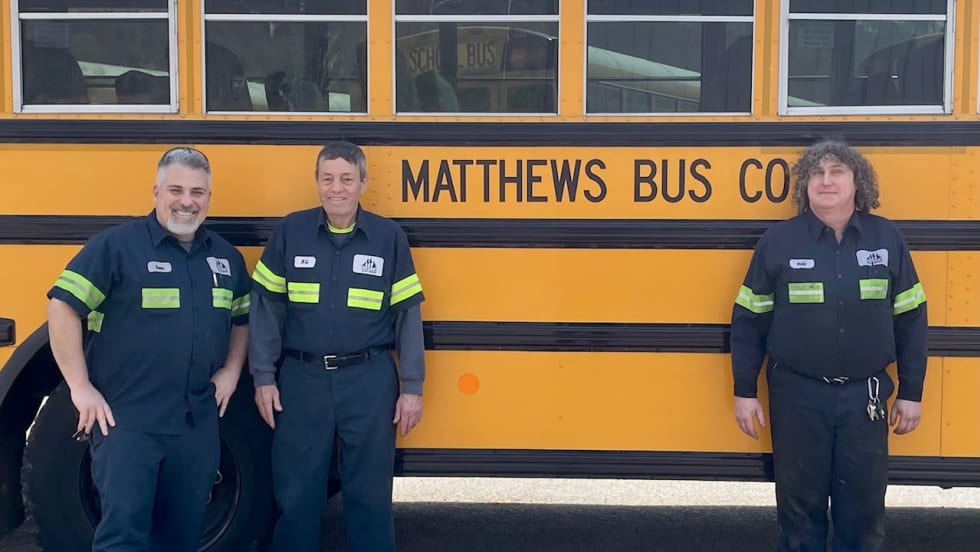
Pennsylvania School Bus Maintenance Team Praised for Dedication to Safety
Matthews Bus Company’s West Jefferson received a letter of commendation from the Pennsylvania State Police for their fleet inspections.
Read More →
From Chaos to Clarity: How School Districts Are Running Leaner Transportation Operations
Covering 38 routes on a Friday afternoon. Buses idling while routes overlap. Parents calling nonstop about late arrivals. Sound familiar? This whitepaper explores how district transportation leaders solved these exact problems — and what measurable results followed.
Read More →