




New stop-arm product aims to enhance visibility
S.A.F.E. GATES™ are available in 20-inch or 48-inch models, and made of either fiberglass, aluminum or stainless steel. They can be seen over 1 mile away and take less than 15 minutes to install, company officials said.

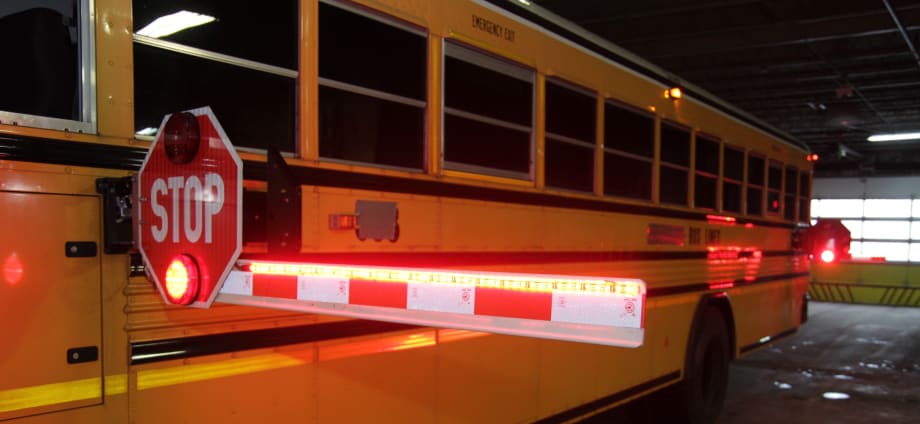
S.A.F.E. GATES are designed to be seen from over 1 mile away. Shown here are the 48-inch gate for the front stop arm and the 20-inch gate for the rear stop arm.
S.A.F.E. GATES are designed to be seen from over 1 mile away. Shown here are the 48-inch gate for the front stop arm and the 20-inch gate for the rear stop arm.
Frustrated by the ongoing problem of illegal school bus passing, a longtime school transportation professional and his business partner designed a tool to potentially prevent these dangerous incidents.
School bus industry veteran Jamie Enger co-invented and co-founded the company S.A.F.E. (Stop Arm Fixed Extension) GATES™. The illuminated, retrofit stop-arm gates of the same name are designed to be more visibile to motorists.
The idea to create the retrofit arm gates came to Enger, who is also a mechanic, after his son was nearly hit by a motorist who illegally passed a school bus. Enger said that he thought that the stop sign may not extend out far enough to be seen by motorists, and started working on a product that would be even more visible and that would be easy to install. He and his business partner conducted research for three years, focusing on visibility, durability and affordability for nearly any school district or school transportation company.
The S.A.F.E. GATES stop-arm gates are available in a 20-inch or 48-inch model, and are made of either fiberglass, aluminum or stainless steel. A package that includes both gates, for both front and rear stop arms, is also available. The 48-inch Large retrofit gate is designed for the front stop arm, and the 20-inch Junior retrofit gate is the ideal length for the rear stop arm, Enger said. The aluminum, 48-inch and 20-inch gate package is created particularly for manufacturers to add to new buses, or for contractors or school districts that want to retrofit buses.
S.A.F.E. GATES™ also feature high visibility, with 3-inch wide 3M diamond reflective tape and LED lights on front and back, and can be seen over 1 mile away, Enger said. Additionally, they are durable enough to withstand being hit by a vehicle at up to 35 miles per hour without breaking off the bus, he added.
S.A.F.E. GATES™ can be installed on any stop arm, Enger said. Only one breakaway bolt needs to be drilled into the stop sign, and installation can be completed in less than 15 minutes.
Although Enger thinks that installing cameras on the side of school buses to ticket motorists running the stop arm is a good idea, he has an eye on prevention, he said.
“A camera will not stop a vehicle from running a school bus stop arm, thus leaving a child in danger,” Enger added. “Let’s stop vehicles from running the stop arm by using a S.A.F.E. GATES™ product, not generate money through fines for municipalities.”
More Safety

HopSkipDrive Reports Progress on Safety Advisory Council
More than a year after forming the council, independent safety experts have helped shape new rider-safety features and policy progress, with a new goal to address rider behavior.
Read More →
What the 2026 National School Bus Safety Month Resolution Means for Student Transportation
The bipartisan resolution highlights illegal school bus passing, student safety during loading and unloading, and the need for driver training and public education.
Read More →
School Bus Stop-Arm Violations Decline 53% Across Verra Mobility Programs
Verra Mobility shares how school bus stop-arm cameras and school zone safety programs are changing driver behavior, reducing violations, and protecting students.
Read More →
Most Bus Crashes Aren’t Your Fault. Here’s How to Prove It.
A guide for what to do in between a school bus crash and a claim: what to preserve, who to notify, and how to keep the facts available when they matter.
Read More →
National School Bus Safety Week 2026: Tips, Toolkits & Resources to Keep Students Safe
School bus safety takes more than awareness. Explore expert tips, enforcement strategies, and free resources to help protect students on every ride.
Read More →
2 Killed, Dozens Injured in Florida School Bus Crash
A multi-vehicle collision caused a Polk County school bus carrying 37 students to overturn on its way to Winter Haven High School.
Read More →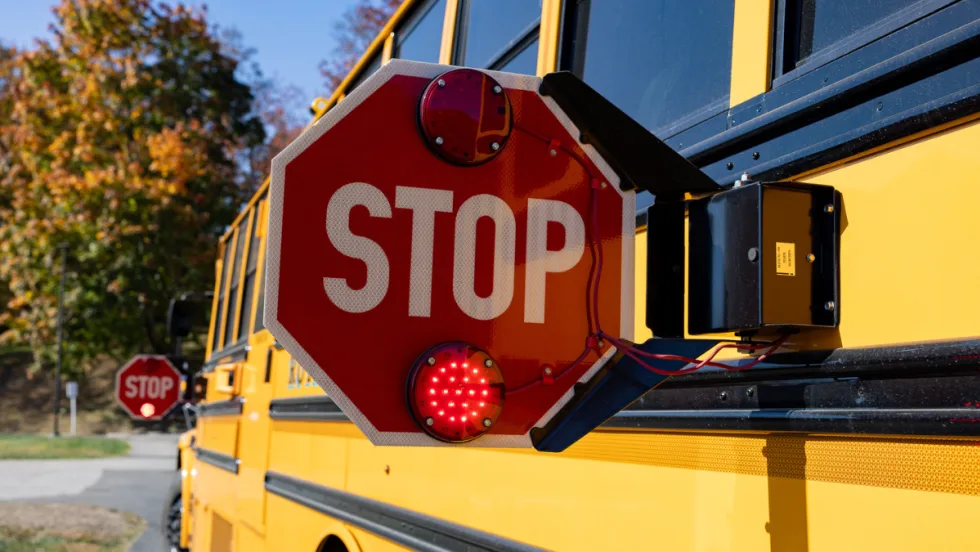
Illegal School Bus Passing Drops 24% in New York Districts
With fewer than 5% of citations involving repeat offenders, Westchester County officials said enforcement, education, and community partnerships are helping change driver behavior.
Read More →
School's Back. Here's What Happened to Traffic, Speeding & Distraction
What happens to traffic when school resumes? New data analysis examines changes in distracted driving, congestion, and speeding around schools.
Read More →
Geotab Expands Fleet Safety Tools With Video Coaching, Risk Insights
New safety and video capabilities aim to help fleet managers assess risk, support drivers, and take targeted action through video coaching, red-light violation detection, and more.
Read More →
How to Build a Better School Bus Driver Training Program
Is it time to strengthen your driver training? Here’s how to pick the right talent and improve recruitment, retention, and safety. This video is brought to you by IC Bus.
Read More →