





PERC Survey Shows 87% of Parents Support Low-Emissions School Buses
New Propane Station to Service Virginia District
Henrico County Public Schools will be among the first to use the new Sandston refueling station near Richmond International Airport.
October 10, 2025
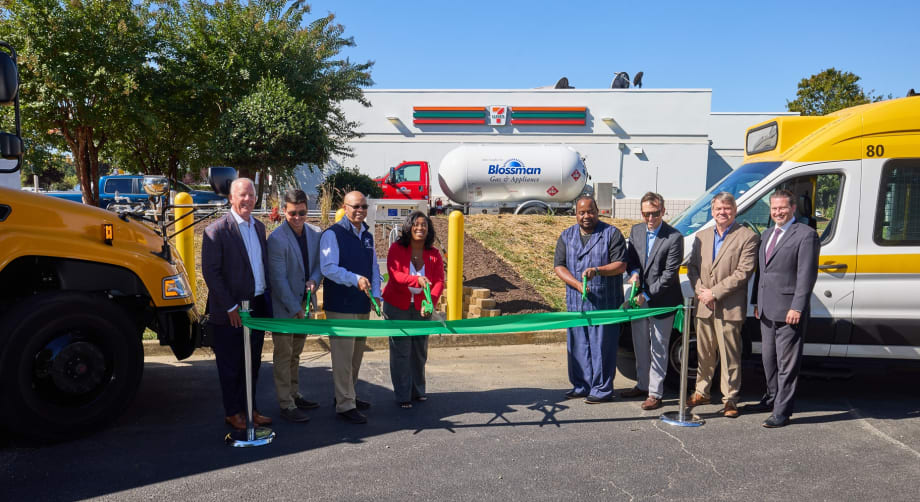
According to PERC research, propane autogas vehicles reduce emissions by up to 96% and cut operating costs by as much as 50% compared to diesel.
Photo: Propane Education & Research Council
3 min to read
Virginia’s clean transportation network took a step forward as leaders from across the state celebrated the opening of a new propane autogas refueling station near Richmond International Airport.
The 1,990-gallon tank and dispenser will serve local fleets, including Henrico County Schools’ propane-powered school buses and Park ‘N Go’s airport shuttle vehicles.
For Henrico County Schools, the station builds upon the district’s broader effort to modernize student transportation. In January, the district added 10 propane buses to the fleet. The buses transport hundreds of students daily.
“When communities invest in clean transportation like propane autogas, everyone benefits,” said Tucker Perkins, president and CEO of PERC. "From the students riding on the buses, to the neighborhoods where these vehicles travel, to the business owners who save money. This is what the future of fleet transportation looks like, and as a Virginian, I am proud to see this investment in the Commonwealth.”
“This new station gives us the tools to continue investing in our community’s air quality and our children’s health,” said Lenny Pritchard, chief of operations at Henrico County Public Schools. “By powering our school buses with propane instead of diesel, we’re reducing the emissions that students breathe every day. The addition of this refueling station makes it even easier to scale up our propane fleet and ensure clean transportation for our students for many years to come.”
The station’s opening reflects Virginia’s movement toward clean energy technologies. In 2024, the state awarded a contract to fuel its public fleets with propane and renewable propane, a low-carbon alternative made from sustainable sources. The new contract provides school districts, transit systems, and government fleets access to favorable pricing and long-term stability.
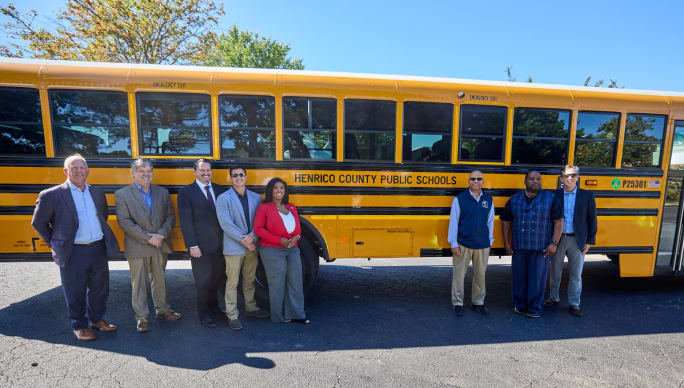
Last January, Henrico County added 10 new propane autogas vehicles to its fleet.
Photo: Propane Education & Research Council
"The opening of this public station marks another important milestone in providing cleaner, more cost-effective fuel options to all drivers in Virginia," said Matthew Wade, deputy director of VCC. "Investing in this fueling station opens the door for more drivers to take advantage of renewable propane and provides easier access to our fleet operators who often face challenges in working toward clean transportation transitions."
The new station was made possible thanks to local propane supplier, Alliance AutoGas. As propane autogas becomes more widely adopted across the Commonwealth, refueling infrastructure will play a critical role in making the fuel accessible to local operators.
“We’re proud to support Virginia’s growing commitment to clean transportation by delivering dependable, easy-to-use propane autogas refueling infrastructure,” said Steve McCoy, vice president of business development at Alliance AutoGas. “We want to make it simple for fleet owners to access clean energy when and where they need it. By building out convenient stations like this one, we’re helping local organizations and businesses take real steps toward cleaner transportation without adding cost or complexity to their operations.”
Vehicles and equipment displayed at the event demonstrated the wide range of applications for propane autogas. This included a Henrico County school bus. Several of the vehicles on site demonstrated the latest in bi-fuel technology, which allows fleet owners to operate vehicles on both propane autogas and gasoline. Bi-fuel systems offer flexibility and extended driving range while allowing operators to reduce emissions and fuel costs without altering routes or performance expectations.
More Alternative Fuels

CALSTART and Forth Combine to Form Catalyst Mobility
The new name represents a renewed vision for the nonprofit focused on advancing clean, equitable, and affordable transportation solutions that move people and goods.
Read More →
Alt-Fuel Moves: New Buses, Charging Hubs & Real-World EV Testing
Propane and electric school bus deployments continue to grow as districts add new vehicles, expand charging infrastructure, and gather more real-world operating data.
Read More →
Fewer Electric School Bus Models Reshape the U.S. Market
WRI’s latest buyer’s guide points to a consolidating electric school bus market, but fewer options may reflect a maturing industry rather than fewer meaningful choices for school bus operators.
Read More →
The Fuel Budget You Can Actually Predict: How Propane Autogas Keeps Money in the Classroom
Learn how propane autogas helps school districts manage fuel costs with predictable pricing, lower maintenance, and reduced emissions from former transportation director Joel Stutheit.
Read More →
Hendrickson, Driventic Introduce New Electric Powertrain for School Buses
ELECTRAAX, the electrified, lightweight drive axle offers integrated ePowertrain efficiency and modular flexibility for Class 6–7 school bus use.
Read More →
The Mobility House Joins PowerFlex in Fleet Electrification Deal
The acquisition combines intelligent charging software, bidirectional charging expertise, and fleet electrification services to support the growing adoption of electric school buses across North America.
Read More →
Alt-Fuel Moves: Electric School Bus Investments Hit the Road
See which districts across the U.S. are putting electric school buses into service, expanding charging infrastructure, and planning the next phase of fleet electrification.
Read More →
With Fuel Volatility Ahead, School Districts Turn to Propane
While diesel prices peaked above $5 this spring, districts with propane autogas-powered fleets paid under $2 per gallon, according to PERC.
Read More →
EPA Unveils Proposed Changes to 2027 Heavy-Duty Engine Rules
The federal agency has proposed changes to next year’s targets that would eliminate DEF derates, ease warranty requirements, and retain current NOx emissions standards.
Read More →
Alt-Fuel Moves: EV Charging & Infrastructure Projects Gain Momentum
The latest developments include new funding, charging infrastructure, utility investments, and fleet technologies designed to support the transition to electric school buses nationwide.
Read More →