




Mother Gives Insights on Transporting Students With Service Animals
Kimberly Bish, whose daughter Danielle has a seizure assistance dog, discusses her training efforts with Ohio school bus drivers.

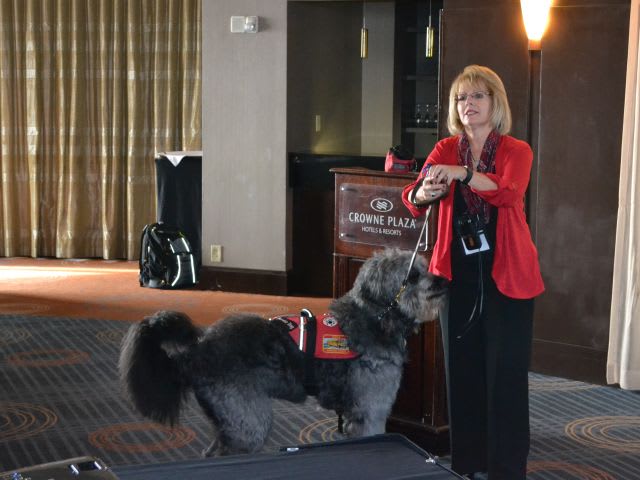
Kimberly Bish, seen here with her daughter Danielle’s seizure assistance dog, Bobo, discussed her training efforts with Ohio school bus drivers.
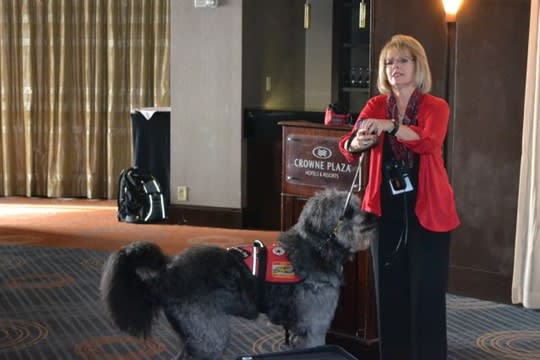
Kimberly Bish, seen here with her daughter Danielle’s seizure assistance dog, Bobo, discussed her training efforts with Ohio school bus drivers.
KANSAS CITY, Mo. — Pupil transportation directors got a parent’s perspective on service animals in school transportation here on Monday.
At the NAPT and NASDPTS conferences, Kimberly Bish of Vandalia, Ohio, shared insights from her family’s experience. Bish’s daughter, Danielle Kneisly, has a seizure assistance dog named Bobo.
With Bobo resting at her feet and her daughter and husband also in the room, Bish told attendees about how the dog is trained to detect when Danielle is having a seizure — and even when she’s about to have one.
When Bobo began accompanying Danielle to school, Bish got involved with training staff at the local school district, including the transportation department.
“My bus drivers needed to know what to expect,” Bish said. For example, she educated them on how Bobo alerts others to Danielle’s seizures, and she worked with them in securing Bobo on the school bus (his leash was clipped to a seat post next to Danielle in her wheelchair). Bish also got involved with emergency evacuation drills, and she told the drivers not to worry about Bobo in an evacuation.
“Make sure all of the students get off of that bus first,” Bish recalled telling the drivers. “Just let Bobo go – he’ll find [Danielle].”
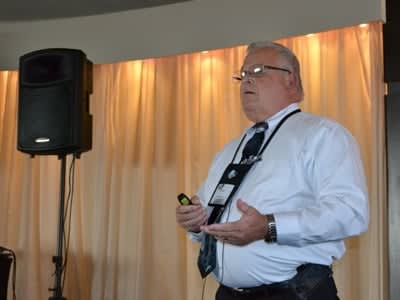
Ohio state director Robert Harmon said that pupil transporters typically have many questions and concerns when it comes to service animals on the bus.
After conducting training with the school district, Bish met Ohio state director Robert Harmon, who joined her for the conference presentation. Harmon said that pupil transporters typically have many questions and concerns when it comes to service animals on the bus. For example: What about other passengers who might be allergic to or scared of the service animal?
Bobo, for one, is hypoallergenic. Also, Bish said that a boy on Danielle’s bus who was scared of dogs became “best friends” with Bobo after the dog came to comfort him when he was crying.
Bish worked with Harmon to expand the service animal training to pupil transportation personnel throughout Ohio. Harmon said that the session became the top-rated driver training course in the state.
Harmon said that Bish also helped Ohio pupil transportation officials understand how to be sensitive in asking parents about a service animal.
Instead of inquiring about what disability their child has, Bish advised asking, “What service does your dog provide for your daughter?”
The NASDPTS conference, which runs through Wednesday, is covering numerous other topics, including stop-arm violations, a school bus evacuation study, and what local directors expect from state directors.
NASDPTS attendees are also hearing from officials of several federal agencies, including the Transportation Security Administration, the National Highway Traffic Safety Administration, the National Transportation Safety Board, and the Environmental Protection Agency.
More Special Needs Transportation
BraunAbility Introduces New Safety Barrier for Wheelchair Lifts
LiftSentinel is designed to add another layer of protection during wheelchair loading and unloading and can be retrofitted to many existing commercial lift installations.
Read More →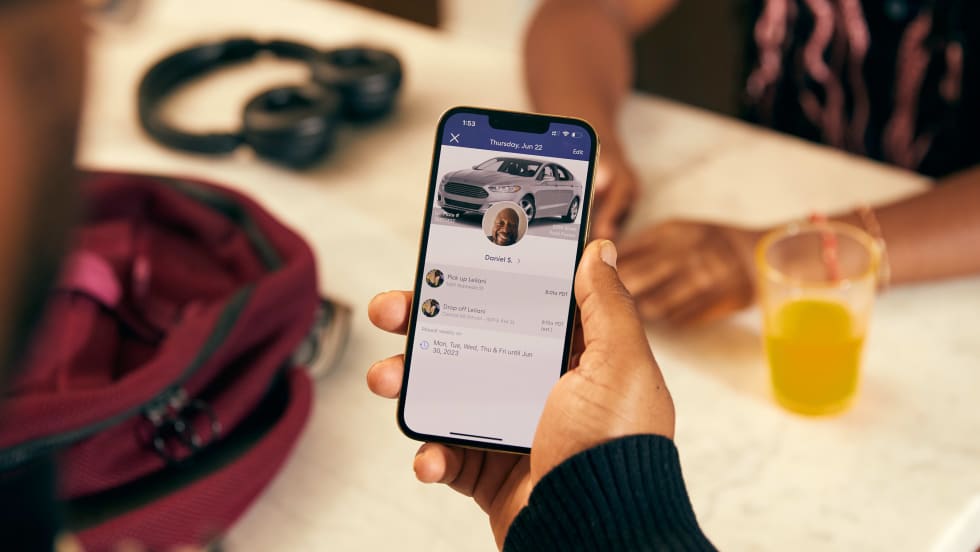
HopSkipDrive Launches New Safety, Driver Consistency Features for 2026-27 School Year
The company’s free ride recording, live ride tracking, and consistent driver assignments aim to improve safety and continuity for diverse student transportation needs.
Read More →
The Most Common Wheelchair Securement Mistakes on School Buses (and How to Fix Them)
Small missteps in wheelchair securement can have serious consequences. Here are 32 tips from experts to reduce risk and increase student safety on the bus.
Read More →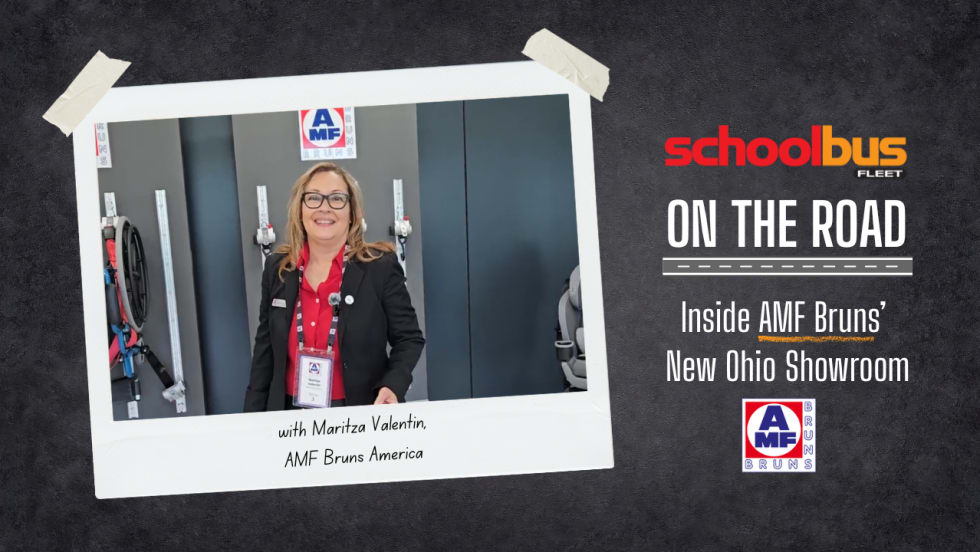
Inside AMF Bruns’ New Showroom: School Bus Securement Solutions Explained
Go inside AMF Bruns America’s new Ohio showroom with Maritza Valentin to see its FutureSafe technology, driver training tools, securement systems, and seating innovations.
Read More →
What AMF Bruns’ New Facility Means for Customers [Video]
Inside AMF Bruns’ new Stow, Ohio, operations: See how expanded space and innovation will enhance customer support and operations.
Read More →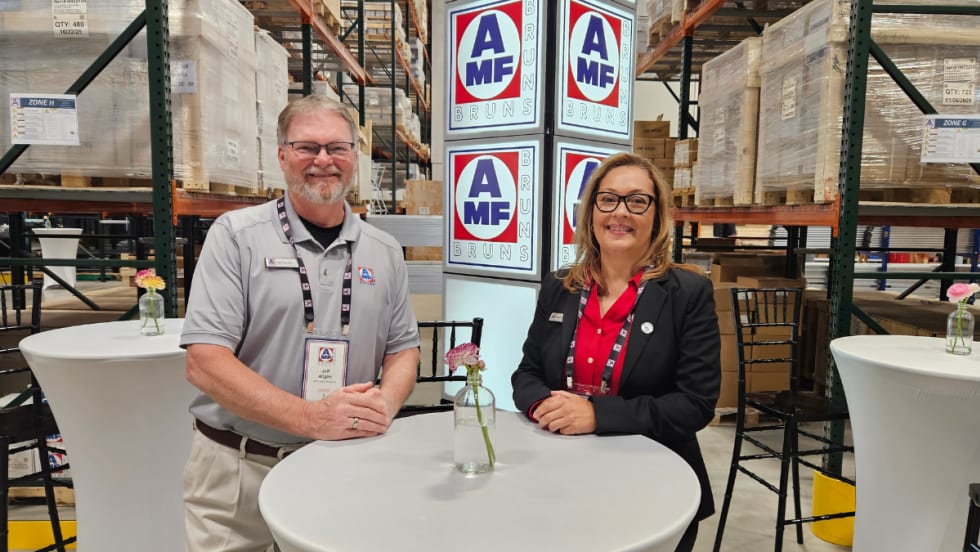
AMF Bruns Expands in Ohio, Investing in Growth and Community
With expanded production space, local investment, and a growing workforce, AMF Bruns is scaling its U.S. presence. Here’s an exclusive first look inside the new Stow, Ohio, HQ.
Read More →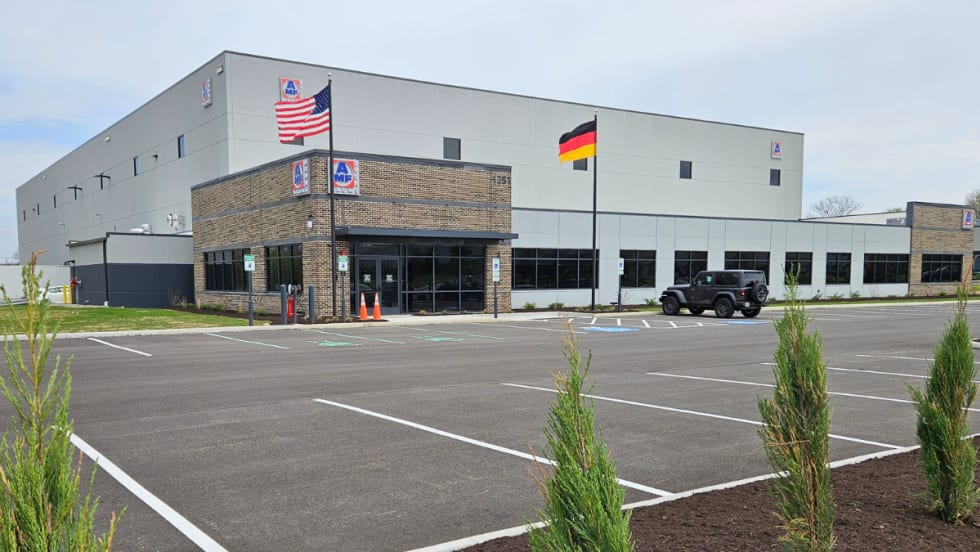
Inside AMF Bruns of America’s New Ohio Manufacturing Facility [Photos]
Take a behind-the-scenes look at AMF Bruns of America’s new 41,000-square-foot Stow, Ohio, headquarters, featuring advanced manufacturing, expanded space, and future-ready mobility solutions.
Read More →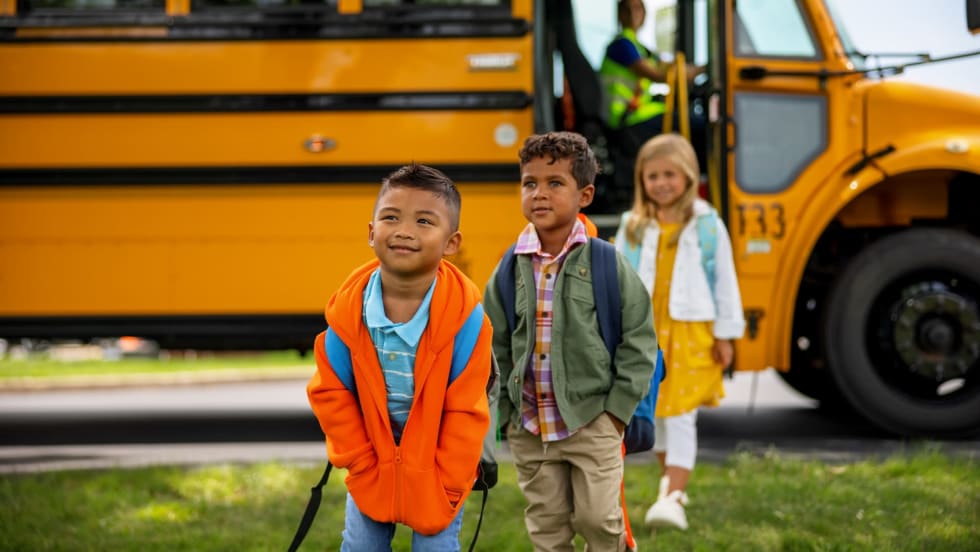
First Student Boosts Student Support in Wichita & Texas
First Student and Wichita Public Schools are using behavioral support strategies to improve student ride experiences, while a separate initiative expands access to after-school programs through a bus donation.
Read More →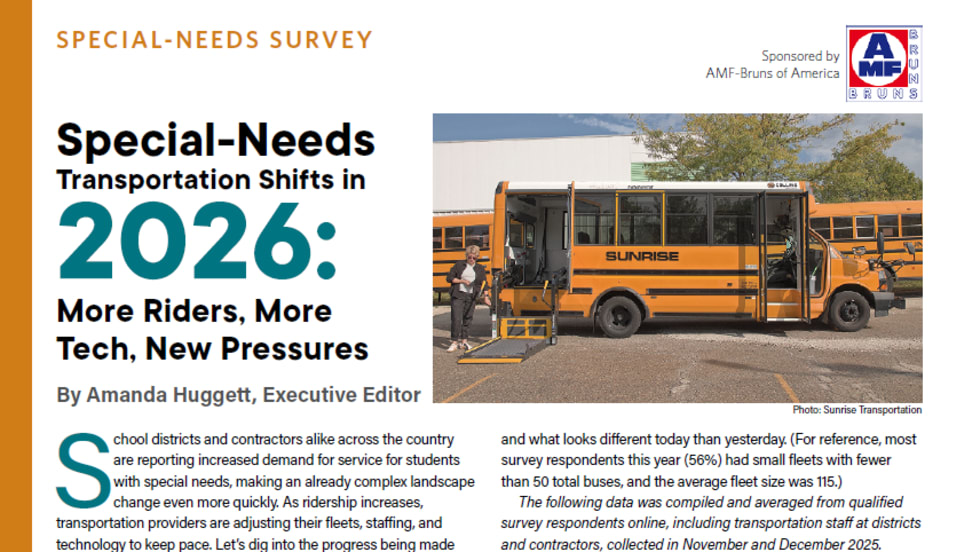
2026 Special-Needs Transportation Survey
What’s changing in special-needs transportation? This year, student transportation operators report a rising need, easing driver shortages, growing tech adoption, and evolving challenges. Sponsored by AMF Bruns of America.
Read More →
The Lived-Experience Gap in Mobility Tech: An Expert Take on Safe Student Transportation
Brianna Pauwee, a product application specialist at AMF Bruns of America and a wheelchair user, drops in to The Route to share practical securement and training insights, plus the story behind the new “Beyond Mobility” podcast. The Route is sponsored by IC Bus.
Read More →