




Micro Bird Expands Plant to Boost Efficiency
The Type A school bus manufacturer has invested in a 115,000 square foot expansion to help expedite bus production.

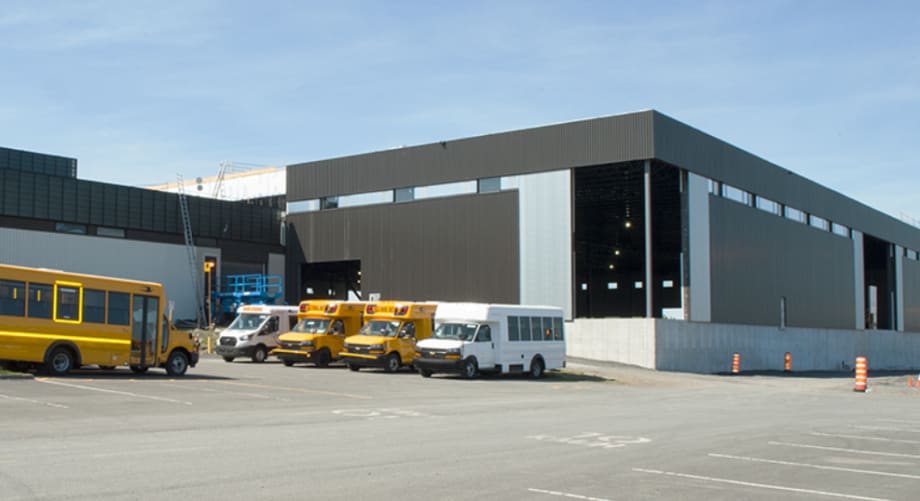
Micro Bird has invested in a 115,000 square foot expansion to help expedite bus production and reduce its carbon footprint.
Photo courtesy Micro Bird
DRUMMONDVILLE, Quebec — Type A school bus manufacturer Micro Bird has invested in a significant expansion of its bus plant to boost efficiency while reducing its carbon footprint.
The expansion, which includes an additional section of 115,000 square feet, began in November 2019. The new plant section is primarily comprised of a warehouse, which Micro Bird is building to help expedite bus production.
The goal of the expansion is to relocate Micro Bird’s warehouse, which is currently a few miles away from the assembly plant. The new section, which is adjacent to the manufacturer’s current plant, will bring Micro Bird’s warehouse in-house. The move will improve logistics by providing quicker and easier access to parts.
It will also enable the manufacturer to perform post-production procedures and maintenance services it currently contracts to local vendors, such as bus washing, custom painting, wheel alignments, and various other chassis and body customizations in an effort to deliver a turnkey solution to customers.
“The ability to handle 100% of our processes under one roof will enable us to build vehicles 70 % faster, from start to finish, and raise quality to new levels, reinforcing our leadership for exemplary standards in our market segments,” Steve Girardin, president of Micro Bird, told School Bus Fleet.
The consolidation of the warehouse will significantly reduce greenhouse gas emissions by about 35 tons per year by eliminating the transportation of parts coming from our remote warehouse, he added.
Additionally, as a greener way of heating the new building section, Girardin said, Micro Bird has implemented a construction method to capture free radiant heat from the sun. That method entails creating a space behind the walls where the air circulates, while dark panels on the wall’s surface heat the air before it enters the plant.
The decision to invest in the expansion was prompted by Micro Bird’s desire to provide even better service to customers as their needs evolve by becoming even more efficient, Girardin said.
“We will greatly improve our efficiency and expedite the build process while reducing our carbon footprint,” he added.
Although the expansion will generate significant efficiencies, Micro Bird plans to maintain its 500-plus employees due to the integration of new services and capabilities which it has historically contracted to local vendors.
The school bus manufacturer plans to move into the new section of the plant in October 2020.Over the last few years, the entire Micro Bird team has been hard at work envisioning and preparing for this expansion, Girardin said.
“The culmination of this project will be a great showcase of our team’s innovations and resilient commitment to honor the trust our customers and partners bestow upon us,” he added.
More Management

How to Build a Better Driver Training Program
Ready to boost up your school bus instructor training? Here’s how to pick the right talent and improve recruitment, retention, and safety.
Read More →
CALSTART and Forth Combine to Form Catalyst Mobility
The new name represents a renewed vision for the nonprofit focused on advancing clean, equitable, and affordable transportation solutions that move people and goods.
Read More →
What Makes a Great School Bus Driver Trainer?
Choosing the right school bus driver trainer takes more than experience. Learn six keys to selecting and developing trainers and evaluating program effectiveness.
Read More →


School Bus Contractors Expand Through New Deals, Acquisitions & Partnerships
STA's Canadian division acquires Ontario-based G&L Stevenson Transport while Durham School Services adds a new district contract in California, First Student adds a New Jersey contract, and Minnesota Coaches acquires Halo Transportation.
Read More →
Logan Bus Company Rolls Out AI Phone System for NYC School Bus Families
A summer pilot found that AI agents could handle most routine calls, freeing up time for customer service staff to focus on emergencies and complex family concerns.
Read More →
From Intent to Impact: What I Learned About Leadership from TAPT
A Texas transportation supervisor shares lessons on self-awareness, accountability, managing stress and building trust — and why investing in leadership development matters at every stage of your career.
Read More →
NAPT Names 2026 Award Recipients, Hall of Fame Inductee
Who earned national recognition for their work in student transportation? This year, NAPT named five recipients of its 2026 awards for service, safety, and leadership, plus its newest Hall of Famer.
Read More →
2026 State of Student Transportation Report
Driver shortages. Rising costs. Growing safety expectations. More data, but not enough time to act on it. The 2026 State of Student Transportation Report reveals what transportation leaders say is putting the most pressure on their operations—and where they’re investing next. See how your priorities compare.
Read More →
How to De-Escalate an Angry Person: 5 Steps for Handling Workplace Conflict
What makes emotions run high, and how should you handle an angry colleague or parent? Follow these steps for staying calm, listening, showing empathy, and resolving conflict.
Read More →
What Readiness Looks Like This School Year
Learn about the challenges shaping the 2026–2027 school year, from persistent driver shortages and budget pressure to technology and readiness gaps. See how school districts are responding and adapting in Zonar’s 2026 Back-to-School Readiness Report.
Read More →