




Related: How Ridesharing Can Meet a Variety of Student Needs
L.A. Agencies, Districts, HopSkipDrive Partner on Foster Care Transportation Pilot
The Foster Youth School Stability Transportation pilot tests three methods for transporting over 1,000 students to their school of origin: school bus routes, paying caregivers, and a public-private partnership with the child ridesharing service.

Nicole Schlosser・Former Executive Editor

Local agencies, school districts, and child ridesharing service HopSkipDrive teamed up on a pilot to transport kids in foster care to their school of origin. Photo courtesy HopSkipDrive
4 min to read

Local agencies, school districts, and child ridesharing service HopSkipDrive teamed up on a pilot to transport kids in foster care to their school of origin. Photo courtesy HopSkipDrive
LOS ANGELES — Local agencies, school districts, and child ridesharing service HopSkipDrive recently teamed up on a pilot to transport kids in foster care to their school of origin to collect data on the costs of a partnership.
The two-year Foster Youth School Stability Transportation pilot, which began in 2017, transported a total of 1,131 students from 65 participating districts to their schools of origin using three tested methods: school bus routes, paying caregivers via education travel reimbursements (ETRs) to transport students, and a public-private partnership with HopSkipDrive, according to an outcome report released by the County of Los Angeles Department of Children and Family Services (DCFS).
Data on the use of school bus routes was only tracked for the Los Angeles Unified School District (USD). The district’s Foster Youth Achievement Program created a referral system to track requests for transportation via school buses. In the first year, about 50 students were transported on school bus routes, the average round trip being 24 miles at an average cost of nearly $8,000 per student per year. In year two of the pilot, 25 students were transported by school bus, with the average round trip being 27 miles at a cost of about $8,726 per student per year. The district spent a total of $613,755 on bus routes.
In both years, only half or less than half of students were offered the bus as an option because a route didn’t exist near the student’s placement, there were safety or developmental concerns about the student, or a caregiver was unable to drop the student off at an existing bus stop. When necessary, Los Angeles USD referred students in foster care to DCFS for stop-gap transportation through HopSkipDrive.
Nearly 90% of the students participating in the pilot used the ridesharing service to get to and from school, for a total of 75,135 rides. The total costs for use of HopSkipDrive were just less than $4 million.
Ridership with the child ridesharing service increased by 717% between year one and year two of the pilot, according to the outcome report, likely due to increased awareness of and communication about the pilot.
The average trip varied from a median of just less than 13 miles with HopSkipDrive to over 24 miles using school bus routes. (In addition to the students being transported as part of this pilot, others received school-of-origin transportation through public transit via Los Angeles County Metropolitan Transportation Authority TAP fare cards.)
“The law requires systems to act swiftly in the best interests of the child, but often lack systems and resources to schedule and book a ride for often very long distances,” said Qiana Patterson, vice president of strategic development for HopSkipDrive. “It’s not for lack of know-how or willpower; there are just a lot of resource constraints.”
County agency staff members identified the biggest success as over 1,000 students being able to continue to attend their school of origin during “a time of great upheaval for themselves and their families,” according to findings from the pilot.
Other findings include:
When school districts were initially not receiving notifications that students were being transported by HopSkipDrive, there was confusion when drivers arrived for pick-ups. However, the ridesharing service quickly put a procedure in place to notify staff from the DCFS, social workers, education specialists, district foster youth liaison, and caregivers when a ride was arranged for a student. HopSkipDrive also offers an app that caregivers and social workers can use to track students’ rides to and from school.
The public-private partnership used in the pilot was considered to be successful enough that a handful of other counties, including San Diego, Sacramento, Santa Clara, and Ventura, and two other states — Colorado and Virginia — have implemented procedures based on the Los Angeles County model.
Students in foster care have transportation needs besides getting to and from their school of origin, such as to medical, dental, mental health, or visitation appointments. The DCFS will look into whether the model used for this pilot can also be used to fulfill these additional transportation needs.
In addition to accessing school, students in foster care often lack the inability to access "normal kid stuff," Patterson added, whether it's meeting up with friends, attending a Saturday PSAT workshop, or staying late for the homecoming game.
“Things so many kids and families take for granted are simply out of reach for these children, and so they feel apart from the world. So we’ve sought partners who think about the whole child,” Patterson said.
To read the full outcome report, go here.
More Management
How to Build a Better Driver Training Program
Ready to boost up your school bus instructor training? Here’s how to pick the right talent and improve recruitment, retention, and safety.
Read More →
CALSTART and Forth Combine to Form Catalyst Mobility
The new name represents a renewed vision for the nonprofit focused on advancing clean, equitable, and affordable transportation solutions that move people and goods.
Read More →
What Makes a Great School Bus Driver Trainer?
Choosing the right school bus driver trainer takes more than experience. Learn six keys to selecting and developing trainers and evaluating program effectiveness.
Read More →


School Bus Contractors Expand Through New Deals, Acquisitions & Partnerships
STA's Canadian division acquires Ontario-based G&L Stevenson Transport while Durham School Services adds a new district contract in California, First Student adds a New Jersey contract, and Minnesota Coaches acquires Halo Transportation.
Read More →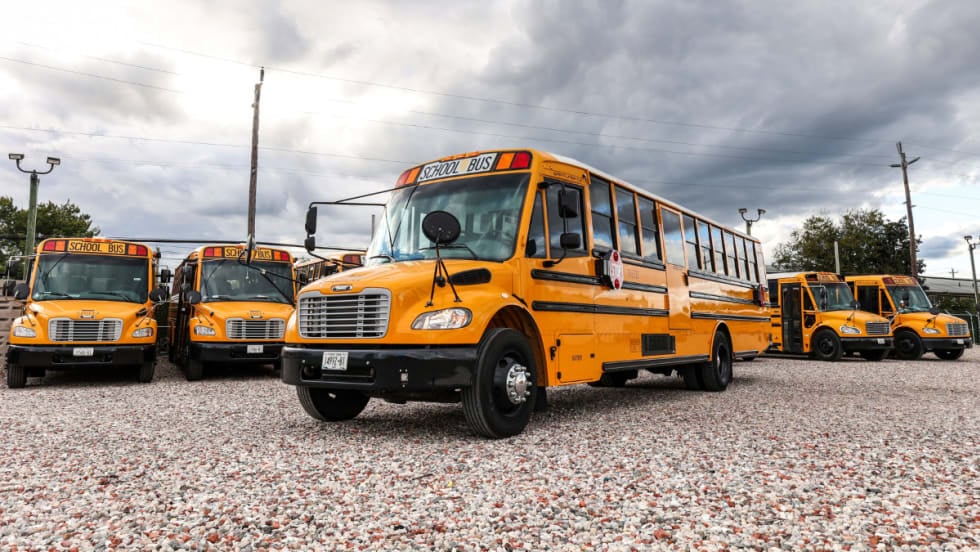
Logan Bus Company Rolls Out AI Phone System for NYC School Bus Families
A summer pilot found that AI agents could handle most routine calls, freeing up time for customer service staff to focus on emergencies and complex family concerns.
Read More →
From Intent to Impact: What I Learned About Leadership from TAPT
A Texas transportation supervisor shares lessons on self-awareness, accountability, managing stress and building trust — and why investing in leadership development matters at every stage of your career.
Read More →
NAPT Names 2026 Award Recipients, Hall of Fame Inductee
Who earned national recognition for their work in student transportation? This year, NAPT named five recipients of its 2026 awards for service, safety, and leadership, plus its newest Hall of Famer.
Read More →
Sponsored•September 2, 2026
2026 State of Student Transportation Report
Driver shortages. Rising costs. Growing safety expectations. More data, but not enough time to act on it. The 2026 State of Student Transportation Report reveals what transportation leaders say is putting the most pressure on their operations—and where they’re investing next. See how your priorities compare.
Read More →
How to De-Escalate an Angry Person: 5 Steps for Handling Workplace Conflict
What makes emotions run high, and how should you handle an angry colleague or parent? Follow these steps for staying calm, listening, showing empathy, and resolving conflict.
Read More →
Sponsored•September 1, 2026
What Readiness Looks Like This School Year
Learn about the challenges shaping the 2026–2027 school year, from persistent driver shortages and budget pressure to technology and readiness gaps. See how school districts are responding and adapting in Zonar’s 2026 Back-to-School Readiness Report.
Read More →