




Koroseal bus tread targets traction, cleaning ease
The company’s Pebble Tread, which has been in use for nearly 20 years, has a non-directional raised pattern that provides an aggressive traction surface and still allows for ease of sweeping. Koroseal officials discuss how it holds up to the “extreme wear and tear found in the school bus entry.”

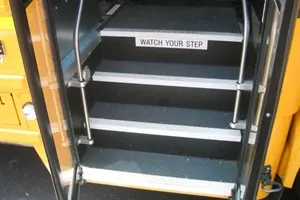
School bus entry steps are in an extremely demanding environment, facing constant physical and environmental abuse.
The entry way into a conventional school bus is a challenge for bus manufacturers, drivers and passengers alike.
The conventional bus body height combined with the narrow entry area create steps that require a good deal of caution to navigate. While manufacturers provide handrails to assist, slips and falls are not uncommon.
The entry steps are in an extremely demanding environment, facing constant physical and environmental abuse.
Officials with flooring manufacturer Koroseal said that historically, the step surface has been covered with a rib material just like the center aisle of the bus. And like the aisle, the direction of the ribs on the steps is in the direction of travel. This provides a clear path for the operator/driver to clean the floor and the step well.
The direction of the rib can also reduce the amount of traction available to drivers and passengers entering and exiting the bus, according to Koroseal. This tradeoff — ease of cleaning versus slip resistance — has been a topic of discussion for many years and has resulted in new products being developed to provide both features.
Koroseal’s Pebble Tread has a non-directional raised pattern that provides an aggressive traction surface and still allows for ease of sweeping.

Koroseal's Pebble Tread has a non-directional raised pattern that provides an aggressive traction surface and still allows for ease of sweeping.
”The product has been in use for nearly 20 years, and bus drivers and school administrators report that it has significantly reduced slip and fall events,” said Jack Woodyard, Koroseal’s general manager of transit products.
The Koroseal product was the result of an extensive R&D program that evaluated the characteristics of a number of traction surfaces and construction techniques.
“What emerged is a product that provides superior slip resistance, and which survives the extreme wear and tear found in the school bus entry,” said Craig D. Sweet, marketing manager of transit products. “In the step well, dirt, sand, water, snow and ice, abrasion, and impact combine to attack the step tread covering and its backing.”
For these harsh conditions, the step tread covering and backing must be permanently bonded over 100 percent of their surface areas. This prevents separation of the components and the failure of the step tread while in service.
Step tread separation and failure create a serious safety hazard that results in the bus being taken out of service until replacement parts can be sourced and installed.
“Poorly engineered copies of the Koroseal Pebble Tread have found their way into the school bus market and are literally falling apart,” Woodyard said.
Woodyard and Sweet said that school bus buyers should be as detailed as possible in developing their specifications. While it was once adequate to specify “pebble type” step treads, they said it is now necessary to add additional specification details to ensure top quality of construction and safety.
For more information on Koroseal, call (800) 938-2858.
More Maintenance

Easy Ways to Reduce School Bus Emissions: Q&A with John Gonzales
Learn how preventive maintenance, driver training, reduced idling, smarter routing, and the right fuel choices can help districts reduce emissions — without investing in new buses.
Read More →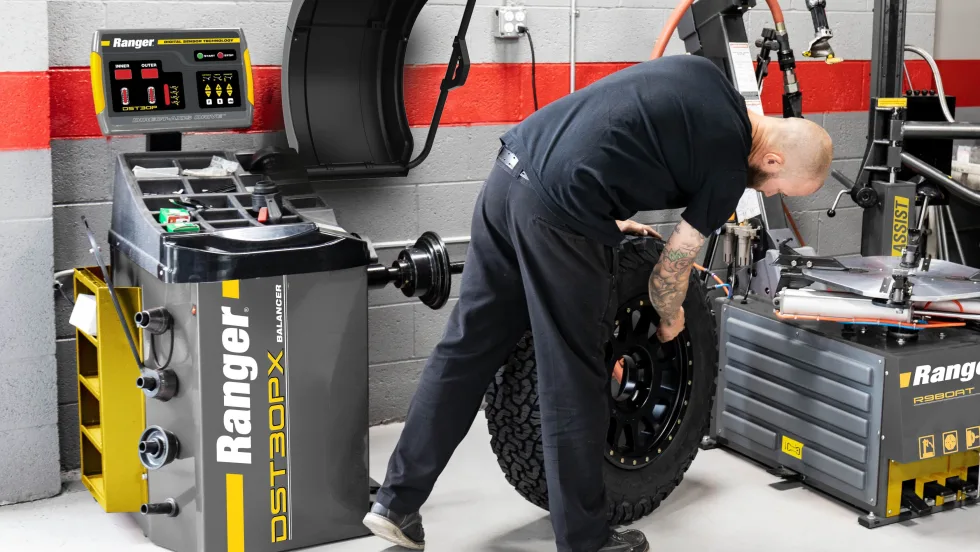
BendPak Launches Ranger DST30PX Wheel Balancer
BendPak's new wheel balancer handles tires up to 43 inches in diameter, with a reinforced design, precise weight placement, and faster service cycles.
Read More →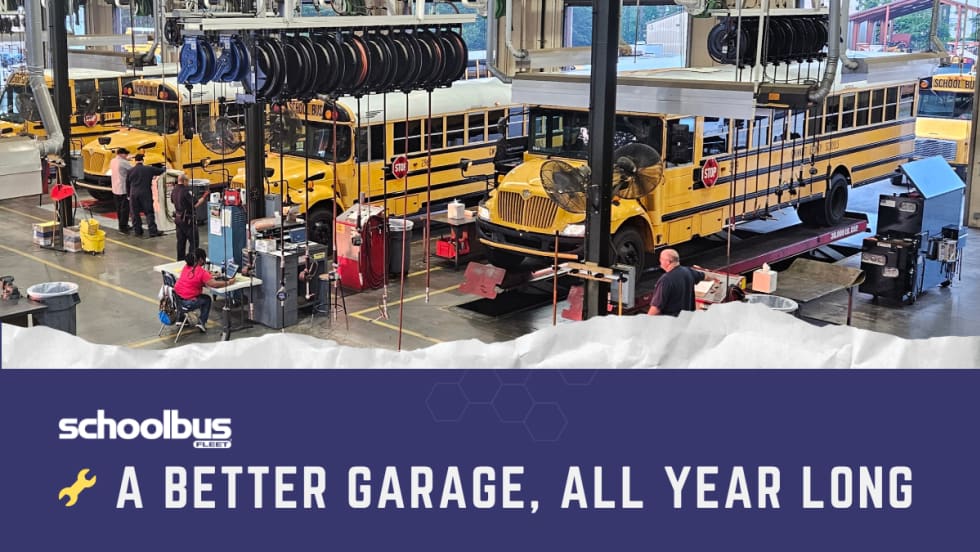
Tips for Ensuring School Bus Garages Are Safe and Warm Year-Round
Cold maintenance bays and rising heating costs? Learn how school bus garages can improve comfort with targeted heating, better airflow, and winter preparation.
Read More →
ASE Highlights School Bus Technician Certification Requirements
ASE is encouraging school bus maintenance professionals to maintain their certifications, highlighting seven specialized tests and five-year renewal requirements.
Read More →
International Adds E-Commerce Capabilities to Fleetrite.com
IC Bus customers can now browse, buy, and track shipments for more than 400,000 aftermarket parts online.
Read More →
The Most Expensive Thing You Do Before Selling a School Bus: Wait
When should you sell an aging school bus? Learn how maintenance, mileage, corrosion, specifications, and timing can affect resale value long before the auction.
Read More →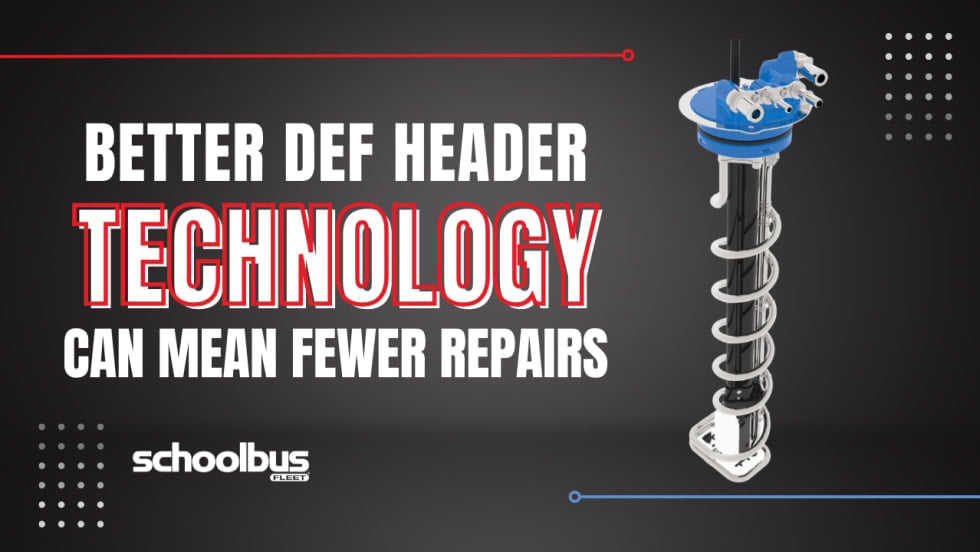
The Evolution of DEF Header Technology: What School Bus Operations Should Know at Replacement Time
See what school bus fleets should consider when replacing DEF headers to improve reliability, reduce repeat repairs, and control maintenance costs.
Read More →
The Essential Guide to School Bus Maintenance and Student Safety
Your district's buses carry students to school every day. This guide shows how predictive maintenance powered by fleet data helps keep buses reliable, drivers accountable and students safer from the first bell to the last stop.
Read More →
Kerry Brothers Grows Michigan School Bus Repair Network
The acquisition of Downriver Truck and Bus expands Kerry Brothers’ school bus maintenance footprint across southeast Michigan, adding repair capacity, diagnostic resources, and state inspection support.
Read More →
Noregon Introduces CAN Bus Diagnostic Tool, Expands JPRO Features
CAN Mentor and the latest JPRO update aim to simplify vehicle network diagnostics and improve repair efficiency for technicians of all experience levels.
Read More →