




Kansas City Highlight: Union Station
More than just a train station, Kansas City, Missouri’s Union Station also offers educational exhibits, entertainment, restaurants, shopping, and a full-service post office.

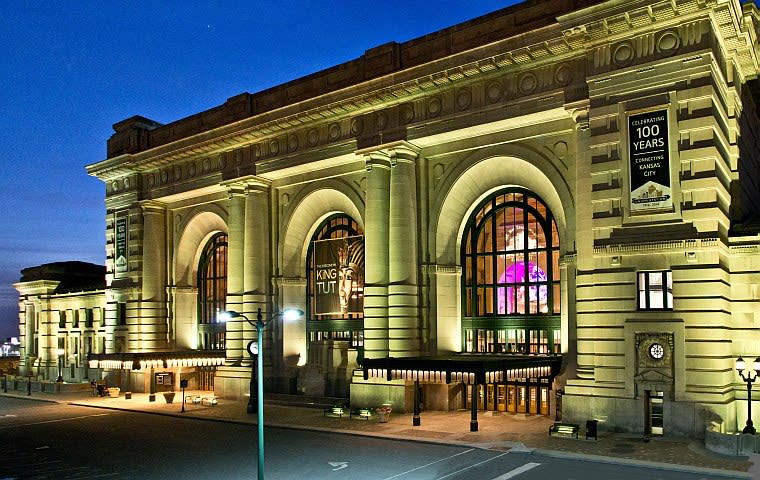
More than just a train station, Kansas City, Missouri’s Union Station also offers educational exhibits, entertainment, restaurants, and shopping. Photo by Union Station Kansas City Inc.
More than just a train station, Kansas City, Missouri’s Union Station also offers educational exhibits, entertainment, restaurants, and shopping. Photo by Union Station Kansas City Inc.
At over 100 years old, Kansas City’s Union Station has been a major point of connection for locals and visitors alike, attracting tourists from all over the world.
Located near downtown Kansas City at 30 West Pershing Rd., Union Station is much more than just a transportation hub. It also offers educational exhibits, entertainment, restaurants, shopping, and a full-service post office.
Visitors can learn about the history of rail travel in the U.S. at KC Rail Experience, a permanent rail exhibit, and see traveling exhibits produced by the Smithsonian, National Geographic, and other international organizations. A planetarium offers interactive astronomy education and night sky viewing, and Science City offers interactive learning experiences. Visitors can also check out a theater district featuring giant-screen movies and live theater.
The station is operated by Union Station Kansas City Inc., a nonprofit organization dedicated to science education, celebration of community, and preservation of history, according to its website.
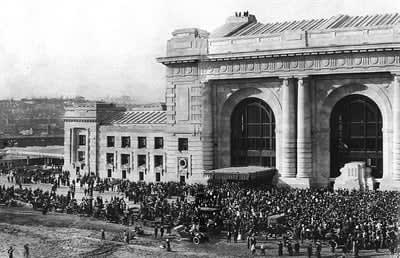
Created by architect Jarvis Hunt and built in 1914 as a train station, the 850,000 square foot structure originally accommodated hundreds of thousands of train passengers. Photo courtesy Union Station Kansas City Inc.
Created by architect Jarvis Hunt and built in 1914 as a train station, the 850,000 square foot structure originally accommodated hundreds of thousands of train passengers. In 1945, the year World War II ended, a record number of passengers — nearly 680,000 — went through the station. A significant number of these travelers were U.S. Armed Forces personnel passing through on their way home from the war. The building also included restaurants, a barber shop, and a cigar store.
After being closed in the 1980s, the station was empty for some time, and almost underwent demolition several times. Then, in 1996, a historic initiative was passed by Missouri and Kansas to fund renovations to the station, which were completed in 1999, according to Union Station Kansas City Inc.’s website.
The station saw significant revival with the onset of the 21st century. In 2002, Amtrak returned to the station. Soon after, the U.S. Postal Service set up a branch in the facility. Then, in 2006, railroad company Kansas City Southern built a pedestrian bridge to connect the station with the Freight House, which became the Crossroads Arts District. Two years later, a 20,000 square foot exhibit gallery was built on the lower level of the facility to host traveling exhibits.
For more information about Union Station, visit www.unionstation.org.
More Management

Meet the 2025 School Bus Driver Hero Winner: Annette Brown
We caught up with Wa-Nee Community Schools' Annette Brown on site at SBFX, where she was named the 2026 School Bus Driver Hero Award winner. Hear about her reaction, what she loves most about being a school bus driver, and more!
Read More →
Predictability Is Like Ketchup (According to 6-Year-Olds)
To students, a different school bus can feel like a full-blown crisis. One driver reflects on why familiar routines, showing up on time, and being reliably boring matter more than we think.
Read More →
Samsara Launches Free Driver Rewards Program
The new Driver Perks program gives eligible professional drivers access to discounts and offers without adding a cost for participating fleets.
Read More →
How Tax-Exempt Municipal Leases Can Help Finance School Buses
Let’s explore school bus financing options, including municipal leases, vendor payable accounts, and balloon payments, and how they can help stretch fleet budgets.
Read More →
Nominate Rising School Transportation Pros Under 40!
We’re searching for the next generation of leaders making an impact across the K-12 student transportation industry to recognize as SBF’s 2027 Trailblazers. Nominations are open now!
Read More →
Changing Lanes: BusWhere, EverDriven, InterMotive, Summit School Services, Switzer-Carty & Thomas Built Buses
Check out who's been hired, promoted, and appointed to leadership positions at various school transportation suppliers, contractors, and manufacturers.
Read More →
The Most Expensive Thing You Do Before Selling a School Bus: Wait
When should you sell an aging school bus? Learn how maintenance, mileage, corrosion, specifications, and timing can affect resale value long before the auction.
Read More →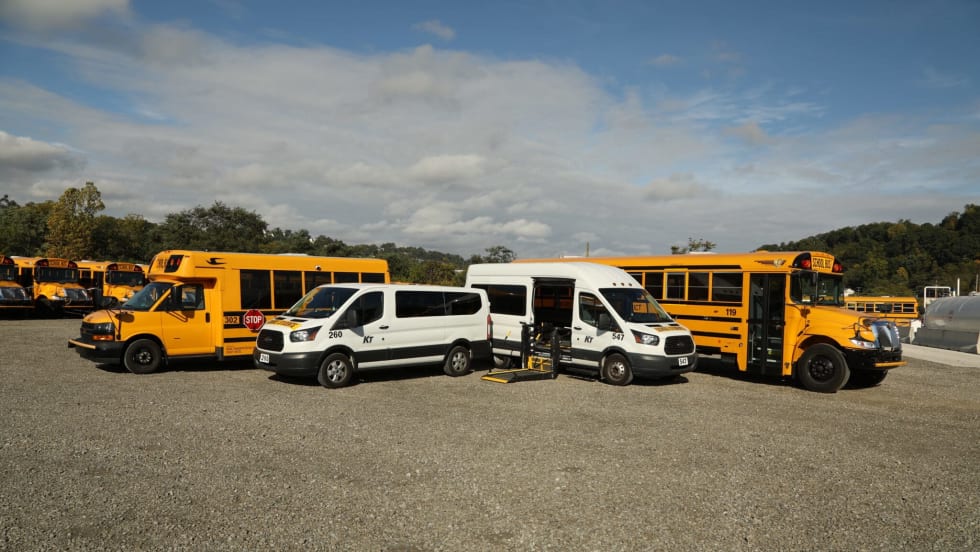
American Student Transportation Partners Acquires AJ Myers and Sons
A new deal brings a 75-year Pennsylvania student transportation provider into one of the nation’s largest private school bus contracting groups.
Read More →
What I Brought Home From SBFX: Relationships, Leadership, and Preparing What's Next
Who could lead your transportation operation tomorrow if you couldn't? Bernando Brown explores succession planning, mentorship, and preparing emerging leaders to step up.
Read More →
Inside School Bus Fleet ConneX 2026: Industry Leaders Connect in Scottsdale [Photos]
See highlights from SBFX 2026 in Arizona, where school bus operators and suppliers gathered for meetings, education, networking, awards, and more.
Read More →