




Indiana District Shifts High School Vicinity to ‘Limited-Transportation Zone’
The move modifies a previous plan for a 1-mile-radius “no-transportation zone” around the school, within which students would not have received school bus service.

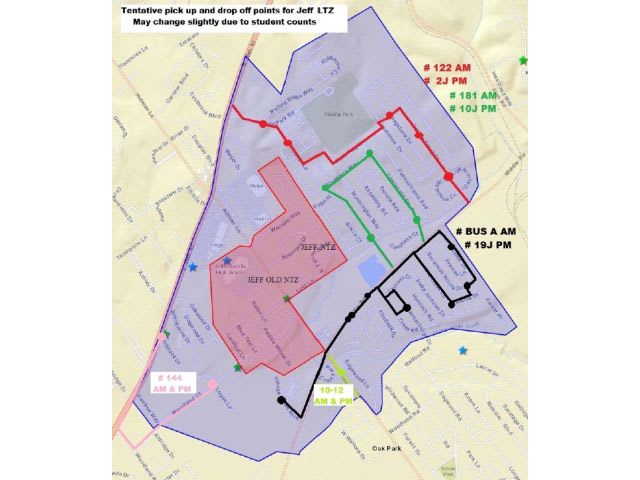
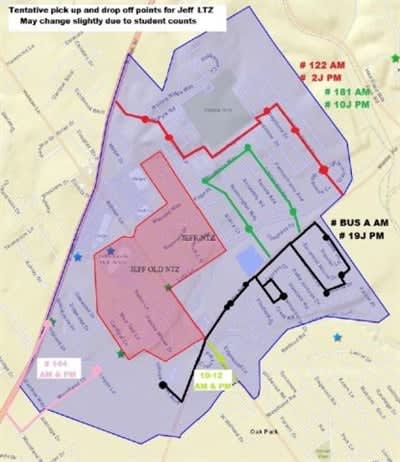
The purple area in this map shows the new “limited transportation zone” — with a radius of about 1 mile — around Jeffersonville High School.
JEFFERSONVILLE, Ind. — A school district here has added back some bus stops around one of its high schools, modifying an earlier plan for a “no-transportation zone.”
Greater Clark County Schools announced that it will now implement a “limited-transportation zone" — with a radius of about 1 mile — around Jeffersonville High School starting with the 2018-19 school year.
The district had previously planned to make that area an expanded no-transportation zone, within which students would not have received school bus service. That plan, which had been expected to directly affect about 160 students, was changed to the limited-transportation zone concept after parents voiced concerns.
Greater Clark County Schools had noted on its website that many neighboring school districts have no-transportation zones of 2 miles around their high schools. Greater Clark County Schools has decided to cap its no-transportation zones at 1 mile for all of its schools.
Twelve of Greater Clark’s schools have a 1-mile no-transportation zone in which families have to make alternative arrangements for their students to get to school. With the new limited-transportation zone for Jeffersonville High School, the district will still provide bus service, but with fewer stops.
“This means that students in the [limited-transportation zone] may have to walk a short distance to a designated bus stop,” the district explained on its website.
The change comes as Greater Clark County Schools deals with growth, increased traffic, and construction in the Jeffersonville area, factors that the district said have led to buses running late for middle and elementary schools. Also, like many other districts across the country, Greater Clark has been experiencing a shortage of school bus drivers.
The new limited-transportation zone around Jeffersonville High School will condense bus runs, which the district expects to help address the bus timing and driver shortage issues.
Greater Clark said that the limited-transportation zone “is currently the best course of action to provide district transportation to our [Jeffersonville High School] students, while also resolving our need to get middle and elementary students to school in a timely fashion with our challenge of needing more bus drivers.”
More Management
HopSkipDrive’s CareEngine Targets the ‘Exceptions’ in Student Transportation
The new platform works alongside districts’ existing transportation management systems to coordinate specialized rides, automate last-minute changes, and turn ride data into operational improvements.
Read More →
The Right Ride for Every Student: Navigating the New Student Transportation Ecosystem
How should districts blend school buses with small-vehicle transportation and other options? EverDriven CEO Mitch Bowling discusses safety, costs, partnerships, and strategy.
Read More →
Annette Brown Always Takes the Extra Time: Meet Our 2026 School Bus Driver Hero
For more than 30 years, the Wa-Nee Community Schools driver has treated students like family, combining safety, compassion, and servant leadership to make a lasting difference on and beyond the school bus.
Read More →


How to Build a Better Driver Training Program
Ready to boost up your school bus instructor training? Here’s how to pick the right talent and improve recruitment, retention, and safety.
Read More →
CALSTART and Forth Combine to Form Catalyst Mobility
The new name represents a renewed vision for the nonprofit focused on advancing clean, equitable, and affordable transportation solutions that move people and goods.
Read More →
What Makes a Great School Bus Driver Trainer?
Choosing the right school bus driver trainer takes more than experience. Learn six keys to selecting and developing trainers and evaluating program effectiveness.
Read More →
School Bus Contractors Expand Through New Deals, Acquisitions & Partnerships
STA's Canadian division acquires Ontario-based G&L Stevenson Transport; Durham School Services adds a new district in California; First Student expands in New Jersey; and Minnesota Coaches rebrands and acquires Halo Transportation.
Read More →
Logan Bus Company Rolls Out AI Phone System for NYC School Bus Families
A summer pilot found that AI agents could handle most routine calls, freeing up time for customer service staff to focus on emergencies and complex family concerns.
Read More →
From Intent to Impact: What I Learned About Leadership from TAPT
A Texas transportation supervisor shares lessons on self-awareness, accountability, managing stress and building trust — and why investing in leadership development matters at every stage of your career.
Read More →
NAPT Names 2026 Award Recipients, Hall of Fame Inductee
Who earned national recognition for their work in student transportation? This year, NAPT named five recipients of its 2026 awards for service, safety, and leadership, plus its newest Hall of Famer.
Read More →