




Ind. district increases safety measures after tornado
Stephen Satterly, director of transportation and school safety at the Community School Corp. of Southern Hancock County in New Palestine, discusses with SBF the training topics he’s covering with his bus drivers and the policy changes he’s planning to implement following this month’s F4 tornado in Henryville. He also shares emergency planning best practices that are part of a white paper he’s co-writing.
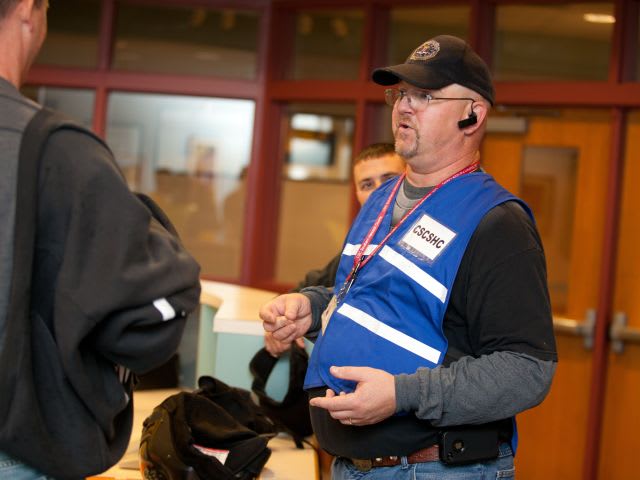
Stephen Satterly, director of transportation and school safety at the Community School Corp. of Southern Hancock County, is co-writing a white paper on emergency best practices. Here, he provides instruction prior to an active shooter exercise.
NEW PALESTINE, Ind. — In the wake of the F4 tornado that hit Henryville, Ind., earlier this month, the director of transportation and school safety at a district an hour north of the city, in New Palestine, is working to enhance safety practices at his operation.
As SBFpreviously reported, the March 2 tornado destroyed several West Clark Community Schools buses, and one of the district’s campuses was damaged.
Now, Stephen Satterly of the Community School Corp. of Southern Hancock County is spending extra time training his operation’s bus drivers, and he is planning some policy changes.
The drivers receive basic CPR and first aid training, and Satterly also uses a program from Safe Havens International called "The First 30 Seconds." (SBFreported on this series of DVDs last year.)
“I provide a short video clip to the drivers, and I use that as a starting point — I’m teaching the drivers how to visualize themselves in a situation, and I try to give them a broad base of knowledge and experience that they can draw upon to make the right decision,” he told SBF in an interview.
Satterly has been focusing on severe weather, so he’s had the drivers visualize being on a route and seeing a tornado, strong storm, etc. coming in, and then they must identify other routes or safe areas where they can go.
If drivers are out in the open, they’ve been trained to get away from the bus, and if possible, find a deep ditch to lie in until the storm or tornado passes.
Beyond the videos from Safe Havens International, Satterly said he encourages his drivers to take online FEMA courses on the Incident Command System (ICS) so that they can better understand their role in a larger emergency.
Satterly has taken ICS-100 and ICS-200, which provide introductory information on ICS, as well as IS-100SCa, which instructs on ICS for schools. ICS-300 and ICS-400 cover intermediate and advanced ICS, respectively.
“They also have online courses that you can take that coach you through talking to the media,” Satterly said, adding that building a relationship with local media is important because it helps them know where to look to get accurate information involving your operation.
In terms of the district’s policies, Satterly would like to amend them to call for the cancellation of school for the day if the National Weather Service's Storm Prediction Center issues a "particularly dangerous situation" warning through the local Emergency Management Agency. If students are already at school, he would like to implement a policy that requires students to stay at school until it’s safe for them to go home.
Satterly is also co-writing a white paper on emergency planning best practices with Michael Dorn, executive director of Safe Havens International.
(In his decade with the Community School Corp. of Southern Hancock County, Satterly has witnessed firsthand the damage tornados can inflict: In 2002, a tornado struck an elementary school in Indianapolis where he was working as an assistant principal. He said that sparked his passion for school safety, and when he traveled to Henryville after the March 2 tornado to assess the damage, he relived his experience from 10 years ago.)
Here are some of the best practices:
• Have your response policies and procedures in writing. This way, if or when an emergency occurs, you’re not trying to formulate a plan.
• Transportation administrators should determine how long it takes for bus drivers to complete their routes to avoid having them on the road when dangerous weather conditions are imminent.
• If a driver is out on the road, he or she should be aware of his/her surroundings. “If you as a driver think the situation is too dangerous to continue driving, don’t continue to drive, and get the kids off the bus,” he advised.
• If you decide to send kids home early, make sure there’s enough time to transport them, and make sure someone is home.
• The communication process is key. At Satterly’s operation, if the bus drivers are going to do something, they radio the office so that the staff there can contact 911 to let responders know the drivers’ location. In addition, all bus passengers should be accounted for.
“It’s important to develop a climate where the drivers can sit down and talk to one another,” Satterly added. “The more experienced drivers can share their experiences with the younger drivers, and the younger drivers can pose questions that the veteran drivers might not have thought of.”
He also believes driver empowerment is an essential component of effective emergency response.
“We empower drivers to make decisions, and we stand by their decisions,” Satterly said, noting that he works with them to ensure that they make the best possible decision for situations they face.
More Management

Why Emotional Intelligence Matters in Student Transportation
Learn the five key elements that bus drivers and transportation directors can use to stay calm in any situation.
Read More →
2026 Back-To-School Readiness Report
Staffing gaps, flat budgets, and the distance between “mostly prepared” and ready for the 2026-2027 school year.
Read More →
National School Transportation Association Presents 2026 Award Winners
Twenty-one individuals and contractor companies were recognized for excellence in student transportation at NSTA's annual meeting and convention in Denver.
Read More →

School Transportation Data Is Only as Powerful as the Story It Tells
Leaders say turning operational metrics into student-centered narratives can help districts justify investments and improve service.
Read More →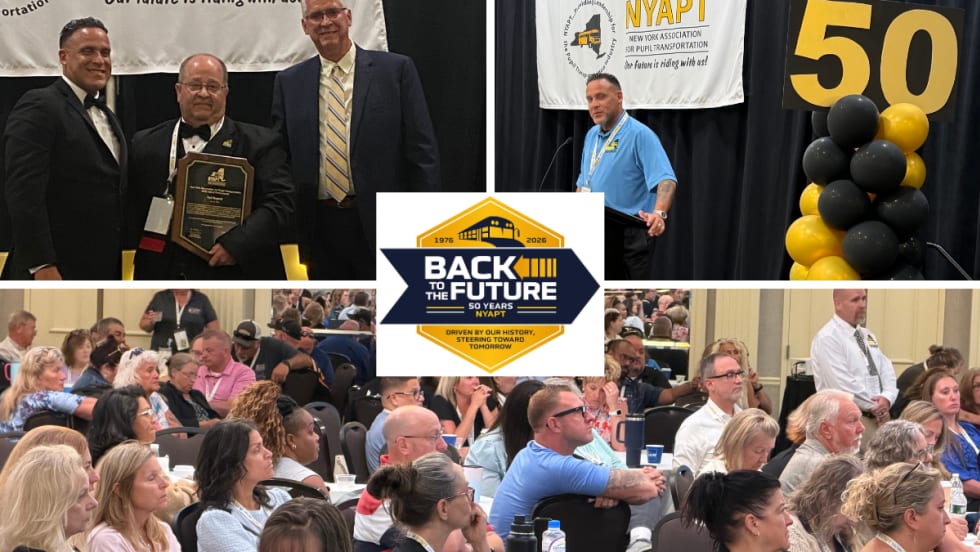
Photos: NYAPT Celebrates 50 Years at 2026 Conference & Trade Show
See highlights from NYAPT's 50th anniversary conference in Saratoga Springs, featuring educational sessions, awards, a trade show, networking, and more.
Read More →
Ohio Transportation Workgroup Calls for End to 'Impractical to Transport' Payments
A final report from Ohio's Pupil Transportation Workgroup proposes ending "impractical to transport" payments and expanding transportation options through regional partnerships, but not all industry pros agree on the approach.
Read More →
Transfinder Expands California Footprint with Multiple School District Wins
Six California school districts selected the company's routing platform and related transportation technology as Transfinder continues expanding its presence across the state.
Read More →
NSTA's Curt Macysyn on Student Transportation History and What's Next
Hear from NSTA's executive director as we discuss student transportation's role in American history, federal regulation, driver recruitment, illegal passing, AI, and what might be next, in this Route interview.
Read More →
NSTA on 250 Years of America and the Road Ahead for Student Transportation
Curt Macysyn joins The Route to discuss student transportation's role in American history, federal regulation, driver recruitment, illegal passing, AI, and the industry’s future. Sponsored by IC Bus.
Read More →
Photo Highlights: Inside the 2026 Michigan Association for Pupil Transportation Conference
Snapshots from the 2026 MAPT conference, where Michigan's school transportation professionals gathered for training, technology updates, awards, networking, and more.
Read More →