




Florida district cuts diesel use by 151K gallons in a year
Orange County Public Schools' combined initiative of anti-idling, biodiesel and fuel-efficient buses resulted in an overall reduction of 151,788 gallons of diesel fuel this past year. The economic benefit was a cost avoidance of $538,847 in fuel costs to the district, and the environmental benefit was a reduction of 1,503 metric tons of carbon matter output.

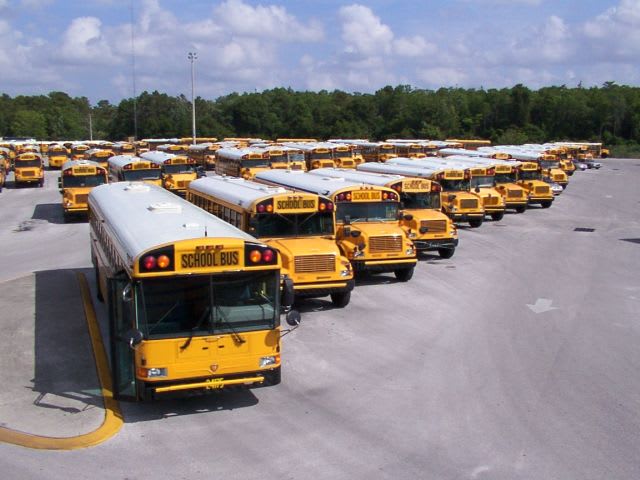
Reduced idling, biodiesel and new buses have helped Orange County (Fla.) Public Schools lessen the amount of diesel used by its yellow fleet.
Florida’s Orange County Public Schools actively measures key performance indicators (KPIs) to manage its operations.
One of the many strategies implemented in the last school year was to reduce the amount of diesel fuel utilized by the district’s yellow fleet. Jim Beekman, senior director of transportation, said that the effort is being carried over to this year as well.
Here is an example of a report on objectives from the operations division’s publication on performance, which is sent to the school board on an annual basis:
Department objective: To reduce the amount of hazardous waste produced and to increase the amount of recycling of hazardous and non-hazardous materials generated by the department
Measure: Reduce idling time
Target: 468.7 hours per school day
Result: 442.5 hours per school day
The measure determines how long buses are idling before, between and after runs. District officials said that this is important to monitor because it has a direct influence on fuel expenditures as well as the amount of emissions placed in the air.
The department measured 100% of its route buses for idling in 2012-13, which resulted in reducing idling time from 520.7 hours per school day to 442.5 hours.
Based on a fuel cost of $3.55 per gallon, a total of $61,025 dollars in fuel costs was avoided last year through the anti-idling program. As for the environmental impact, the effort reduced the fleet’s carbon matter output by 170.3 metric tons.
Lessons learned from this new measure have pushed the goal out to managers’ scorecards to be monitored on a weekly basis, in order for the department to be more responsive to any spikes in the data that may occur.
Additionally, Orange County Public Schools has utilized biodiesel fuel and, through its capital campaign, has purchased more fuel-efficient buses to replace older buses.
The combined initiative of anti-idling, biodiesel and fuel-efficient buses resulted in an overall reduction of 151,788 gallons of diesel fuel this past year. The economic benefit was a cost avoidance of $538,847 in fuel costs to the district, and the environmental benefit was a reduction of 1,503 metric tons of carbon matter output.
Orange County Public Schools, which is based in Orlando, transports 67,618 students per day on 906 route buses, traveling about 16.6 million miles per year.
News from another of SBF's Top 100 School District Fleets:
More Management

How to Build a Better Driver Training Program
Ready to boost up your school bus instructor training? Here’s how to pick the right talent and improve recruitment, retention, and safety.
Read More →
CALSTART and Forth Combine to Form Catalyst Mobility
The new name represents a renewed vision for the nonprofit focused on advancing clean, equitable, and affordable transportation solutions that move people and goods.
Read More →
What Makes a Great School Bus Driver Trainer?
Choosing the right school bus driver trainer takes more than experience. Learn six keys to selecting and developing trainers and evaluating program effectiveness.
Read More →


School Bus Contractors Expand Through New Deals, Acquisitions & Partnerships
STA's Canadian division acquires Ontario-based G&L Stevenson Transport while Durham School Services adds a new district contract in California, First Student adds a New Jersey contract, and Minnesota Coaches acquires Halo Transportation.
Read More →
Logan Bus Company Rolls Out AI Phone System for NYC School Bus Families
A summer pilot found that AI agents could handle most routine calls, freeing up time for customer service staff to focus on emergencies and complex family concerns.
Read More →
From Intent to Impact: What I Learned About Leadership from TAPT
A Texas transportation supervisor shares lessons on self-awareness, accountability, managing stress and building trust — and why investing in leadership development matters at every stage of your career.
Read More →
NAPT Names 2026 Award Recipients, Hall of Fame Inductee
Who earned national recognition for their work in student transportation? This year, NAPT named five recipients of its 2026 awards for service, safety, and leadership, plus its newest Hall of Famer.
Read More →
2026 State of Student Transportation Report
Driver shortages. Rising costs. Growing safety expectations. More data, but not enough time to act on it. The 2026 State of Student Transportation Report reveals what transportation leaders say is putting the most pressure on their operations—and where they’re investing next. See how your priorities compare.
Read More →
How to De-Escalate an Angry Person: 5 Steps for Handling Workplace Conflict
What makes emotions run high, and how should you handle an angry colleague or parent? Follow these steps for staying calm, listening, showing empathy, and resolving conflict.
Read More →
What Readiness Looks Like This School Year
Learn about the challenges shaping the 2026–2027 school year, from persistent driver shortages and budget pressure to technology and readiness gaps. See how school districts are responding and adapting in Zonar’s 2026 Back-to-School Readiness Report.
Read More →