




First Student shares 12 winter driving safety tips
With arctic temperatures gripping much of the country and the long-term forecast calling for ice and snow, the company is offering winter driving safety tips for students, parents and drivers.

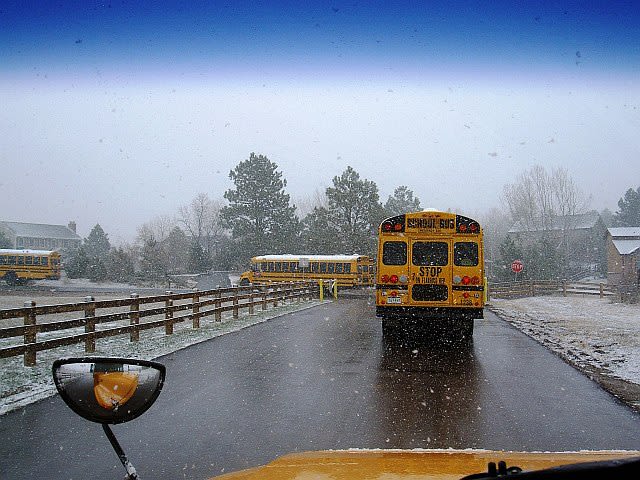
First Student’s winter safety tips for students, parents and drivers include taking extra time in the morning, and slowing down and increasing following distance when driving. Photo by John Horton
First Student’s winter safety tips for students, parents and drivers include taking extra time in the morning, and slowing down and increasing following distance when driving.
unknown nodeCINCINNATI — With arctic temperatures gripping much of the country and the long-term forecast calling for ice and snow, First Student is sharing winter driving safety tips.
Every year, First Student drivers complete advanced training on driving in adverse conditions, including snow, ice, rain and fog, so they're prepared for the challenges of every climate.
“First Student school buses are twice as safe as the industry average, and a key to our success is training drivers to be prepared for winter road conditions,” said Gary Catapano, First Student’s senior vice president of safety. “Each driver is trained specifically to handle slippery roads to help ensure students are safe throughout the more challenging driving months.”
The safety of children on the school bus depends not only on the bus driver, but others on the road as well. Here are First Student’s winter safety tips for students, parents and drivers.
Students and parents:
1. Don’t rush to catch the bus. When roads and walkways are slippery, rushing to catch the bus or driving faster to make it to your destination can have disastrous results. Children need extra time to get to the bus stop in cold, windy or snowy conditions. Encouraging them to leave a few minutes early and take their time can reduce the number of falls on slick pavement.
2. Bundle up like Randy from “A Christmas Story.” Students need to keep warm at the bus stop, but they also must still be able to see and hear what’s going on around them. When bundling up your child in the morning, make sure he or she still has an adequate line of sight and can hear traffic and other noises. And make sure your student can put his arms down.
3. Put down the phone. Look in the direction you are walking. Take shorter, more deliberate steps or do the penguin “shuffle” when walking on snow or ice covered surfaces that cannot be avoided.
4. Get a grip. Wear footwear appropriate for conditions. Avoid footwear with slick (no-tread) soles when walking on wet surfaces, snow or ice.
5. Just a little patience. School bus drivers are very well trained on driving in inclement weather; however, snow and icy roads can slow down even the most experienced driver. Safety is each driver’s top priority and extra time may be needed to get from stop to stop.
6. The last step. The seemingly simple task of getting on and off the bus can be taken for granted. Always use the handrails.
7. Pay attention to weather alerts and school messages. As hectic as mornings can be, parents should be aware of weather alerts and school cancellations or delays. Bad weather also can lead to early dismissals or a change in bus routes. Make sure your school has your contact information to receive late-breaking alerts and be sure to check your school website or local media when inclement weather is expected.
Drivers:
1. You snooze, you lose. Don’t hit the snooze button. Give yourself extra time when weather is bad. Drivers who give themselves extra time to get to their destination help ensure a safe and appropriate speed for road conditions, and an adequate following distance.
2. Share the road with school buses. In all 50 states, it’s illegal to pass a school bus that has its stop arm out and red flashing lights on. Yellow flashing lights signal that the driver is preparing to stop. Red flashing lights indicate passengers are getting on or off. Motorists should use caution and maintain a safe following distance.
3. An ounce of prevention. Make sure the wiper blades, tires, battery and defroster are in good working condition before inclement weather hits. Keep the vehicle’s gas tank full and check window washer fluid levels. Driving is a visual task, so always be sure your windows and mirrors are clean and clear and your visibility is good.
4. Be aware. Pedestrians are more likely to be rushing during cold temperatures and could be hidden by snow banks. Remain alert for children who may be hidden or standing in or near the street at the bus stop due to mounds of plowed snow.
5. Drive for conditions. Adjust your driving behavior to the weather conditions. During winter, this often requires slowing down and increasing following distance. Anticipate that bridges and overpasses may be frozen, even if the roadway is not, and minimize acceleration or hard braking.
More Safety

How to Build a Better School Bus Driver Training Program
Is it time to strengthen your driver training? Here’s how to pick the right talent and improve recruitment, retention, and safety. This video is brought to you by IC Bus.
Read More →
Recent School Bus Accidents Leave 2 Dead, 2 Injured
Four school bus crashes in Florida, Illinois, and Georgia highlight risks in transportation lots, at bus stops, and during student loading and unloading.
Read More →
When Every Second Matters, Clarity Keeps Routes Moving
From routine delays to urgent incidents, strong communication practices help drivers, dispatchers, schools, and families respond with confidence.
Read More →

What Happens When a School Bus Catches Fire — and What Can Help
School bus fires are rare but can be devastating. Learn how advances in fire suppression and asset protection help fleets detect fires earlier, reduce damage, and improve safety.
Read More →
Geotab Launches Tool to Help Fleets Investigate Road Incidents
Geotab Investigations combines telematics data, video, documents, and other evidence to help fleets reconstruct incidents, resolve claims, and determine what happened.
Read More →
Texas Sixth Grader Wins 2026 National School Bus Safety Poster Contest
Sai Darshana Yekolu of Moseley Middle School in Prosper, Texas, was named the newest winner for her artwork, bringing the theme of “Safe Rides, Everyday Heroes” to life.
Read More →
Doing More With Less: How Transportation Directors Can Prioritize Safety Amid Budget Uncertainty
With diesel prices soaring and nearly one-third of transportation directors expecting budget cuts, maintaining student safety has never been more challenging. Download this guide to learn how leading districts are prioritizing risk, funding critical safety technology, and building stronger budget cases with data.
Read More →
Walton County Schools Adds Gatekeeper Stop-Arm Enforcement System
The Florida district will deploy Gatekeeper’s updated Student Protector technology, which now incorporates AI to improve video evidence.
Read More →
How To Build a More Secure School Bus Yard During and After Hours
As thefts and overnight security threats continue, school transportation leaders are combining stronger operational practices with AI-enabled surveillance to better protect buses, facilities, and staff.
Read More →
FMCSA Names New Chief Safety Officer: What School Bus Operators Should Know
Steve Dowling is set to lead the federal agency's efforts to advance commercial motor vehicle safety and reduce crashes, fatalities, and injuries on the nation's roadways.
Read More →