




Fire-Prone School Buses Removed From South Carolina Fleet
The state Department of Education confirms that all 1995 and 1996 models, which accounted for a majority of the state’s thermal events, have been scrapped and replaced.

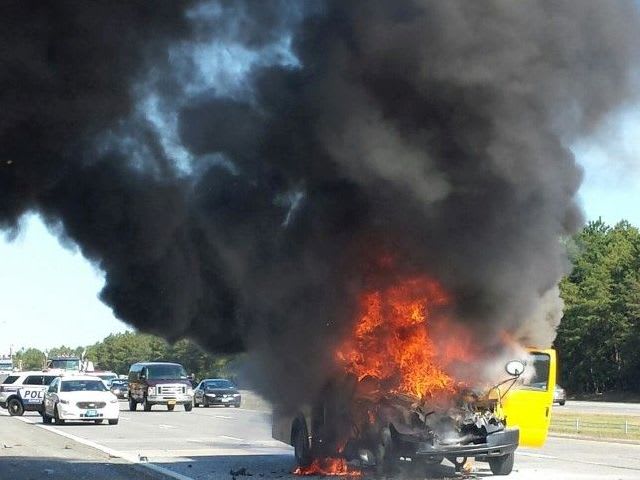
The South Carolina Department of Education confirmed that all 1995 and 1996 models, which accounted for a majority of the state’s thermal events, have been scrapped and replaced. File photo courtesy NYPD
The South Carolina Department of Education confirmed that all 1995 and 1996 models, which accounted for a majority of the state’s thermal events, have been scrapped and replaced. File photo courtesy NYPD
COLUMBIA, S.C. — School buses that had been identified as being prone to catch fire have been removed from the state’s fleet.
The South Carolina Department of Education (DOE) confirmed to WCSC that all of the 1995 and 1996 bus models, which accounted for the majority of the state’s over 100 thermal events, were taken from school districts and sent to the state’s fleet office to be scrapped.
State Superintendent Molly Spearman’s office had announced that by New Year’s Day 2019, every bus from those model years would be replaced with a new one, The Post and Courier reports. (Spearman’s office also noted that there have been no bus fires or thermal events reported since the May 2017 incident in Spartanburg, according to the newspaper.)
Ryan Brown, a spokesperson for the state DOE, told WCSC that over the last two fiscal years, the state has purchased 2,100 new school buses, including 116 propane-powered buses, to replace the aging buses.
As SBF previously reported, the state has been working for years on a plan to update its school bus fleet, which is considered to be one of the oldest in the U.S. In January 2017, State Superintendent Molly Spearman asked the General Assembly to fund the replacement of more than 1,000 of the state’s buses that are at least 20 years old, and worked with the state treasurer and legislators to establish South Carolina’s first school bus lease-to-purchase program.
In June of that same year, Gov. Henry McMaster had initially vetoed $20.5 million in funding for hundreds of new school buses in the 2017-18 fiscal year, due to concerns that the funding would come from surpluses from lottery proceeds that voters were promised would go to scholarships. However, the state Legislature overrode that veto in January 2018.
The state DOE’s next goal is to replace the state’s 432 30-year-old buses, Brown told WCSC. State Superintendent Spearman has asked for $5 million in recurring funds and $40 million in non-recurring funds for bus replacement in her budget request for the next fiscal year, according to The Post and Courier.
Brown also told WCSC that the state DOE hopes that a share of the state’s Volkswagen (VW) settlement funds could help cover the costs, as well as for additional buses for counties that have seen their student populations grow.
However, state Rep. Wendell Gilliard is proposing a bill that would require South Carolina to sell or dispose of its fleet by July 1, 2023, turning operations over to school districts to run in-house or contract with companies, in an effort to use an anticipated cost savings to increase teacher salaries, according to WCSC.
More Safety

How to Build a Better School Bus Driver Training Program
Is it time to strengthen your driver training? Here’s how to pick the right talent and improve recruitment, retention, and safety. This video is brought to you by IC Bus.
Read More →
Recent School Bus Accidents Leave 2 Dead, 2 Injured
Four school bus crashes in Florida, Illinois, and Georgia highlight risks in transportation lots, at bus stops, and during student loading and unloading.
Read More →
When Every Second Matters, Clarity Keeps Routes Moving
From routine delays to urgent incidents, strong communication practices help drivers, dispatchers, schools, and families respond with confidence.
Read More →

What Happens When a School Bus Catches Fire — and What Can Help
School bus fires are rare but can be devastating. Learn how advances in fire suppression and asset protection help fleets detect fires earlier, reduce damage, and improve safety.
Read More →
Geotab Launches Tool to Help Fleets Investigate Road Incidents
Geotab Investigations combines telematics data, video, documents, and other evidence to help fleets reconstruct incidents, resolve claims, and determine what happened.
Read More →
Texas Sixth Grader Wins 2026 National School Bus Safety Poster Contest
Sai Darshana Yekolu of Moseley Middle School in Prosper, Texas, was named the newest winner for her artwork, bringing the theme of “Safe Rides, Everyday Heroes” to life.
Read More →
Doing More With Less: How Transportation Directors Can Prioritize Safety Amid Budget Uncertainty
With diesel prices soaring and nearly one-third of transportation directors expecting budget cuts, maintaining student safety has never been more challenging. Download this guide to learn how leading districts are prioritizing risk, funding critical safety technology, and building stronger budget cases with data.
Read More →
Walton County Schools Adds Gatekeeper Stop-Arm Enforcement System
The Florida district will deploy Gatekeeper’s updated Student Protector technology, which now incorporates AI to improve video evidence.
Read More →
How To Build a More Secure School Bus Yard During and After Hours
As thefts and overnight security threats continue, school transportation leaders are combining stronger operational practices with AI-enabled surveillance to better protect buses, facilities, and staff.
Read More →
FMCSA Names New Chief Safety Officer: What School Bus Operators Should Know
Steve Dowling is set to lead the federal agency's efforts to advance commercial motor vehicle safety and reduce crashes, fatalities, and injuries on the nation's roadways.
Read More →