




Feds Drop Proposal on Motor Carrier Insurance Increases
FMCSA had requested comment about raising minimum insurance requirements for commercial operators. The National School Transportation Association praises the withdrawal of the proposal.

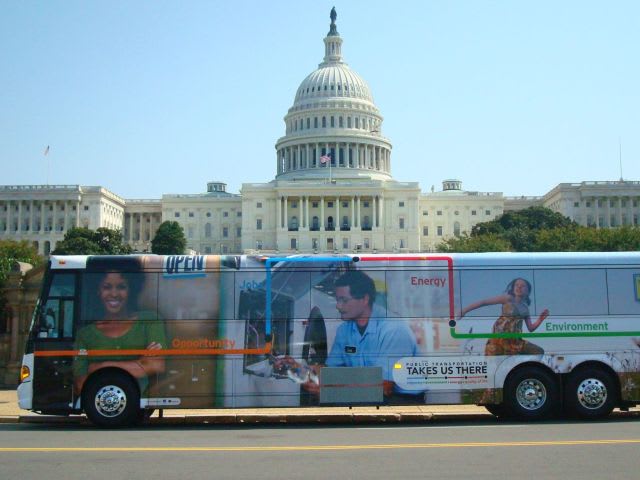
FMCSA's proposal could have led to increased insurance requirements for commercial carriers, such as motoroach operators and school bus contractors.
FMCSA's proposal could have led to increased insurance requirements for commercial carriers, such as motoroach operators and school bus contractors.
WASHINGTON, D.C. — A federal proposal that could have led to increased insurance requirements for school bus contractors and other commercial operators has been withdrawn by the Trump administration.
The advance notice of proposed rulemaking was issued under the Obama administration on Nov. 28, 2014. It requested comment on whether the Federal Motor Carrier Safety Administration (FMCSA) should increase the minimum insurance requirements for commercial motor carriers.
In pulling the proposal on Monday, the agency said that “after reviewing all public comments … FMCSA has determined that it has insufficient data or information to support moving forward with a rulemaking proposal, at this time.”
School bus contractors are federally required to have at least $1.5 million or $5 million, depending on passenger capacity, for each vehicle that is used for purposes other than home-to-school transportation, such as activity trips and charter service. FMCSA reportedly suggested that the insurance minimums should be raised to as much as $25 million for large vehicles.
In responding to the advance notice of proposed rulemaking on Feb. 25, 2015, the National School Transportation Association (NSTA) wrote that FMCSA had not demonstrated that current federal insurance minimums were inadequate, nor how increasing those limits would improve safety. The school bus contractors association also argued that the agency did not provide any data or analysis specific to the school transportation industry.
“The school bus and its safety record is not comparable to other types of commercial motor vehicles,” NSTA wrote in its comment. “Simply put, we do not think Federal minimum insurance requirements for school buses can be viewed through the same prism as other commercial motor vehicles.”
On Tuesday, NSTA praised the withdrawal of FMCSA’s proposal.
“School bus transportation is the safest mode of transportation available, and current federal insurance minimums are more than adequate,” NSTA Executive Director Ronna Weber said. “Above all, imposing a burdensome increase in limits without research or data would have caused unnecessary harm to the industry and its ability to continue to transport the nation's schoolchildren safely."
More Management

How to Build a Better Driver Training Program
Ready to boost up your school bus instructor training? Here’s how to pick the right talent and improve recruitment, retention, and safety.
Read More →
CALSTART and Forth Combine to Form Catalyst Mobility
The new name represents a renewed vision for the nonprofit focused on advancing clean, equitable, and affordable transportation solutions that move people and goods.
Read More →
What Makes a Great School Bus Driver Trainer?
Choosing the right school bus driver trainer takes more than experience. Learn six keys to selecting and developing trainers and evaluating program effectiveness.
Read More →


School Bus Contractors Expand Through New Deals, Acquisitions & Partnerships
STA's Canadian division acquires Ontario-based G&L Stevenson Transport while Durham School Services adds a new district contract in California, First Student adds a New Jersey contract, and Minnesota Coaches acquires Halo Transportation.
Read More →
Logan Bus Company Rolls Out AI Phone System for NYC School Bus Families
A summer pilot found that AI agents could handle most routine calls, freeing up time for customer service staff to focus on emergencies and complex family concerns.
Read More →
From Intent to Impact: What I Learned About Leadership from TAPT
A Texas transportation supervisor shares lessons on self-awareness, accountability, managing stress and building trust — and why investing in leadership development matters at every stage of your career.
Read More →
NAPT Names 2026 Award Recipients, Hall of Fame Inductee
Who earned national recognition for their work in student transportation? This year, NAPT named five recipients of its 2026 awards for service, safety, and leadership, plus its newest Hall of Famer.
Read More →
2026 State of Student Transportation Report
Driver shortages. Rising costs. Growing safety expectations. More data, but not enough time to act on it. The 2026 State of Student Transportation Report reveals what transportation leaders say is putting the most pressure on their operations—and where they’re investing next. See how your priorities compare.
Read More →
How to De-Escalate an Angry Person: 5 Steps for Handling Workplace Conflict
What makes emotions run high, and how should you handle an angry colleague or parent? Follow these steps for staying calm, listening, showing empathy, and resolving conflict.
Read More →
What Readiness Looks Like This School Year
Learn about the challenges shaping the 2026–2027 school year, from persistent driver shortages and budget pressure to technology and readiness gaps. See how school districts are responding and adapting in Zonar’s 2026 Back-to-School Readiness Report.
Read More →