




Electronic Stability Control, Backup Cameras Now Standard on Some Blue Bird School Buses
The standard ESC feature is available for buses equipped with air brakes, and the backup camera systems apply to all new Blue Bird school buses built in 2019.

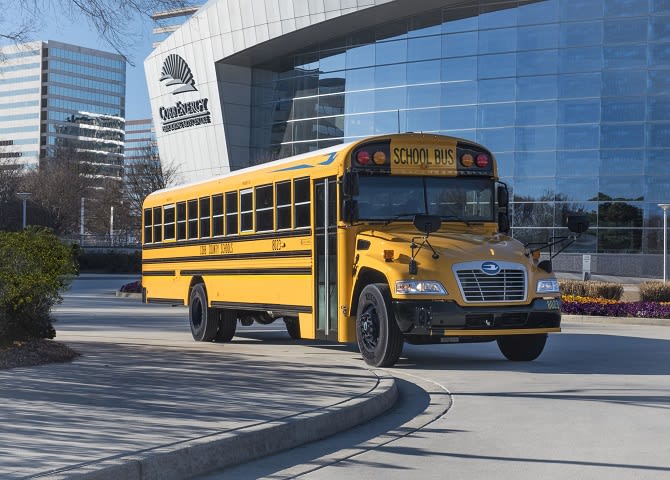
Electronic stability control and backup cameras will be standard on all new Blue Bird school buses built in 2019. File photo
Electronic stability control and backup cameras will be standard on all new Blue Bird school buses built in 2019. File photo
MACON, Ga. — Blue Bird announced on Tuesday that it is making electronic stability control (ESC) and backup cameras standard on its school buses.
The standard ESC feature, supplied by braking systems provider Bendix, is available for buses equipped with air brakes, and the backup camera systems will apply to all new school buses built in 2019.
The school bus manufacturer first introduced ESC to customers in 2015.
“We are always looking to be one step ahead in regards to safety,” said Mark Terry, chief commercial officer at Blue Bird. “We offered ESC to customers three years before anyone else, because we knew then that this safety feature would be necessary in the near future. It was an easy decision to provide this to customers as a standard feature.”
Using a group of sensors, the ESC system is notified when a potential situation may occur, and activates the brakes in a sequence to reduce the chances of losing control of the bus. In medium- and heavy-duty truck applications, ESC serves as a way to prevent rollover incidents, and works well to prevent incidents on icy, wet, sandy, and muddy roads, according to Blue Bird.
Blue Bird has also added a rear backup camera as a standard feature on all of their school buses going forward. The school bus manufacturer's backup camera system utilizes a single camera located at the back of the vehicle. The camera provides a 150-degree field of vision image of the rear of the bus to the driver through a 7-inch LCD color monitor displayed in the rearview mirror. The image shows when the bus is in reverse, and features night vision capability. Additionally, Blue Bird is also working on developing a dash-mounted monitor, which will be available soon.
“Beyond the obvious safety aspects of a backup camera system, many new bus drivers are used to having backup cameras in their personal vehicles. We also want to tailor our buses to give drivers confidence while driving,” Terry said. “Providing additional safety features on buses not only helps keep our children safe, it also gives drivers greater confidence while operating the bus.”
More Management

How to Build a Better Driver Training Program
Ready to boost up your school bus instructor training? Here’s how to pick the right talent and improve recruitment, retention, and safety.
Read More →
CALSTART and Forth Combine to Form Catalyst Mobility
The new name represents a renewed vision for the nonprofit focused on advancing clean, equitable, and affordable transportation solutions that move people and goods.
Read More →
What Makes a Great School Bus Driver Trainer?
Choosing the right school bus driver trainer takes more than experience. Learn six keys to selecting and developing trainers and evaluating program effectiveness.
Read More →

School Bus Contractors Expand Through New Deals, Acquisitions & Partnerships
STA's Canadian division acquires Ontario-based G&L Stevenson Transport while Durham School Services adds a new district contract in California, First Student adds a New Jersey contract, and Minnesota Coaches acquires Halo Transportation.
Read More →
Logan Bus Company Rolls Out AI Phone System for NYC School Bus Families
A summer pilot found that AI agents could handle most routine calls, freeing up time for customer service staff to focus on emergencies and complex family concerns.
Read More →
From Intent to Impact: What I Learned About Leadership from TAPT
A Texas transportation supervisor shares lessons on self-awareness, accountability, managing stress and building trust — and why investing in leadership development matters at every stage of your career.
Read More →
NAPT Names 2026 Award Recipients, Hall of Fame Inductee
Who earned national recognition for their work in student transportation? This year, NAPT named five recipients of its 2026 awards for service, safety, and leadership, plus its newest Hall of Famer.
Read More →
2026 State of Student Transportation Report
Driver shortages. Rising costs. Growing safety expectations. More data, but not enough time to act on it. The 2026 State of Student Transportation Report reveals what transportation leaders say is putting the most pressure on their operations—and where they’re investing next. See how your priorities compare.
Read More →
How to De-Escalate an Angry Person: 5 Steps for Handling Workplace Conflict
What makes emotions run high, and how should you handle an angry colleague or parent? Follow these steps for staying calm, listening, showing empathy, and resolving conflict.
Read More →
What Readiness Looks Like This School Year
Learn about the challenges shaping the 2026–2027 school year, from persistent driver shortages and budget pressure to technology and readiness gaps. See how school districts are responding and adapting in Zonar’s 2026 Back-to-School Readiness Report.
Read More →