


District to convert school bus fleet to run on natural gas
Officials at Florida-based Leon County Schools say the district will transition 44 buses to compressed natural gas by August 2012, and they hope to transition the entire fleet to natural gas within five to 10 years. The move is part of a partnership with Nopetro, a company that is working to build a natural gas fueling station for the district and will share back royalties from private sales.

TALLAHASSEE, Fla. — Leon County Schools will switch its school bus fleet to run on natural gas as part of a partnership with Nopetro, a company that is building a network of compressed natural gas (CNG) and liquefied natural gas (LNG) fueling stations around the state.
Leon County Schools has signed an agreement with Nopetro to build a natural gas fueling station for the district and share back royalties from private sales. The station, which will break ground in the fall and be operational by August 2012, is the first of at least 11 stations the company plans to build around Florida and, later, along the East Coast.
Leon County Superintendent of Schools Jackie Pons said the district will transition 44 buses to CNG by the time the station opens, and hopes to transition the entire fleet to natural gas within five to 10 years.
“The switch to natural gas will save the district millions of dollars over time — money we can reinvest in the classrooms,” Pons added. “It’s significantly cleaner for our environment, and it reduces our dependence on foreign oil. That’s a triple win.”
Aside from reducing the district’s fuel costs by up to 40 percent, officials said the switch to natural gas will reduce emissions, including particulate matter, by 89 percent.
Jorge Herrera, CEO of Nopetro, said the district’s fueling station also will serve private customers, delivering both CNG and LNG used by tractor-trailer trucks. That will benefit the school district, officials said, because Nopetro will pay a royalty on all private fuel sales at the facility.
Herrera said the company is interested in forging similar partnerships with other school districts and local government bodies around the state.
“We are meeting with companies in the area that have their own truck fleets to let them know a natural gas fueling option will be available soon,” Herrera said. “The interest level has been strong. With diesel prices rising and natural gas prices expected to remain constant, natural gas is an increasingly attractive option.”
More Alternative Fuels
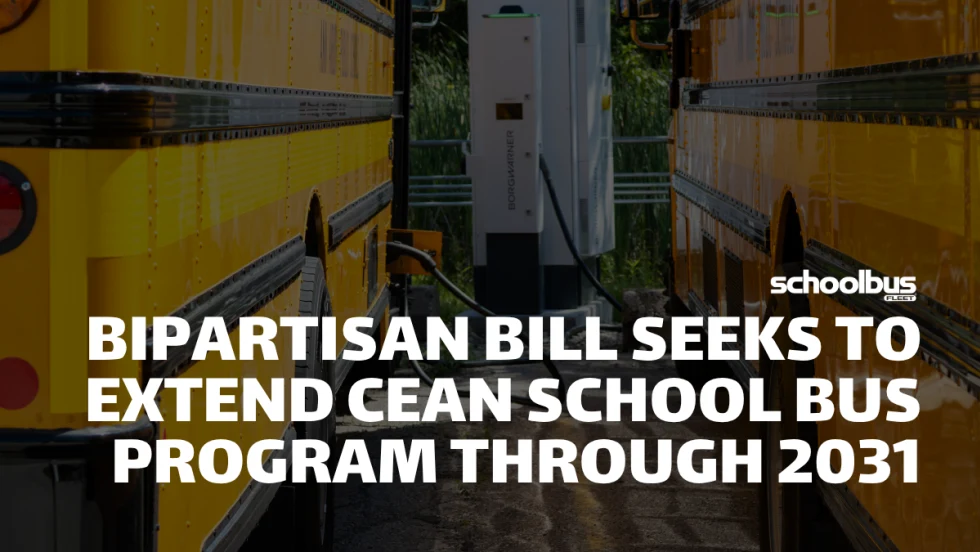
Bipartisan Bill Seeks to Extend Clean School Bus Program Through 2031
The proposed legislation would renew federal support for cleaner school buses as districts navigate funding uncertainty, rising fuel and infrastructure costs, and fleet replacement needs.
Read More →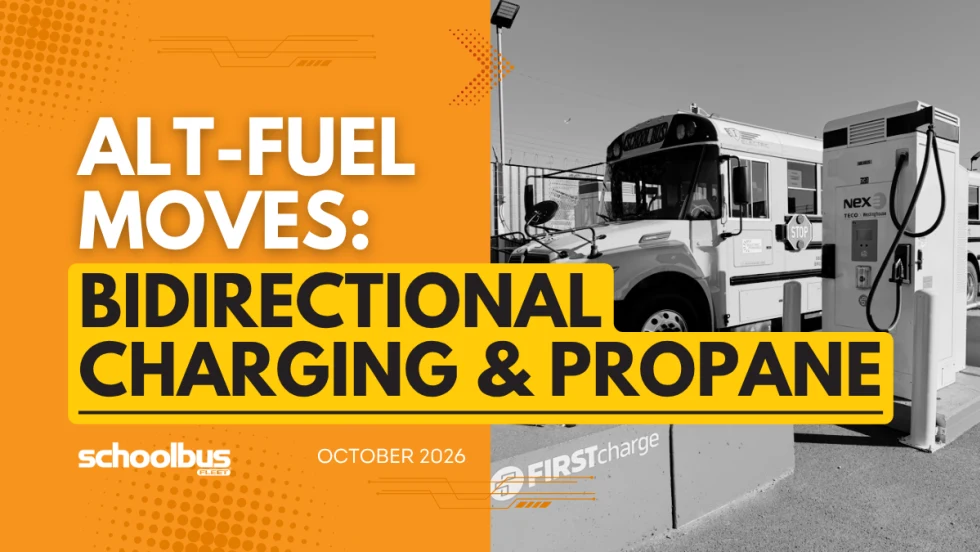
Alt-Fuel Moves: Electric Bus Rollouts, Bidirectional Charging & Propane Growth
See which fleets are adding electric and propane school buses as districts and operators invest in charging infrastructure, bidirectional technology, and alternative-fuel expansion.
Read More →
Nobody Told Diesel Prices They Were Supposed to Come Down
With diesel prices surging, school bus fleets have new reason to stress-test fuel costs, consider diversification, and calculate what each route really costs to operate.
Read More →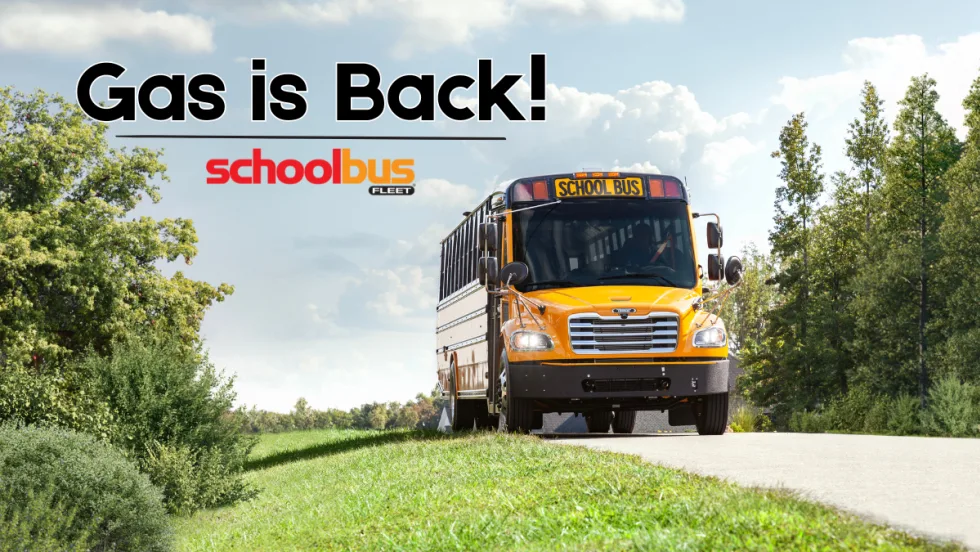
Why Gasoline School Buses Are Making a Comeback
Gasoline is gaining ground in full-size school buses. See how today’s options stack up against diesel on cost, maintenance, emissions, performance, and more.
Read More →
EPA Opens $180M DERA Funding Round for Diesel Upgrades
The 2026 Diesel Emissions Reduction Act program seeks applications from eligible organizations to accelerate the retirement of legacy diesel vehicles.
Read More →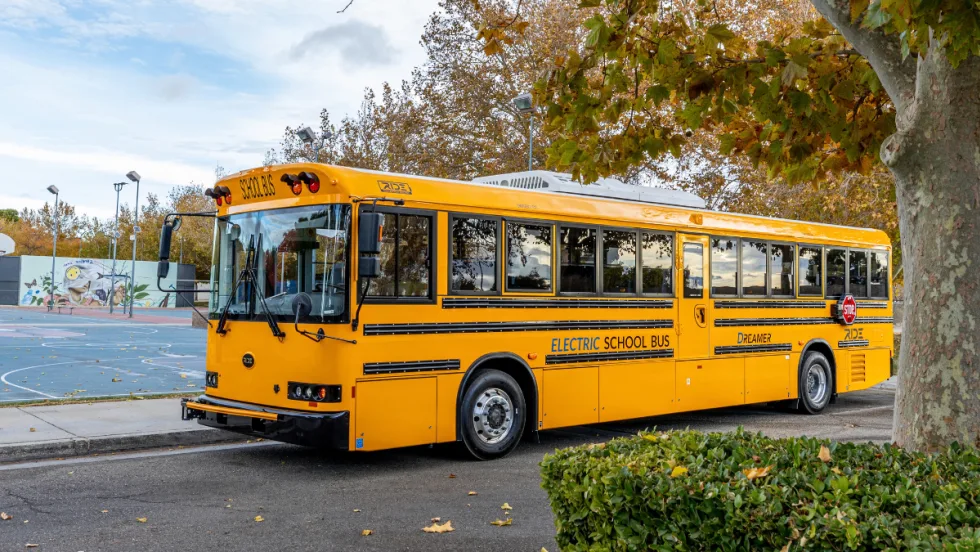
The Secret Life of an Electric School Bus Battery
Batteries change throughout years of daily routes, but degradation doesn’t necessarily mean the end. Here’s what operators should know about performance, safety, and second life.
Read More →
CALSTART and Forth Combine to Form Catalyst Mobility
The new name represents a renewed vision for the nonprofit focused on advancing clean, equitable, and affordable transportation solutions that move people and goods.
Read More →
Alt-Fuel Moves: New Buses, Charging Hubs & Real-World EV Testing
Propane and electric school bus deployments continue to grow as districts add new vehicles, expand charging infrastructure, and gather more real-world operating data.
Read More →
Fewer Electric School Bus Models Reshape the U.S. Market
WRI’s latest buyer’s guide points to a consolidating electric school bus market, but fewer options may reflect a maturing industry rather than fewer meaningful choices for school bus operators.
Read More →
The Fuel Budget You Can Actually Predict: How Propane Autogas Keeps Money in the Classroom
Learn how propane autogas helps school districts manage fuel costs with predictable pricing, lower maintenance, and reduced emissions from former transportation director Joel Stutheit.
Read More →