




Dispatch from the Distracted Driving Summit
At the national summit last week, North Carolina state pupil transportation director Derek Graham had a realization about the school bus industry’s cause. He describes the experience in this editorial.

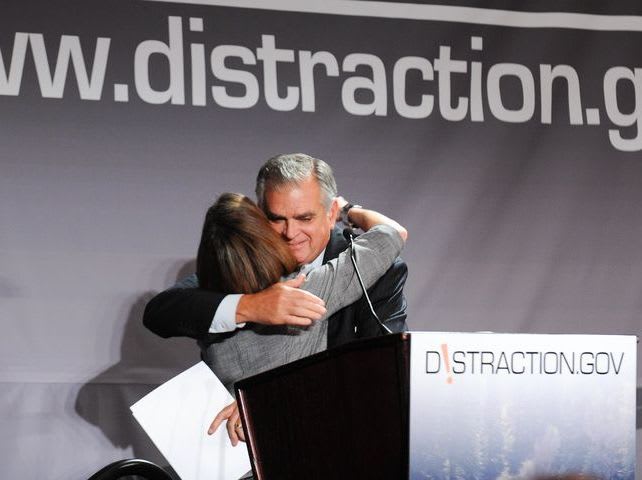
U.S. Transportation Secretary Ray LaHood hugs FocusDriven founder Jennifer Smith as the Distracted Driving Summit closes. State director Derek Graham attended and saw similarity between FocusDriven and the American School Bus Council.
At the Distracted Driving Summit last week, North Carolina state pupil transportation director Derek Graham had a realization about the school bus industry’s cause. He describes the experience in this editorial.
Fellow state director Leon Langley of Maryland and I represented the National Association of State Directors of Pupil Transportation Services (NASDPTS) at the second Distracted Driving Summit, hosted by U.S. Transportation Secretary Ray LaHood on Sept. 21.
The focus was the importance of education, legislation and enforcement to limit crash injury and death caused by distracted drivers. We heard from the secretaries of transportation and labor, U.S. senators, Department of Transportation (DOT) agency heads, researchers and the private sector.
Many speakers and panelists likened the situation to where we were with seat belts and drunken driving 20 years ago. Injuries and deaths can be eliminated if we can curtail texting, operating cell phones and engaging in other distractions while driving. It is a no-brainer — just like wearing a seat belt or not driving after drinking. It is the hope of all involved that we will look back after 10 years and say, “I can’t believe we were engaging in such stupid behavior!”
There was not a lot of discussion about distracted driving in the school bus world except to acknowledge that more states have cell phone or texting laws that impact school bus drivers than those with similar laws for the general public.
My takeaway from this meeting ended up being quite a bit different from what I expected. The closing speaker was Jennifer Smith, founder of FocusDriven, a non-profit advocacy group that was born from last year’s summit through her passion to make a difference after her mother was killed in a crash with a distracted driver.
As Smith encouraged the group to work hard to eliminate distracted driving, I was struck by how she was trying to change behavior of the American public. Like MADD, she is promoting a widespread, grassroots effort to change laws and provide education on the safety benefits of “hanging up the phone” while driving.
As I listened to her, I couldn’t help but notice the similarity with the American School Bus Council (ASBC). ASBC is a coalition that is working for grassroots support to help educate parents and kids on the value of the yellow school bus. The similarities are many.
Distracted driving is a major problem among teens, partly because they are less safe due to their inexperience in driving — just like those high school kids who are 44 times less safe when driving or riding with another teen.
The experts agree that the message must begin at home. Parents must also understand that talking or texting on a cell phone while driving is dangerous. Until they model that behavior because they really understand, teens won’t take it seriously. The parallel with the school bus message is obvious, isn’t it?
The myriad attendees at the summit were all focused on a problem for which there is a document safety issue. The lives lost due to distracted driving are real and countable and in the thousands. And the people in that room were praising Secretary LaHood for his vision, his passion and the direction he has set for the U.S. DOT to do something about this problem.
This is where our efforts differ. Even though the DOT and Department of Education leadership acknowledge more than ever the merits of our cause and the value of educating parents and students, we will never have the widespread sense of urgency felt by that group at the Distracted Driving Summit. Why? Because our safety record is outstanding, and convincing people that all students should be on school buses is not seen as realistic.
Yes, we can argue — with a fair amount of validity — that we need to work on those students who do not ride the bus. And, yes, we have a valid cause and should keep at it.
So what’s the point? What really hit me hard is this: Since we are not going to be able to count on multiple federal agencies and research institutions and advocacy groups to fight this battle for us with the same fervor that they have for eliminating distracted driving, we had better have our own house in order. The American School Bus Council must continue to lead the charge as a lean, mean coalition.
If we are going to achieve something of national proportions — like FocusDriven is planning to do — without the kind of firepower that seat belts, drunken driving or distracted driving command, then we have to do it by being united, determined and passionate.
Are we up for the challenge?
More Safety
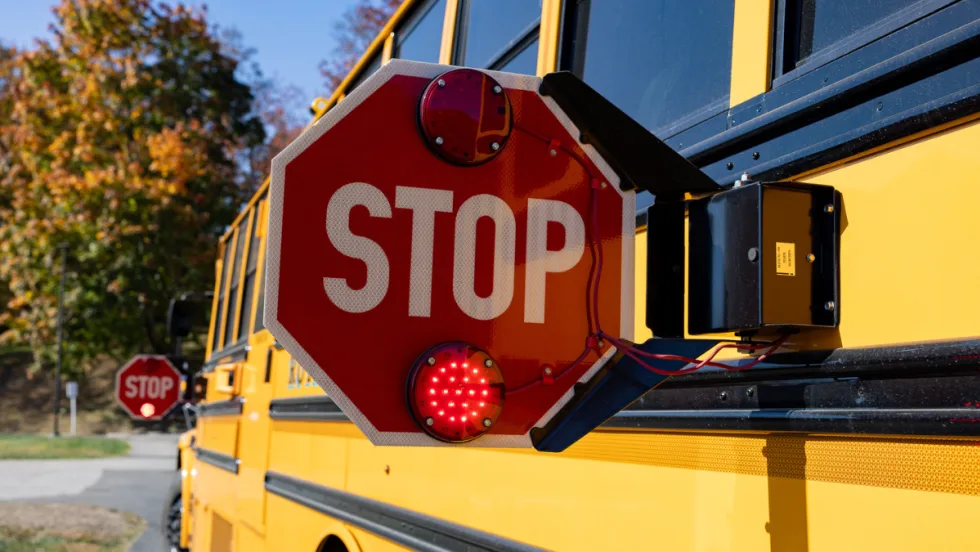
Illegal School Bus Passing Drops 24% in New York Districts
With fewer than 5% of citations involving repeat offenders, Westchester County officials said enforcement, education, and community partnerships are helping change driver behavior.
Read More →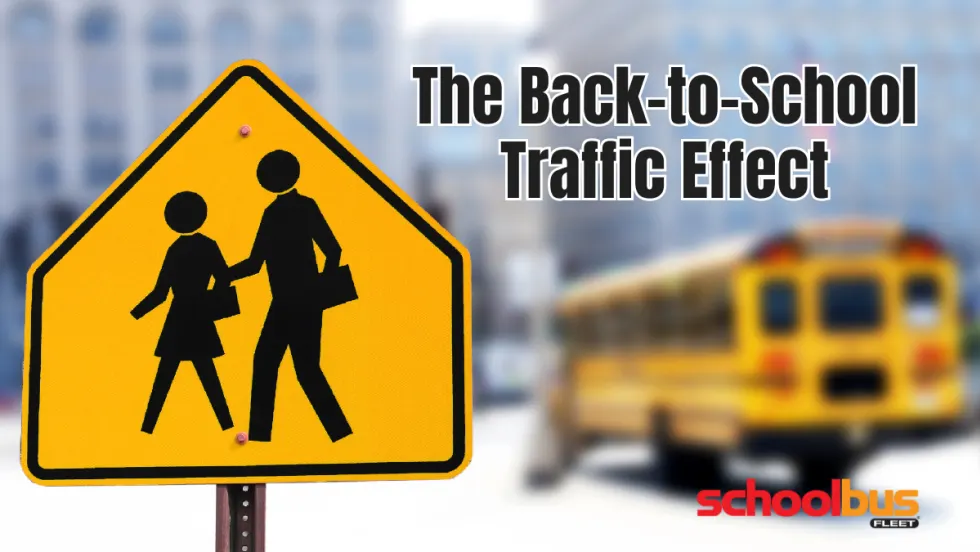
School's Back. Here's What Happened to Traffic, Speeding & Distraction
What happens to traffic when school resumes? New data analysis examines changes in distracted driving, congestion, and speeding around schools.
Read More →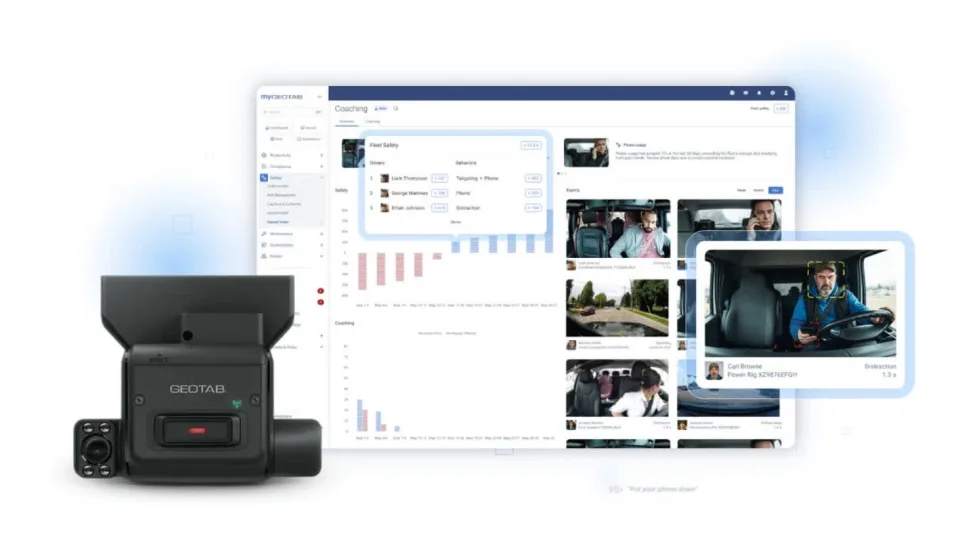
Geotab Expands Fleet Safety Tools With Video Coaching, Risk Insights
New safety and video capabilities aim to help fleet managers assess risk, support drivers, and take targeted action through video coaching, red-light violation detection, and more.
Read More →

How to Build a Better School Bus Driver Training Program
Is it time to strengthen your driver training? Here’s how to pick the right talent and improve recruitment, retention, and safety. This video is brought to you by IC Bus.
Read More →
Recent School Bus Accidents Leave 2 Dead, 2 Injured
Four school bus crashes in Florida, Illinois, and Georgia highlight risks in transportation lots, at bus stops, and during student loading and unloading.
Read More →
When Every Second Matters, Clarity Keeps Routes Moving
From routine delays to urgent incidents, strong communication practices help drivers, dispatchers, schools, and families respond with confidence.
Read More →
What Happens When a School Bus Catches Fire — and What Can Help
School bus fires are rare but can be devastating. Learn how advances in fire suppression and asset protection help fleets detect fires earlier, reduce damage, and improve safety.
Read More →
Geotab Launches Tool to Help Fleets Investigate Road Incidents
Geotab Investigations combines telematics data, video, documents, and other evidence to help fleets reconstruct incidents, resolve claims, and determine what happened.
Read More →
Texas Sixth Grader Wins 2026 National School Bus Safety Poster Contest
Sai Darshana Yekolu of Moseley Middle School in Prosper, Texas, was named the newest winner for her artwork, bringing the theme of “Safe Rides, Everyday Heroes” to life.
Read More →
Doing More With Less: How Transportation Directors Can Prioritize Safety Amid Budget Uncertainty
With diesel prices soaring and nearly one-third of transportation directors expecting budget cuts, maintaining student safety has never been more challenging. Download this guide to learn how leading districts are prioritizing risk, funding critical safety technology, and building stronger budget cases with data.
Read More →