




Daimler, PGE Open 'Electric Island' Charging Site
Less than a mile from Interstate 5 in Portland, Oregon, a new electric-vehicle charging site opened April 21 aimed at medium- and heavy-duty trucks and buses.
April 21, 2021

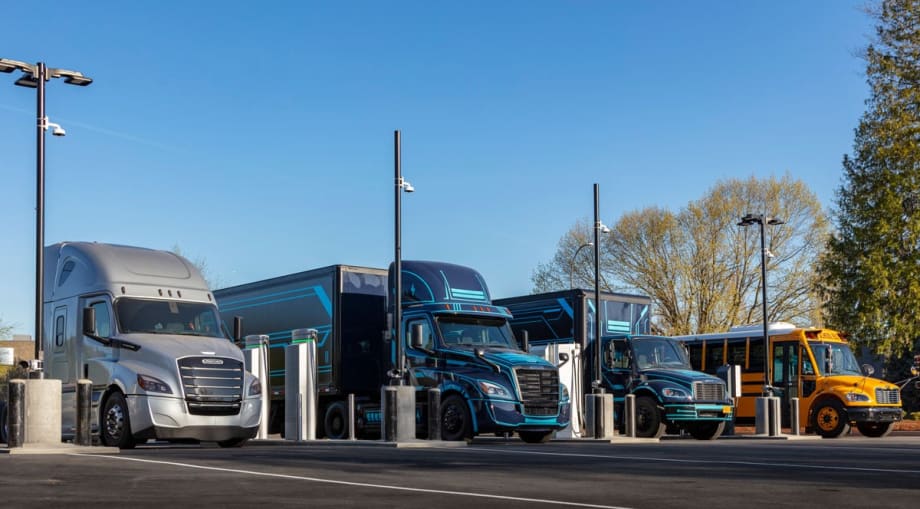
Electric Island opens with eight vehicle charging stations for electric cars, buses, box vans and semi-trucks.
Photo: Daimler Trucks North America
3 min to read
Less than a mile from Interstate 5 in Portland, Oregon, a new heavy-duty electric truck charging site opened April 21. Called “Electric Island,” it’s a joint project of Daimler Trucks North America and Portland General Electric, designed to accelerate the development, testing and deployment of zero-emissions commercial vehicles.
Electric Island opens with eight vehicle charging stations for electric cars, buses, box vans and semi-trucks. A majority of these stations are available for public use. The facility will allow PGE and DTNA to study energy management, charger use and performance – and, in the case of DTNA, its own vehicles’ charging performance.
Located across the street from DTNA headquarters, the facility represents the first location specifically designed for medium- and heavy-duty trucks aligned to the blueprint of the West Coast Clean Transit Corridor Initiative, according to DTNA. WCCTCI’s collaboration between nine electric utilities and two government agencies yielded a strategic plan in 2020 to electrify 1,300 miles of I-5 across the three West Coast states to provide publicly available charging for freight and delivery trucks.
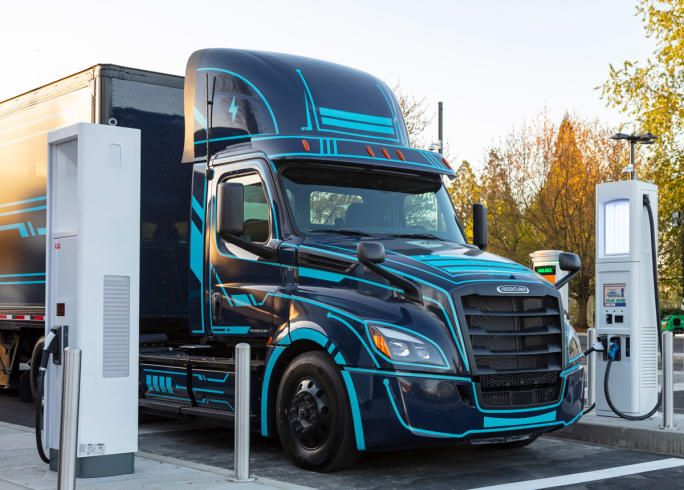
Freightliner's eCascadia recently became available for order.
Photo: Daimler Trucks North America
“For the first time in our history, we have to deliver not just a reliable, dependable, economic truck, but we have to address the entire ecosystem around this vehicle,” said Nate Hill of Daimler Trucks North America in a video provided to reporters by DTNA. “We get to test our vehicles with many different chargers, test the performance of each of these chargers with our vehicles, and experiment with different software to help us manage these chargers.”
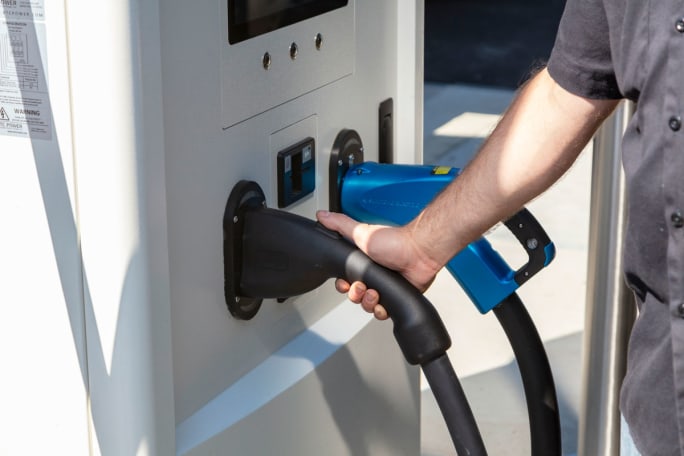
The site will allow DTNA to test its electric vehicles with many different chargers and experiment with different software to help manage these chargers.
Photo: Daimler Trucks North America
The Electric Island site is designed to be flexible, allowing the chargers of today to be replaced with new charger technologies of the future, including planned 1+ megawatt chargers, when they are released. Additional plans for future on-site energy storage, solar power generation, and a product and technology showcase building remain under development.
“The site has up to 5 megawatts of capacity, making it easy… to add new, more advanced charging stations as the technology progresses,” explained Joe Colett with PGE. “The site also has room for complementary grid edge technologies, thing like energy storage, on site generation, and an advanced control system to help all these technologies work together.”
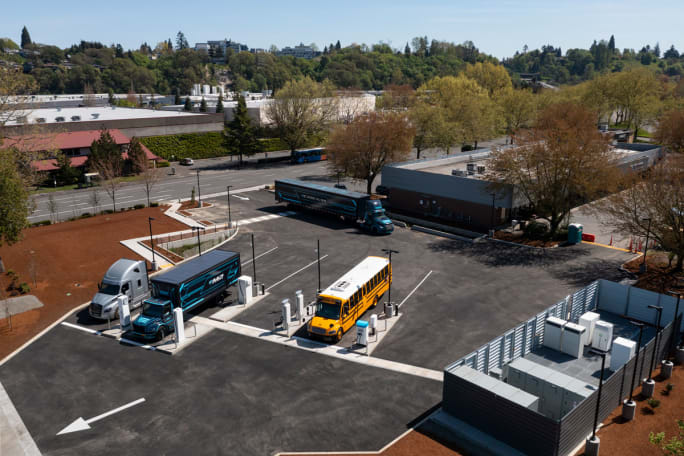
An aerial view of the new Electric Island electric vehicle charging facility, located across the street from DTNA headquarters in Portland.
Photo: Daimler Trucks North America
The site will provide insights into charging issues such as:
Use of vehicle chargers featuring power delivery of up to over one megawatt (over four times faster than today’s fastest light-duty vehicle chargers), enabling PGE and DTNA to develop best practices for cost-effective future deployments;
Integration of heavy-duty charging technology into PGE’s Smart Grid, such as vehicle-to-grid technologies, second-life use of Daimler’s battery packs, and onsite energy generation; and
Testing information technology opportunities like fleet and energy management by captive solutions and services.
“Through collaboration with great partners like Portland General Electric, we are helping to shape the future of carbon-neutral freight transportation, starting right here in the City of Portland,” said John O’Leary, president and CEO of DTNA, in a statement. “Moreover, the manufacture of reliable, durable and efficient medium- and heavy-duty battery electric trucks will take place just down the road at our Portland Truck Manufacturing Plant, demonstrating that we truly are crafting an Electric Island.”
Originally posted on Heavy Duty Trucking
More Alternative Fuels

CALSTART and Forth Combine to Form Catalyst Mobility
The new name represents a renewed vision for the nonprofit focused on advancing clean, equitable, and affordable transportation solutions that move people and goods.
Read More →
Alt-Fuel Moves: New Buses, Charging Hubs & Real-World EV Testing
Propane and electric school bus deployments continue to grow as districts add new vehicles, expand charging infrastructure, and gather more real-world operating data.
Read More →
Fewer Electric School Bus Models Reshape the U.S. Market
WRI’s latest buyer’s guide points to a consolidating electric school bus market, but fewer options may reflect a maturing industry rather than fewer meaningful choices for school bus operators.
Read More →
The Fuel Budget You Can Actually Predict: How Propane Autogas Keeps Money in the Classroom
Learn how propane autogas helps school districts manage fuel costs with predictable pricing, lower maintenance, and reduced emissions from former transportation director Joel Stutheit.
Read More →
Hendrickson, Driventic Introduce New Electric Powertrain for School Buses
ELECTRAAX, the electrified, lightweight drive axle offers integrated ePowertrain efficiency and modular flexibility for Class 6–7 school bus use.
Read More →
The Mobility House Joins PowerFlex in Fleet Electrification Deal
The acquisition combines intelligent charging software, bidirectional charging expertise, and fleet electrification services to support the growing adoption of electric school buses across North America.
Read More →
Alt-Fuel Moves: Electric School Bus Investments Hit the Road
See which districts across the U.S. are putting electric school buses into service, expanding charging infrastructure, and planning the next phase of fleet electrification.
Read More →
With Fuel Volatility Ahead, School Districts Turn to Propane
While diesel prices peaked above $5 this spring, districts with propane autogas-powered fleets paid under $2 per gallon, according to PERC.
Read More →
EPA Unveils Proposed Changes to 2027 Heavy-Duty Engine Rules
The federal agency has proposed changes to next year’s targets that would eliminate DEF derates, ease warranty requirements, and retain current NOx emissions standards.
Read More →
Alt-Fuel Moves: EV Charging & Infrastructure Projects Gain Momentum
The latest developments include new funding, charging infrastructure, utility investments, and fleet technologies designed to support the transition to electric school buses nationwide.
Read More →